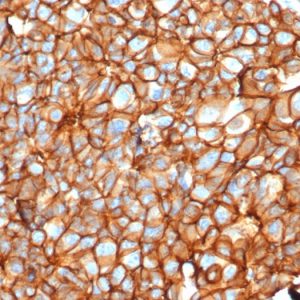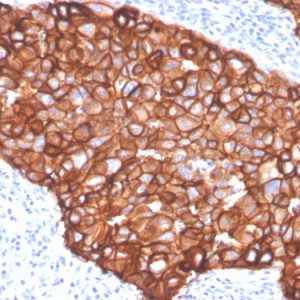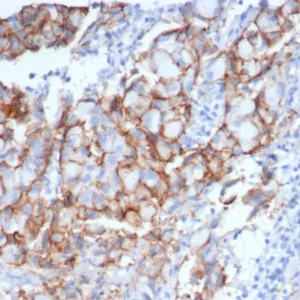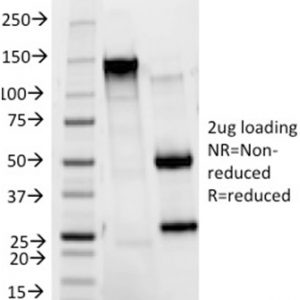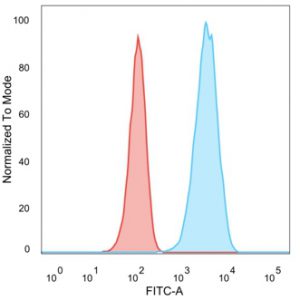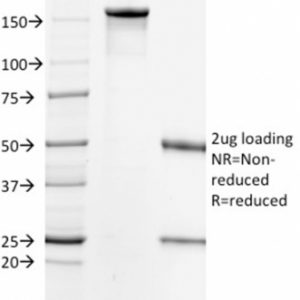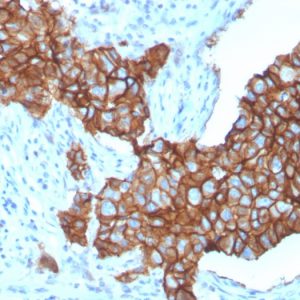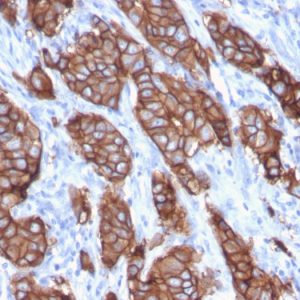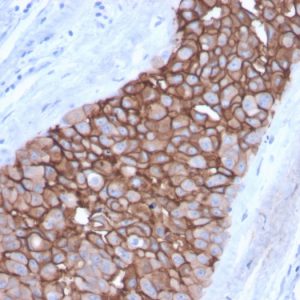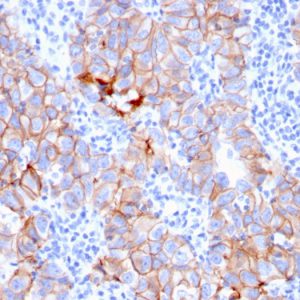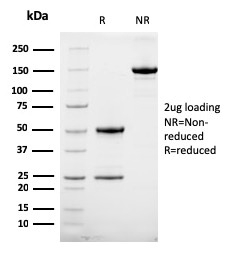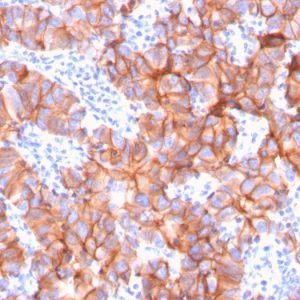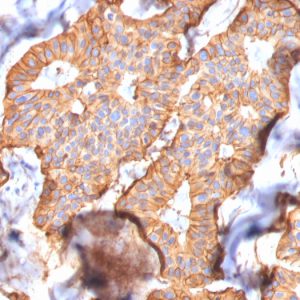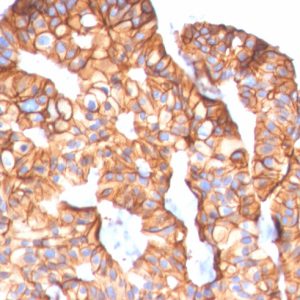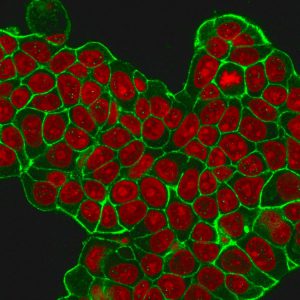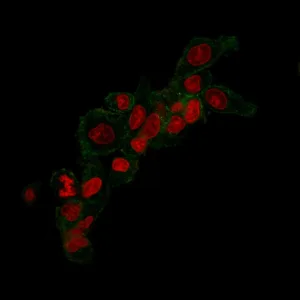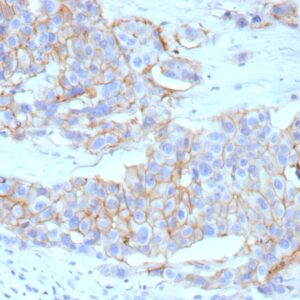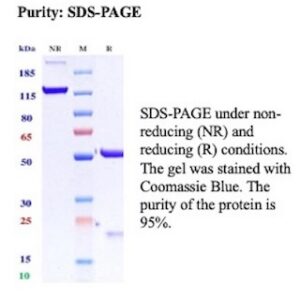


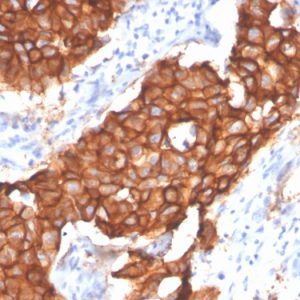
The human epidermal growth factor receptor 2 (HER-2) protein, also known as ERBB2, is encoded by the ERBB2 gene on chromosome 17q12. The HER-2 protein contains 1255 amino acids with a molecular weight of around 185 kDa. Post-translational modifications such as phosphorylation, glycosylation, and formation of disulfide bonds are crucial for HER-2 function, influencing its stability, localization, and signaling activity.
HER-2 is primarily recognized as a membrane-bound receptor tyrosine kinase, integral to the ErbB family of receptors. Functionally, HER-2 is pivotal in regulating cell growth, proliferation, and differentiation by transducing signals from extracellular growth factors. It also acts as a key player in various signaling pathways, including the PI3K/AKT and MAPK pathways, which are fundamental for cellular survival, proliferation, and migration. HER-2 is widely expressed in epithelial tissues, including the breast, ovary, lung, and gastrointestinal tract, contributing to tissue homeostasis and development. Expression of HER-2 is tightly regulated at multiple levels, involving transcriptional, translational, and post-translational mechanisms.
Dysregulation of HER-2 expression or activity is associated with various diseases, most notably cancer. HER-2 gene amplification or protein overexpression is observed in approximately 20–30% of breast cancers. Notably, HER-2 status also serves as a critical biomarker for diagnostic and prognostic purposes in breast cancer and other malignancies. HER-2 expression levels or gene amplification status are routinely assessed in tumor tissue samples to guide treatment decisions and predict patient outcomes. While HER-2 positivity is associated with a more aggressive disease course in breast cancer, it also indicates potential responsiveness to HER-2-targeted therapies.
Targeting HER-2 has also been a significant focus of therapeutic development in oncology. Monoclonal antibodies (mAbs) such as trastuzumab (Herceptin) and pertuzumab (Perjeta) have been developed to specifically target HER-2-positive cancer cells, inhibiting HER-2 signaling and inducing antibody-dependent cellular cytotoxicity (ADCC). Additionally, antibody-drug conjugates (ADCs) like ado-trastuzumab emtansine (Kadcyla) deliver cytotoxic payloads directly to HER-2-expressing cells, resulting in targeted cell death. Small molecule inhibitors, such as lapatinib and neratinib, target the intracellular kinase domain of HER-2, blocking downstream signaling pathways and inhibiting tumor growth. These FDA-approved therapies have revolutionized the treatment of HER-2-positive breast cancer, significantly improving patient outcomes and survival rates.
NeoBiotechnologies offers a variety of antibodies against HER-2 that have been validated for ELISA, flow cytometry, immunofluorescence, and immunohistochemistry, as well as HuProt validated options. Additionally, we hold exclusive r https://www.neobiotechnologies.com/shop/?s=HER2].
Synonyms
Receptor tyrosine-protein kinase erbB-2, CD340|HER-2|HER-2/neu|HER2|MLN 19|MLN-19|NEU|NGL|TKR1|VSCN2|c-ERB-2|c-ERB2|p185(erbB2)
Research Areas
Apoptosis, Autophagy, Breast Cancer, Cancer, Cardiovascular, Cell Biology, Cellular Markers and Tags, Developmental Biology, Endocrine, Epigenetics, Gastrointestinal Tract, Hypoxia, Immuno Oncology, Immunology, Kidney, Lymphatic, Metabolism, Microbiology, Muscle, Neuroscience, Pancreatic Cancer, Prostate Cancer, Skin, Stem Cell, AKT Signaling, Angiogenesis, Articular Cartilage Extracellular Matrix, B Cell Markers, Basal Cell Marker, BBB VCAM-1 Signaling, Bladder Cancer, Cardiac Stem Cells, Colon Cancer, Colorectal Cancer, Complement System, CTLA-4 blockade immunotherapy, Cytokine Signaling, Defective Intrinsic Apoptosis, Dendritic Cell Marker, Digestion, Endothelial Cell Marker, Hematopoietic Stem Cells, Immune checkpoint, Infectious Disease, Lipid Metabolism, Lung Cancer, MAPK Signaling, Mast Cell Marker, Melanoma, Mesenchymal Stem Cell Differentiation, Mitochondria Marker, Neural Stem Cells, Neuroinflammation, Nuclear Marker, Oncology, Ovarian Cancer, PD-1 blockade immunotherapy, Signal Transduction, Stem Cell Differentiation, Transcription Factors