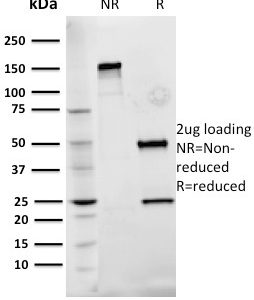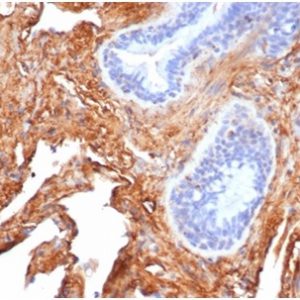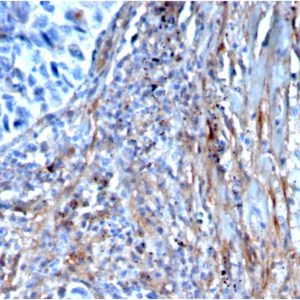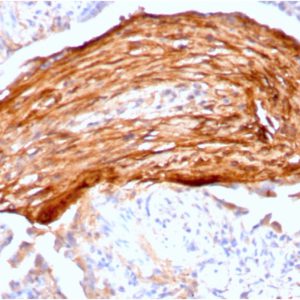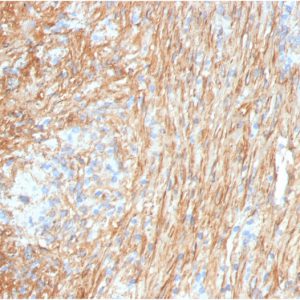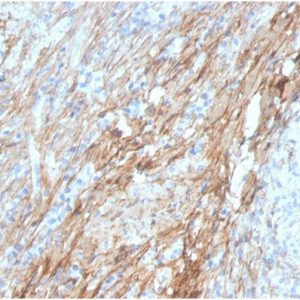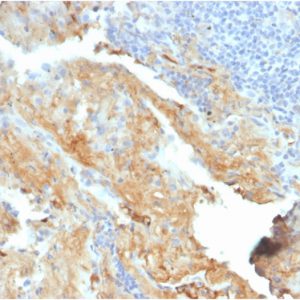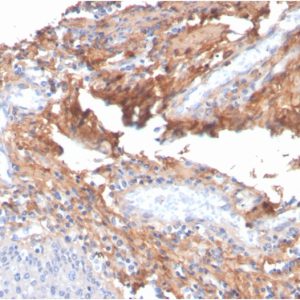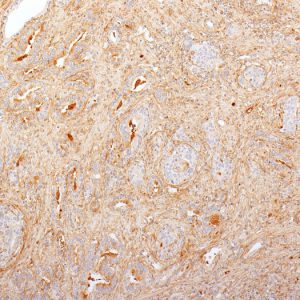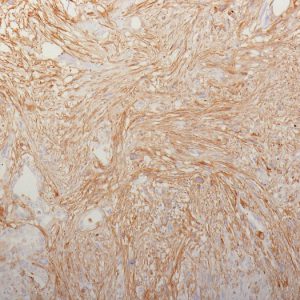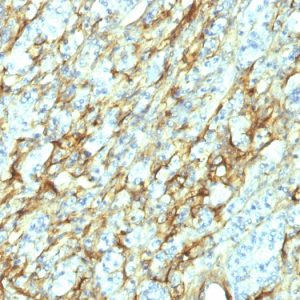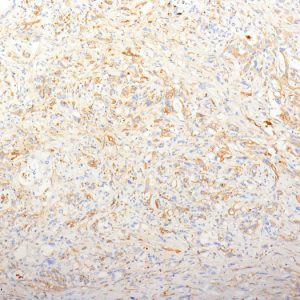


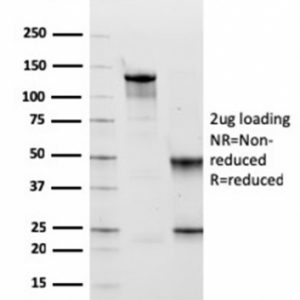
Fibronectin (Fn1) is a large glycoprotein with a molecular weight that varies depending on its isoform but is generally around 220-250 kDa. This protein is widely expressed in various tissues, is a major component of the extracellular matrix (ECM), and is produced by fibroblasts, endothelial cells, and other cell types.
Fibronectin serves as a key structural and adhesive molecule in the ECM, plays a crucial role in cell adhesion, migration, and tissue repair, and also participates in processes such as embryonic development and blood clotting.
Abnormalities in Fn1 expression or function are associated with various diseases and conditions, including fibrosis, cancer progression, and certain cardiovascular diseases. Altered fibronectin levels may be observed in conditions such as arthritis and tissue injuries.
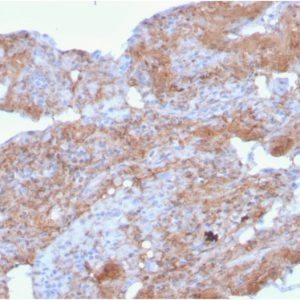
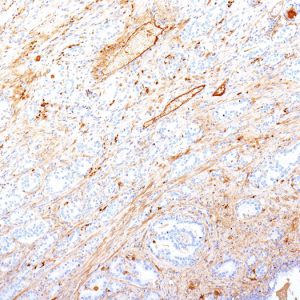
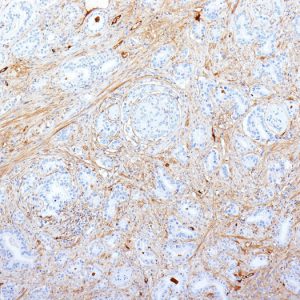
Antibodies against fibronectin are used in research to study its expression and localization in tissues and cells. Immunohistochemistry and immunofluorescence techniques employing anti-Fn1 antibodies help researchers understand its role in various physiological and pathological processes. In the clinical setting, fibronectin is explored as a potential biomarker in certain diseases, including cancer. Measuring fibronectin levels may provide information about the severity of fibrotic diseases. Furthermore, targeting fibronectin or its interactions may be considered in conditions with excessive fibrosis or abnormal tissue remodeling.
Synonyms
Fibronectin, CIG|ED-B|FINC|FN|FNZ|GFND|GFND2|LETS|MSF|SMDCF
Research Areas
Apoptosis, Autophagy, Breast Cancer, Cancer, Cardiovascular, Cell Biology, Cellular Markers and Tags, Developmental Biology, Endocrine, Epigenetics, Gastrointestinal Tract, Hypoxia, Immuno Oncology, Immunology, Kidney, Lymphatic, Metabolism, Microbiology, Muscle, Neuroscience, Pancreatic Cancer, Prostate Cancer, Skin, Stem Cell, AKT Signaling, Angiogenesis, Articular Cartilage Extracellular Matrix, B Cell Markers, Basal Cell Marker, BBB VCAM-1 Signaling, Bladder Cancer, Cardiac Stem Cells, Colon Cancer, Colorectal Cancer, Complement System, CTLA-4 blockade immunotherapy, Cytokine Signaling, Defective Intrinsic Apoptosis, Dendritic Cell Marker, Digestion, Endothelial Cell Marker, Hematopoietic Stem Cells, Immune checkpoint, Infectious Disease, Lipid Metabolism, Lung Cancer, MAPK Signaling, Mast Cell Marker, Melanoma, Mesenchymal Stem Cell Differentiation, Mitochondria Marker, Neural Stem Cells, Neuroinflammation, Nuclear Marker, Oncology, Ovarian Cancer, PD-1 blockade immunotherapy, Signal Transduction, Stem Cell Differentiation, Transcription Factors