
PARTNERSHIP OPPORTUNITIES

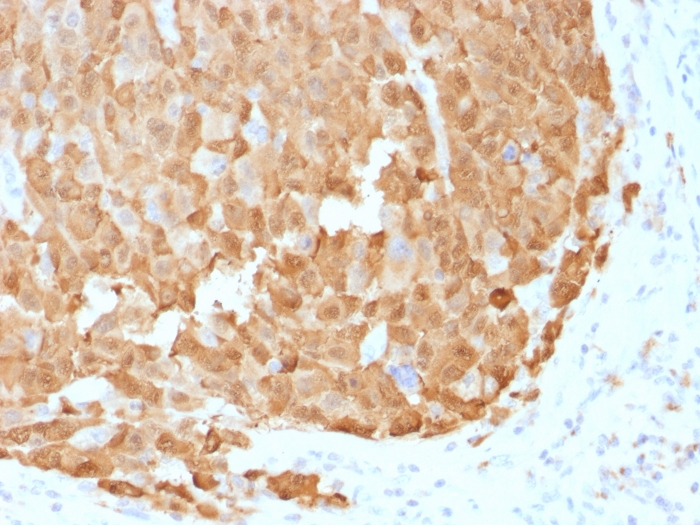
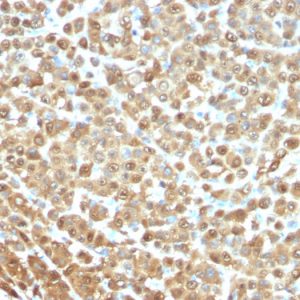
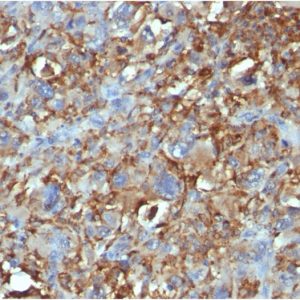
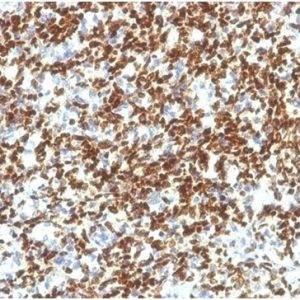
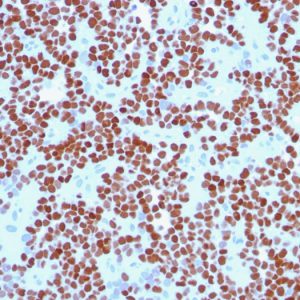
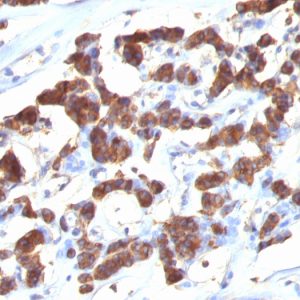
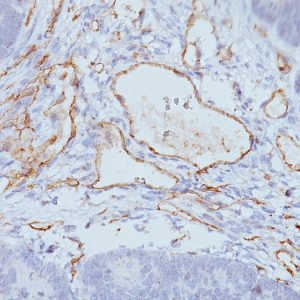
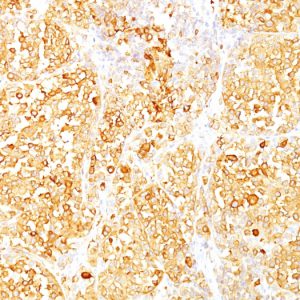
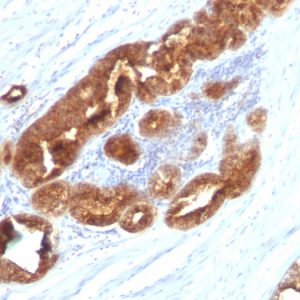
Formalin-fixed, paraffin-embedded human Melanoma stained with S100A1 Mouse Monoclonal Antibody (S100A1/1942).
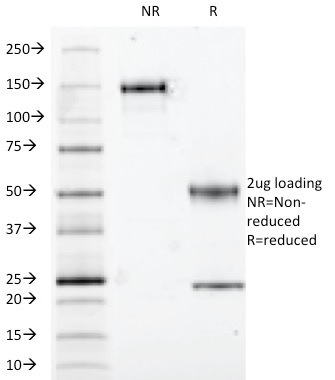
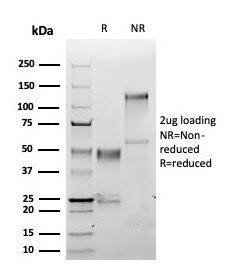
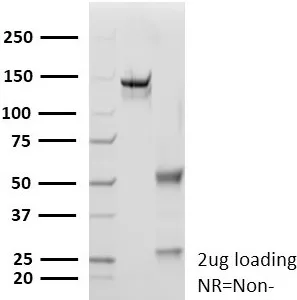
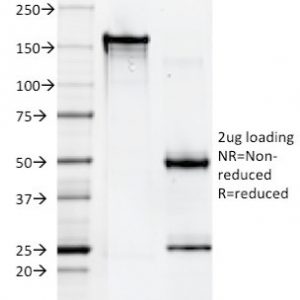
SDS-PAGE Analysis of Purified S100A1 Mouse Monoclonal Antibody (S100A1/1942). Confirmation of Purity and Integrity of Antibody.
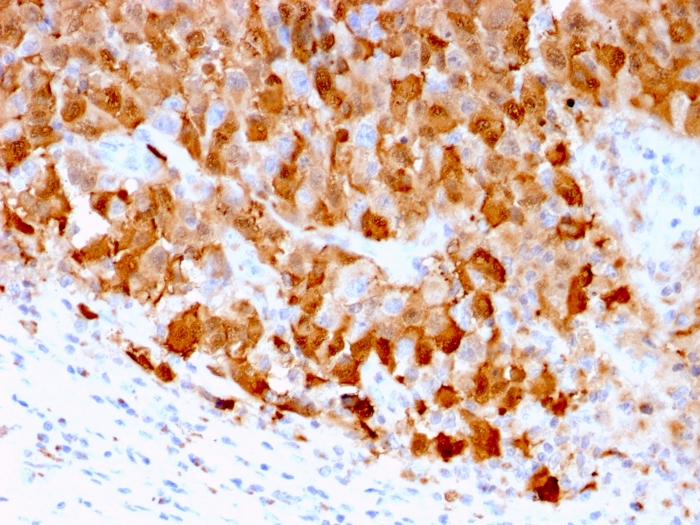
Formalin-fixed, paraffin-embedded human Melanoma stained with S100A1 Mouse Monoclonal Antibody (S100A1/1942).
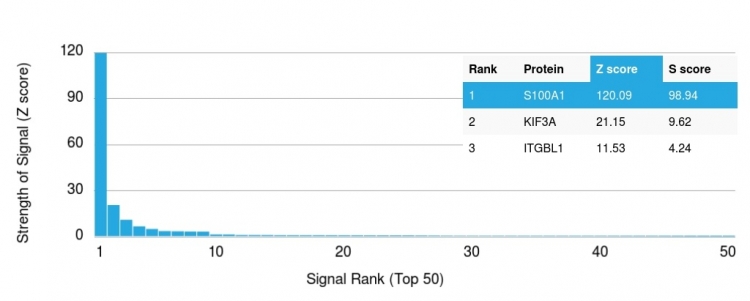
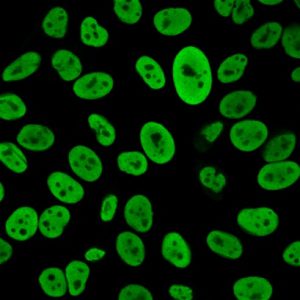
Analysis of Protein Array containing more than 19,000 full-length human proteins using S100A1 Mouse Monoclonal Antibody (S100A1/1942). Z- and S- Score: The Z-score represents the strength of a signal that a monoclonal antibody (MAb) (in combination with a fluorescently-tagged anti-IgG secondary antibody) produces when binding to a particular protein on the HuProtTM array. Z-scores are described in units of standard deviations (SD's) above the mean value of all signals generated on that array. If targets on HuProtTM are arranged in descending order of the Z-score, the S-score is the difference (also in units of SD's) between the Z-score. S-score therefore represents the relative target specificity of a MAb to its intended target. A MAb is considered to specific to its intended target, if the MAb has an S-score of at least 2.5. For example, if a MAb binds to protein X with a Z-score of 43 and to protein Y with a Z-score of 14, then the S-score for the binding of that MAb to protein X is equal to 29.
The specificity of this monoclonal antibody to its intended target was validated by HuProtTM Array, containing more than 19,000, full-length human proteins. S100 belongs to the family of calcium binding proteins. S100A and S100B proteins are two members of the S100 family. S100A is composed of an alpha and a beta chain whereas S100B is composed of two beta chains. This antibody is specific against an epitope located on the alpha-chain (i.e. in S-100A and S-100B) but not on the beta-chain of S-100 (i.e. in S-100B). This antibody can be used to localize S-100A in various tissue sections. S-100 protein has been found in normal melanocytes, Langerhans cells, histiocytes, chondrocytes, lipocytes, skeletal and cardiac muscle, epithelial and myoepithelial cells of the breast, salivary and sweat glands. Neoplasms derived from these cells also express S-100 protein. Almost all malignant melanomas and cases of histiocytosis X are positive for S-100 protein.


There are no reviews yet.