
PARTNERSHIP OPPORTUNITIES


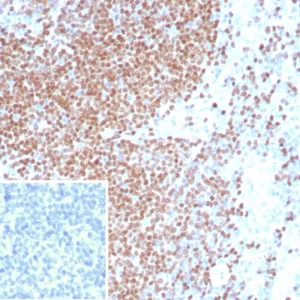
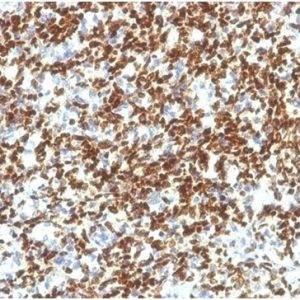
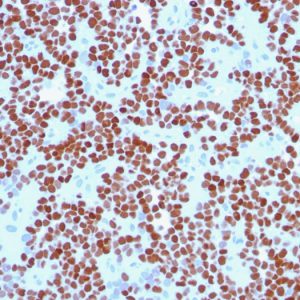
Formalin-fixed, paraffin-embedded human tonsil stained with PAX3 Mouse Monoclonal Antibody (PAX3/8424). Inset: PBS instead of primary antibody; secondary only negative control.

Formalin-fixed, paraffin-embedded human tonsil stained with PAX3 Mouse Monoclonal Antibody (PAX3/8424). Inset: PBS instead of primary antibody; secondary only negative control.

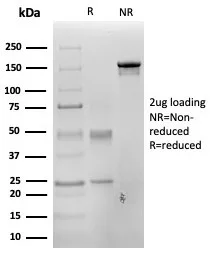
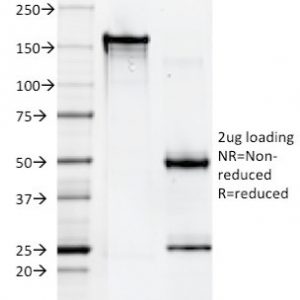
SDS-PAGE Analysis of Purified Paired box protein Pax-3 Mouse Monoclonal Antibody (PAX3/8424). Confirmation of Purity and Integrity of Antibody.

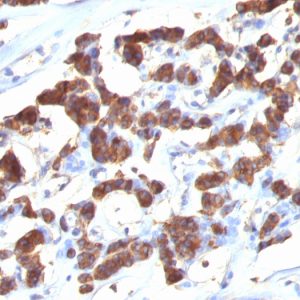
Western Blot Analysis of Human Brain and Human Skeletal muscle lysates using PAX3 Mouse Monoclonal Antibody (PAX3/8424).
Pax genes contain paired domains that share strong homology to genes in Drosophila which are involved in programming early development. The product of the PAX3 gene is a DNA-binding protein expressed during early neurogenesis. Pax-3 is a protein containing both a paired domain and a paired-type homeodomain. During early neurogenesis, Pax-3 expression is limited to mitotic cells in the ventricular zone of the developing spinal cord and to distinct regions in the hindbrain, midbrain and diencephalon. In 10-12 day embryos, expression of Pax-3 is also seen in neural crest cells of the developing spinal ganglia, the craniofacial mesectoderm and in limb mesenchyme. Mutations in the MITF and Pax-3 genes, encoding transcription factors, are responsible for Waardenburg syndrome II (WSII) and WSI/WSIII, respectively.


There are no reviews yet.