
PARTNERSHIP OPPORTUNITIES

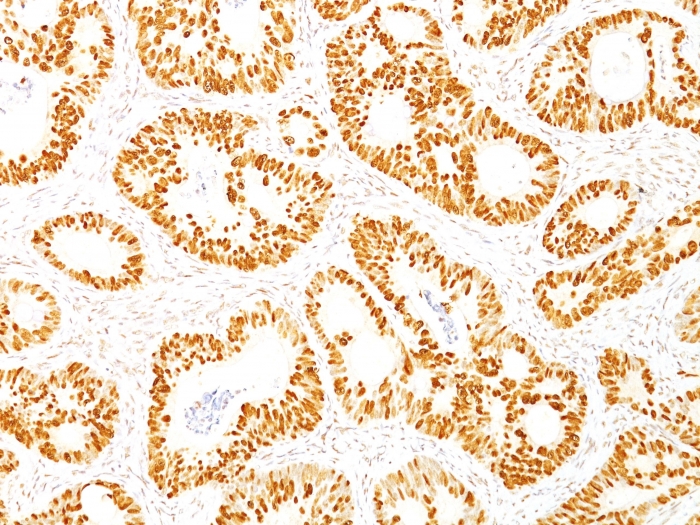
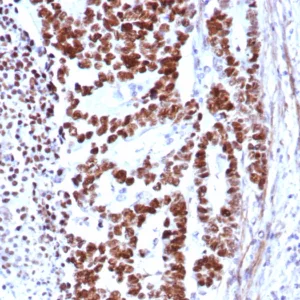
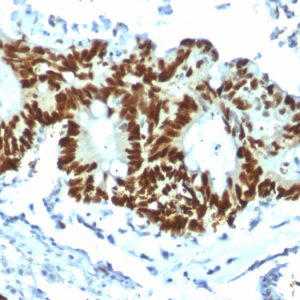
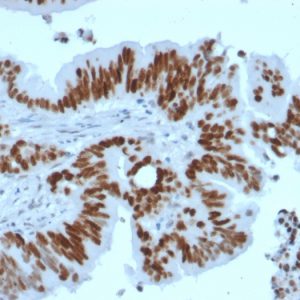
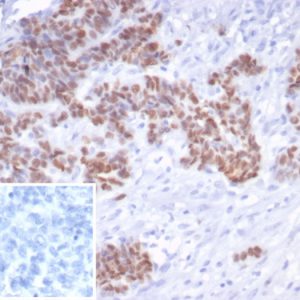
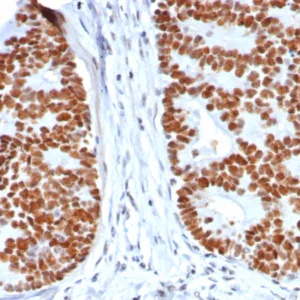
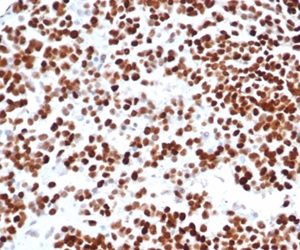
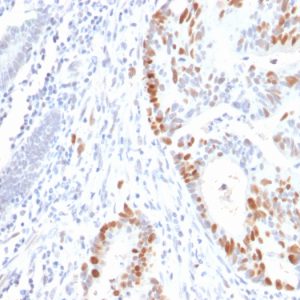
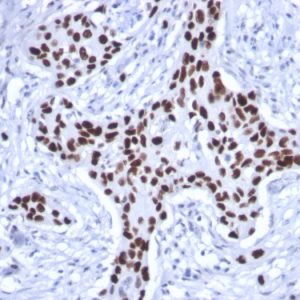
Formalin-fixed, paraffin-embedded human Colon Carcinoma stained with p53 Mouse Monoclonal Antibody (DO-7).
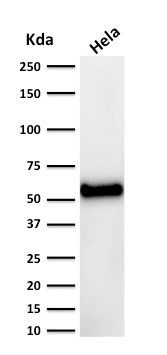
Western Blot Analysis of human HeLa cell lysate using p53 Mouse Monoclonal Antibody (DO-7).
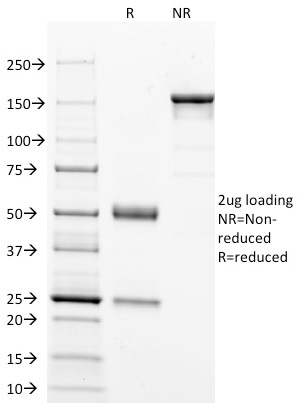
SDS-PAGE Analysis of Purified p53 Mouse Monoclonal Antibody (DO-7). Confirmation of Integrity and Purity of Antibody

SDS-PAGE Analysis of Purified Cellular tumor antigen p53 Recombinant Mouse Monoclonal Antibody (DO-7). Confirmation of Purity and Integrity of Antibody.

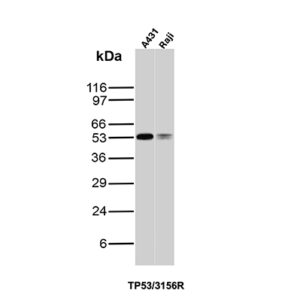
Western Blot Analysis of Raji cell lysate using p53 Mouse Monoclonal Antibody (DO-7).
Recognizes a 53kDa protein, which is identified as p53 suppressor gene product. It reacts with the mutant as well as the wild form of p53. Its epitope maps within the N-terminus (aa 37-45) of p53. Monoclonal antibody PAb1801 does not block the binding of DO-7 MAb to p53 in an ELISA test. p53 is a tumor suppressor gene expressed in a wide variety of tissue types and is involved in regulating cell growth, replication, and apoptosis. It binds to MDM2, SV40 T antigen and human papilloma virus E6 protein. Positive nuclear staining with p53 antibody has been reported to be a negative prognostic factor in breast carcinoma, lung carcinoma, colorectal, and urothelial carcinoma. Anti-p53 positivity has also been used to differentiate uterine serous carcinoma from endometrioid carcinoma as well as to detect intratubular germ cell neoplasia. Mutations involving p53 are found in a wide variety of malignant tumors, including breast, ovarian, bladder, colon, lung, and melanoma.


There are no reviews yet.