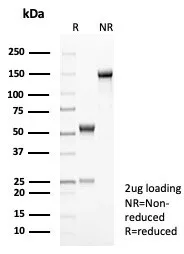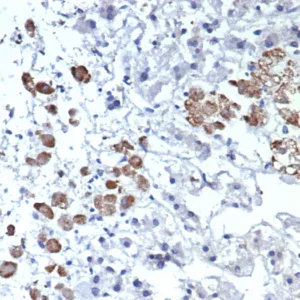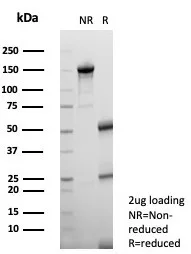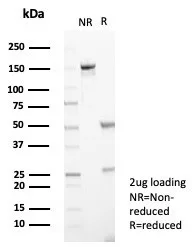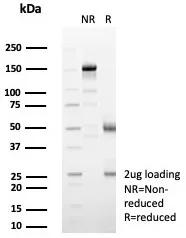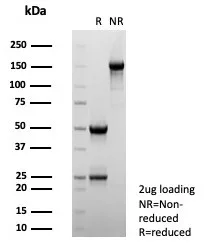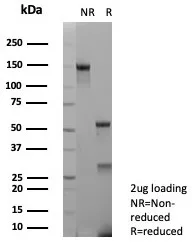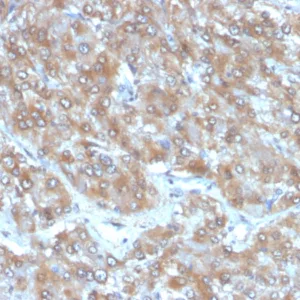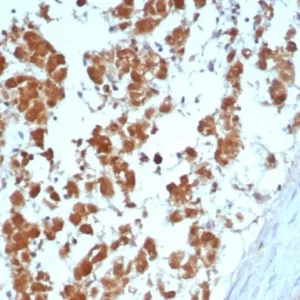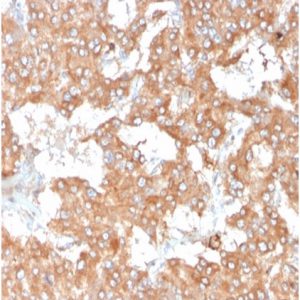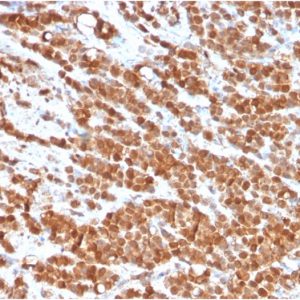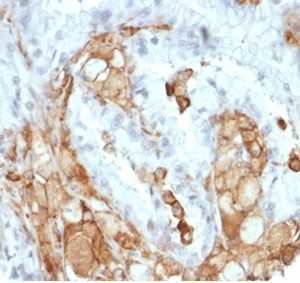


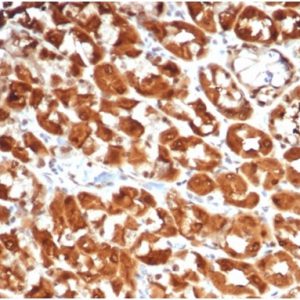
Interleukin-2Â (IL-2) has a molecular weight of approximately 15 kDa and is primarily produced by activated T cells, particularly CD4+ T helper cells and CD8+ cytotoxic T cells. It can also be produced by regulatory T cells (Tregs) and other immune cells. It is a key cytokine that plays a central role in regulating immune responses and also functions as a growth factor for T cells, promoting their proliferation and differentiation.
Interleukin-2 dysregulation is associated with autoimmune diseases like type 1 diabetes and multiple sclerosis, where aberrant immune responses can damage tissue. Additionally, deficiency or dysfunction of this cytokine may contribute to immunodeficiency, making individuals more susceptible to infections. IL-2 is also involved in the immune response to cancer, and therapeutic strategies involving it have been explored for cancer treatment.
Antibodies against IL-2 are used in research to study the expression and function of Interleukin-2 in various biological samples. These antibodies can be used in techniques like ELISA, western blotting, and flow cytometry to detect and quantify it. Clinical applications include its use as a therapeutic agent to boost the immune response against certain cancers, such as metastatic melanoma and renal cell carcinoma. In diagnostics, measuring IL-2 levels may be relevant in assessing immune function or identifying immune-related disorders.
Synonyms
Interleukin-2, IL-2|TCGF|lymphokine
Research Areas
Apoptosis, Autophagy, Breast Cancer, Cancer, Cardiovascular, Cell Biology, Cellular Markers and Tags, Developmental Biology, Endocrine, Epigenetics, Gastrointestinal Tract, Hypoxia, Immuno Oncology, Immunology, Kidney, Lymphatic, Metabolism, Microbiology, Muscle, Neuroscience, Pancreatic Cancer, Prostate Cancer, Skin, Stem Cell, AKT Signaling, Angiogenesis, Articular Cartilage Extracellular Matrix, B Cell Markers, Basal Cell Marker, BBB VCAM-1 Signaling, Bladder Cancer, Cardiac Stem Cells, Colon Cancer, Colorectal Cancer, Complement System, CTLA-4 blockade immunotherapy, Cytokine Signaling, Defective Intrinsic Apoptosis, Dendritic Cell Marker, Digestion, Endothelial Cell Marker, Hematopoietic Stem Cells, Immune checkpoint, Infectious Disease, Lipid Metabolism, Lung Cancer, MAPK Signaling, Mast Cell Marker, Melanoma, Mesenchymal Stem Cell Differentiation, Mitochondria Marker, Neural Stem Cells, Neuroinflammation, Nuclear Marker, Oncology, Ovarian Cancer, PD-1 blockade immunotherapy, Signal Transduction, Stem Cell Differentiation, Transcription Factors