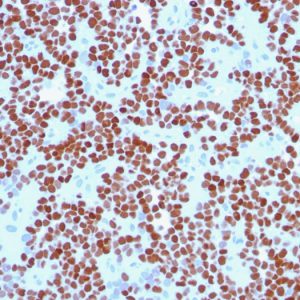
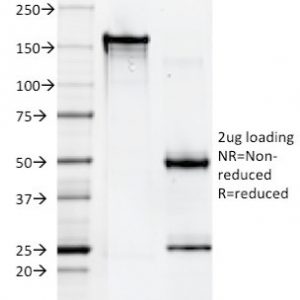
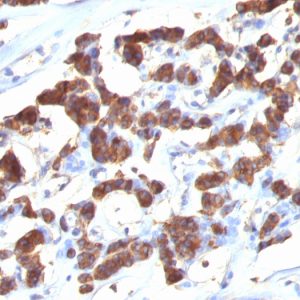
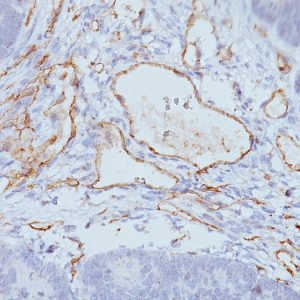
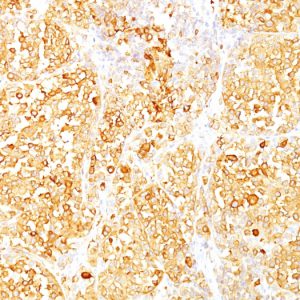
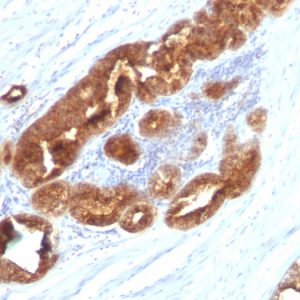
Recombinant SLC7A11 / xCT Antibody [SLC7A11/9136R]

In Stock
Catalog Number Formulation Size Price
23657-RBM3-P0
Purified Ab with BSA and Azide at 200ug/ml
20ug
$259.00
23657-RBM3-P1
Purified Ab with BSA and Azide at 200ug/ml
100ug
$559.00
23657-RBM3-P1ABX
Purified Ab WITHOUT BSA and Azide at 1.0mg/ml
100ug
$559.00
Flat Rate Domestic: $95 | Orders outside the US - Contact Us for Order Information | Ships next business day

Applications & Dilutions

Applications Tested Dillution Protocol Note
Immunohistochemistry (IHC)
1-2ug/ml
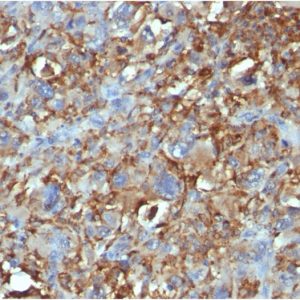
30 min at RT. Staining of formalin-fixed tissues requires heating tissue sections in 10mM Tris with 1mM EDTA, pH 9.0, for 45 min at 95°C followed by cooling at RT for 20 minutes

Summary

xCT, also known as SLC7A11 (solute carrier family 7, (cationic amino acid transporter, y+ system) member 11) or CCBR1, is a 501 amino acid multi-pass membrane protein that belongs to the polyamine-organocation superfamily of amino acid transporters. Existing as a disulfide-linked heterodimer with CD98, xCT functions as a member of a heteromeric Na+-independent anionic amino acid transport system that specifically facilitates the exchange of anionic amino acids for anionic forms of cystine and glutamate, thereby mediating the formation of glutathione within the cell. Due to its involvement in amino acid transport, xCT is associated with the pathogenesis of gliomainduced neurodegeneration and brain edema, as well as pancreatic cancer. The gene encoding xCT maps to human chromosome 4, which encodes nearly 6% of the human genome and has the largest gene deserts (regions of the genome with no protein encoding genes) of all of the human chromosomes.

Product Properties & Targets

Host
Rabbit
Applications
Species Reactivity
Isotype / Light Chain
IgG / Kappa
Cellular Localization
Membrane.
Gene Name
Positive Control
Human small intestine tissue.
Immunogen
Recombinant fragments of human SLC7A11 protein (exact sequence is proprietary)
Alternate Names
Cystine/glutamate transporter, Amino acid transport system xc, -Calcium channel blocker resistance protein CCBR1, Solute carrier family 7 member 11, xCT, Amino acid transport system xc xCT antibody; Calcium channel blocker resistance protein CCBR1; CCBR1; Cystine/glutamate transporter; SLC7A11; Solute carrier family 7, (cationic amino acid transporter, y+ system) member 11; SYSTEM Xc(-) TRANSPORTER-RELATED PROTEIN; xCT

Database Links

Entrez Gene ID
SwissProt

Additional Information

Clone
SLC7A11/9136R
Chromosome Location
4q28.3
Mol. Weight of Antigen
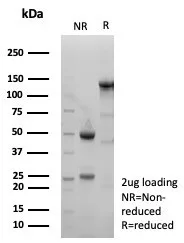
40kDa

Functions

  • Heterodimer with SLC3A2, that functions as an antiporter by mediating the exchange of extracellular anionic L-cystine and intracellular L-glutamate across the cellular plasma membrane (PubMed:15151999, PubMed:34880232, PubMed:35352032, PubMed:35245456, PubMed:11417227, PubMed:14722095, PubMed:11133847). Provides L-cystine for the maintenance of the redox balance between extracellular L-cystine and L-cysteine and for the maintenance of the intracellular levels of glutathione that is essential for cells protection from oxidative stress (By similarity). The transport is sodium-independent, electroneutral with a stoichiometry of 1:1, and is drove by the high intracellular concentration of L-glutamate and the intracellular reduction of L-cystine (PubMed:11417227, PubMed:11133847). In addition, mediates the import of L-kynurenine leading to anti-ferroptotic signaling propagation required to maintain L-cystine and glutathione homeostasis (PubMed:35245456). Moreover, mediates N-acetyl-L-cysteine uptake into the placenta leading to subsequently down-regulation of pathways associated with oxidative stress, inflammation and apoptosis (PubMed:34120018). In vitro can also transport L-aspartate (PubMed:11417227). May participate in astrocyte and meningeal cell proliferation during development and can provide neuroprotection by promoting glutathione synthesis and delivery from non-neuronal cells such as astrocytes and meningeal cells to immature neurons (By similarity). Controls the production of pheomelanin pigment directly (By similarity).

Key References

  • Jiang H et.al. J Cancer Res Clin Oncol. 2012 Jan;138(1):1-9

Storage & Stability

Antibody with azide - store at 2 to 8°C. Antibody without azide - store at -20 to -80°C. Antibody is stable for 24 months. Non-hazardous. No MSDS required.

Limitations

This antibody is available for research use only and is not approved for use in diagnosis.

Supplied as

200ug/ml of Ab purified from Bioreactor Concentrate by Protein A/G. Prepared in 10mM PBS with 0.05% BSA & 0.05% azide. Also available WITHOUT BSA & azide at 1.0mg/ml.

Warranty

There are no warranties, expressed or implied, which extend beyond this description. Company is not liable for any personal injury or economic loss resulting from this product.

Reviews

There are no reviews yet.

Be the first to review “Recombinant SLC7A11 / xCT Antibody”

Your email address will not be published. Required fields are marked *

PARTNERSHIP OPPORTUNITIES

NeoBiotechnologies holds Exclusive rights to 10,000 recombinant and hybridoma antibody products, available for Licensing or Collaboration.

LETS TALK