
PARTNERSHIP OPPORTUNITIES


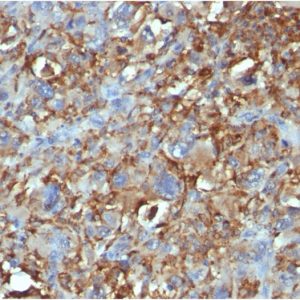
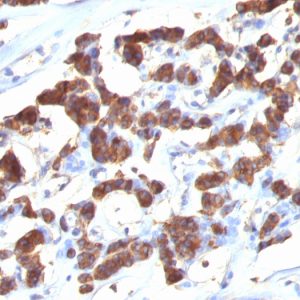
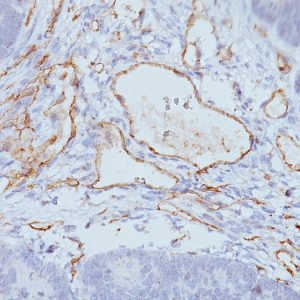
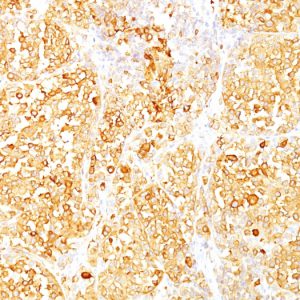
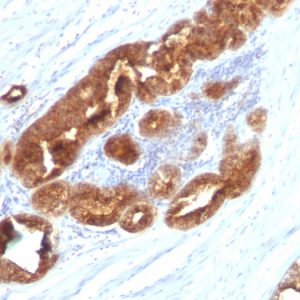
Formalin-fixed, paraffin-embedded human placenta stained with Fetuin / AHSG Mouse Monoclonal Antibody (AHSG/3748) at 2ug/ml. Inset: PBS instead of primary antibody; secondary only negative control.
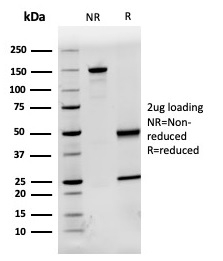
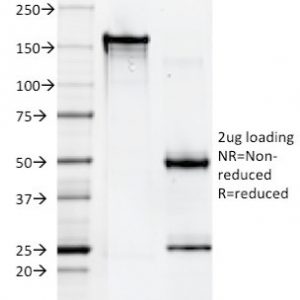
SDS-PAGE Analysis of Purified Fetuin / AHSG Mouse Monoclonal Antibody (AHSG/3748). Confirmation of Purity and Integrity of Antibody.
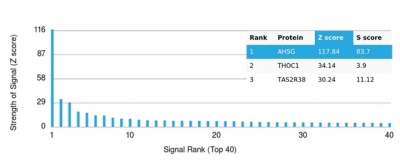
Analysis of Protein Array containing more than 19,000 full-length human proteins using Fetuin / AHSG Monospecific Mouse Monoclonal Antibody (AHSG/3748). Z- and S- Score: The Z-score represents the strength of a signal that a monoclonal antibody (MAb) (in combination with a fluorescently-tagged anti-IgG secondary antibody) produces when binding to a particular protein on the HuProtTM array. Z-scores are described in units of standard deviations (SD's) above the mean value of all signals generated on that array. If targets on HuProtTM are arranged in descending order of the Z-score, the S-score is the difference (also in units of SD's) between the Z-score. S-score therefore represents the relative target specificity of a MAb to its intended target. A MAb is considered to specific to its intended target, if the MAb has an S-score of at least 2.5. For example, if a MAb binds to protein X with a Z-score of 43 and to protein Y with a Z-score of 14, then the S-score for the binding of that MAb to protein X is equal to 29.
Fetuin (also designated 伪2-z-globulin or 伪2-HS-glycoprotein) is a secreted plasma protein that is expressed in hepatocytes, monocyte/macrophages and in bone and is downregulated during injury and inflammation. Fetuin preferentially binds to and carries calcium and barium ions in the blood, where it is thought to mediate serum calcium homeostasis and mineralization, and to potentially participate in the transport of bioactive molecules. Additionally, fetuin has been shown to function as an acute phase anti-inflammatory mediator that is critical to regulating the innate immune response following tissue injury. During inflammation, circulating fetuin levels substantially decrease as fetuin becomes associated with the membranes of macrophages. This membrane associated form of fetuin acts as an opsonic participant by potentiating the entry of cationic small molecules into the activated macro-phage, which in turn facilitates macrophage-deactivating mechanisms. Biologically active fetuin is derived from a precursor protein that is cleaved at the aminoterminus to generate two chains held together by a single disulfide bond.


There are no reviews yet.