
PARTNERSHIP OPPORTUNITIES

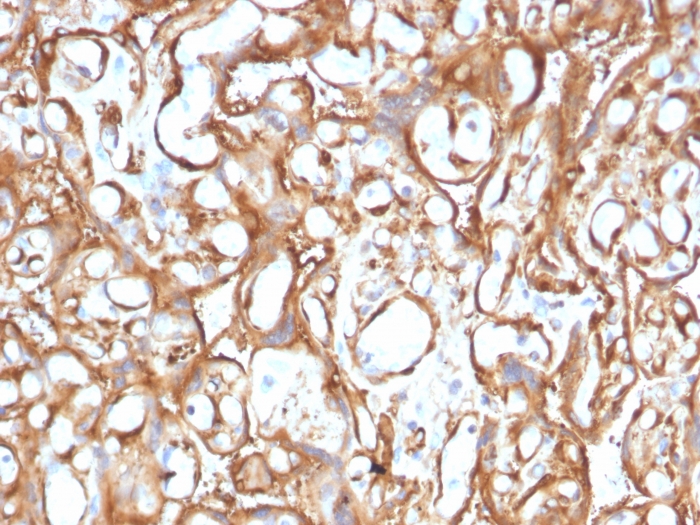
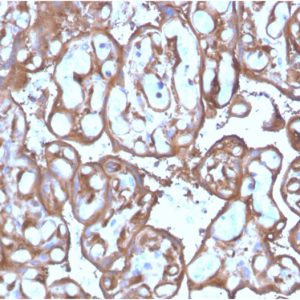
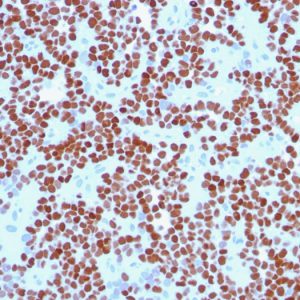
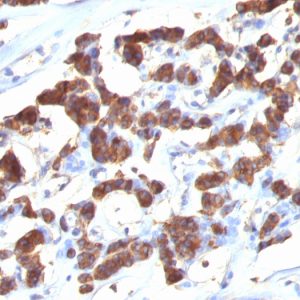
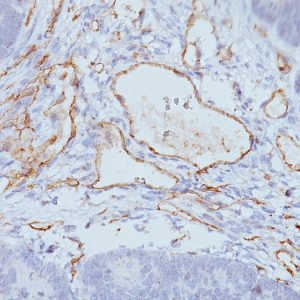
Formalin-fixed, paraffin-embedded human Placenta stained with Ezrin Mouse Monoclonal Antibody (CPTC-Ezrin-1).
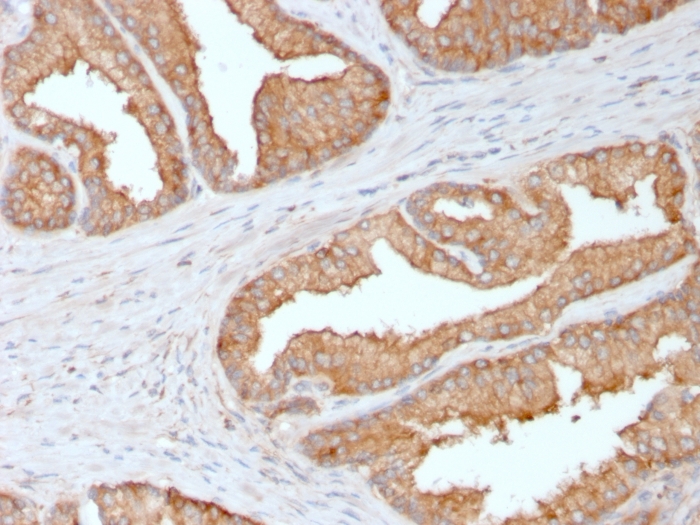
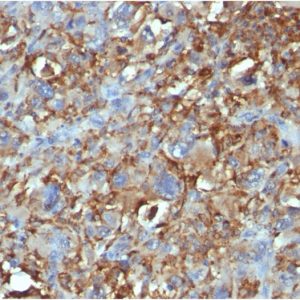
Formalin-fixed, paraffin-embedded human Prostate Carcinoma stained with Ezrin Mouse Monoclonal Antibody (CPTC-Ezrin-1).
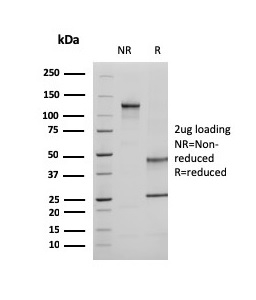
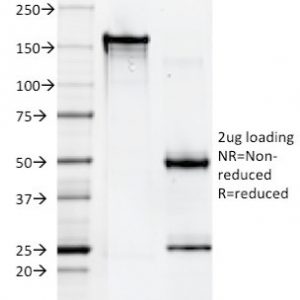
SDS-PAGE Analysis of Purified Ezrin Mouse Monoclonal Antibody (CPTC-Ezrin-1). Confirmation of Purity and Integrity of Antibody.
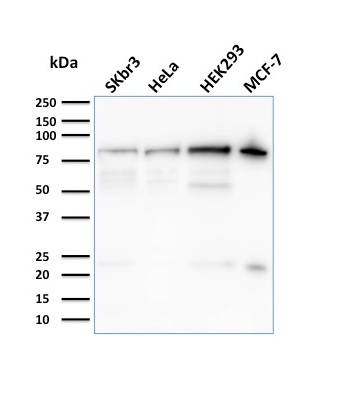
Western Blot Analysis of SKBr-3, HeLa, HEK293, MCF-7 Cell lysates using Ezrin Mouse Monoclonal Antibody (CPTC-Ezrin-1).
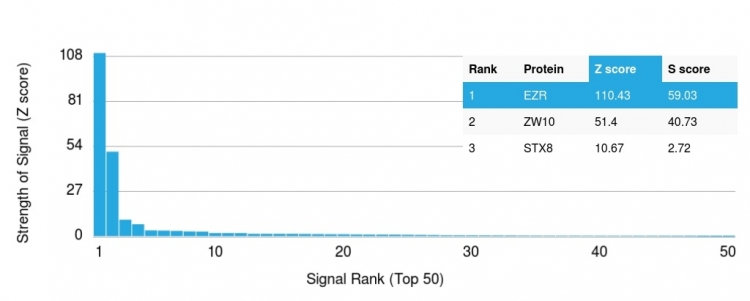
Analysis of Protein Array containing more than 19,000 full-length human proteins using Ezrin / p81 Mouse Monoclonal Antibody (CPTC-Ezrin-1). Z- and S- Score: The Z-score represents the strength of a signal that a monoclonal antibody (MAb) (in combination with a fluorescently-tagged anti-IgG secondary antibody) produces when binding to a particular protein on the HuProtTM array. Z-scores are described in units of standard deviations (SD's) above the mean value of all signals generated on that array. If targets on HuProtTM are arranged in descending order of the Z-score, the S-score is the difference (also in units of SD's) between the Z-score. S-score therefore represents the relative target specificity of a MAb to its intended target. A MAb is considered to specific to its intended target, if the MAb has an S-score of at least 2.5. For example, if a MAb binds to protein X with a Z-score of 43 and to protein Y with a Z-score of 14, then the S-score for the binding of that MAb to protein X is equal to 29.
Ezrin, Moesin and Radixin belong to a family of highly homologous actin-associated proteins that are localized just beneath the plasma membrane. The proteins are believed to be involved in the mediation of interactions between cytoskeletal and membrane proteins. Ezrin serves as a major cytoplasmic substrate of various protein-tyrosine kinases, including the epidermal growth factor receptor. Ezrin has also been identified as a cAMP-dependent protein kinase (A-kinase) anchoring protein and designated AKAP78. Moesin and Radixin share over 70% homology with Ezrin and are co-expressed within various cell types. Despite the high degree of homology, the three proteins exhibit a distinct receptor-specific pattern of phosphorylation. Overexpression of Ezrin predicts the poor prognosis of gastric adenocarcinoma.


There are no reviews yet.