PARTNERSHIP OPPORTUNITIES

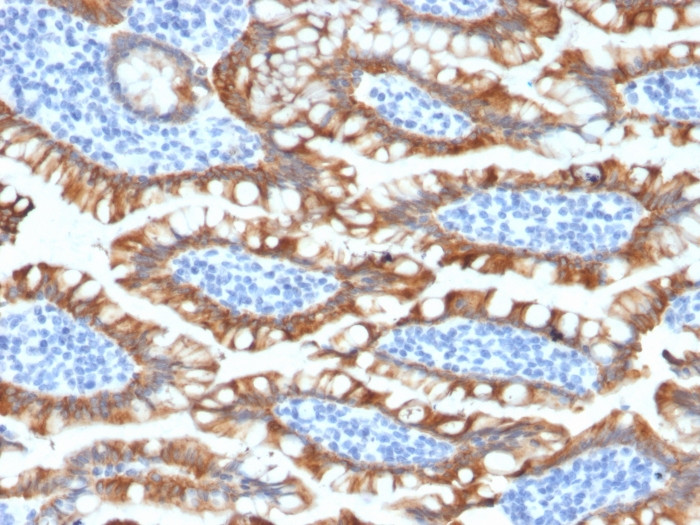
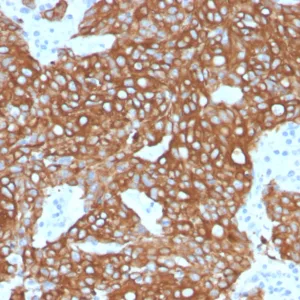
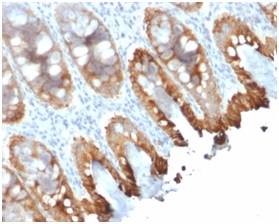
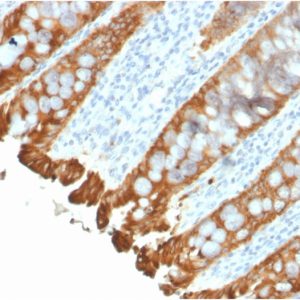
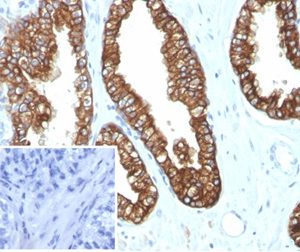
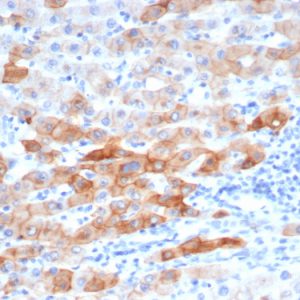
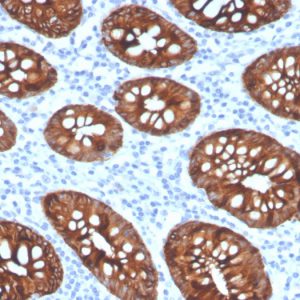
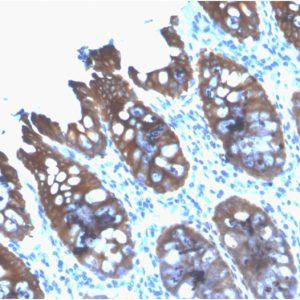
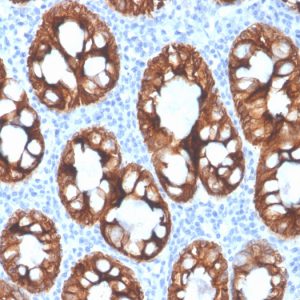
Formalin-fixed, paraffin-embedded human Small Intestine stained with Cytokeratin 8 Rabbit Recombinant Monoclonal Antibody (KRT8/2174R).
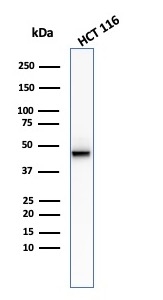
Western Blot analysis of HCT116 cell lysate using Cytokeratin 8 Rabbit Recombinant Monoclonal Antibody (KRT8/2174R).

Western blot analysis of Human Stomach, Human Intestine, and HCT 116 lysates using Cytokeratin 8 Recombinant Rabbit Monoclonal Antibody (KRT8/2174R).
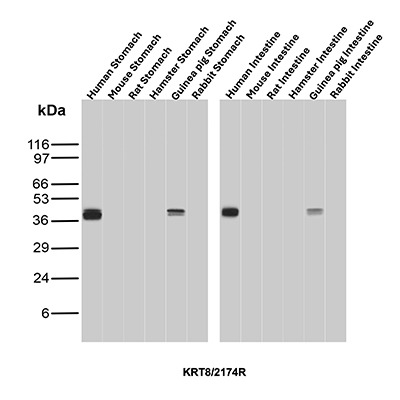
Western blot analysis of Human Stomach, Mouse Stomach, Rat Stomach, Hamster Stomach, Guinea pig Stomach, Rabbit Stomach, Human Intestine, Mouse Intestine, Rat Intestine, Hamster Intestine, Guinea pig Intestine and Rabbit Intestine tissue lysates using Cytokeratin 8 Recombinant Rabbit Monoclonal Antibody (KRT8/2174R).

SDS-PAGE Analysis of Purified Keratin, type II cytoskeletal 8 Recombinant Rabbit Monoclonal Antibody (KRT8/2174R). Confirmation of Purity and Integrity of Antibody.
Cytokeratin 8 (CK8) belongs to the type II (or B or basic) subfamily of high molecular weight cytokeratins and exists in combination with cytokeratin 18 (CK18). CK8 is primarily found in the non-squamous epithelia and is present in majority of adenocarcinomas and ductal carcinomas. It is absent in squamous cell carcinomas. Hepatocellular carcinomas are defined by the use of antibodies that recognize only cytokeratin 8 and 18. CK8 exists on several types of normal and neoplastic epithelia, including many ductal and glandular epithelia such as colon, stomach, small intestine, trachea, and esophagus as well as in transitional epithelium. Anti-CK8 does not react with skeletal muscle or nerve cells. Epithelioid sarcoma, chordoma, and adamantinoma show strong positivity corresponding to that of simple epithelia (with antibodies against CK8, CK18 and CK19). Reportedly, anti-CK8 is useful for the differentiation of lobular (‘ring-like, perinuclear’) from ductal (‘peripheral-predominant’) carcinoma of the breast.


There are no reviews yet.