
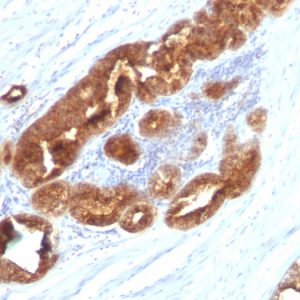
PARTNERSHIP OPPORTUNITIES

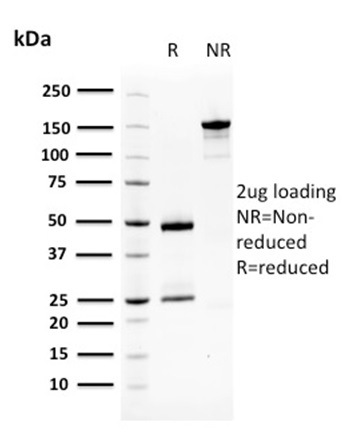
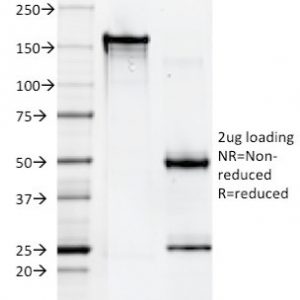
SDS-PAGE Analysis of Purified SqCC Antigen 1 Mouse Monoclonal Antibody (CPTC-SERPINB3-2). Confirmation of Purity and Integrity of Antibody.

Analysis of Protein Array containing more than 19,000 full-length human proteins using SqCC Antigen 1 Mouse Monoclonal Antibody (CPTC-SERPINB3-2). Z- and S- Score: The Z-score represents the strength of a signal that a monoclonal antibody (Monoclonal Antibody) (in combination with a fluorescently-tagged anti-IgG secondary antibody) produces when binding to a particular protein on the HuProtTM array. Z-scores are described in units of standard deviations (SD's) above the mean value of all signals generated on that array. If targets on HuProtTM are arranged in descending order of the Z-score, the S-score is the difference (also in units of SD's) between the Z-score. S-score therefore represents the relative target specificity of a Monoclonal Antibody to its intended target. A Monoclonal Antibody is considered to specific to its intended target, if the Monoclonal Antibody has an S-score of at least 2.5. For example, if a Monoclonal Antibody binds to protein X with a Z-score of 43 and to protein Y with a Z-score of 14, then the S-score for the binding of that Monoclonal Antibody to protein X is equal to 29.

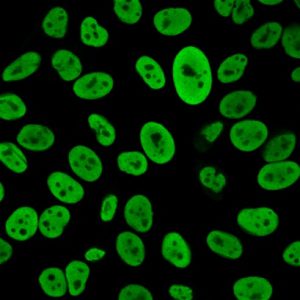
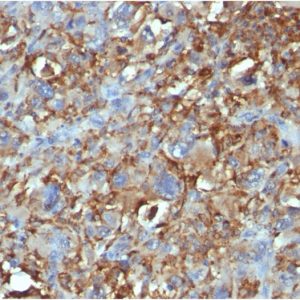
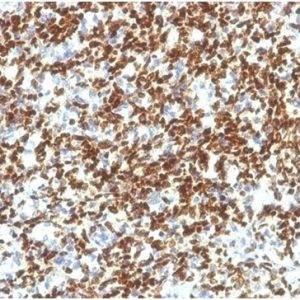
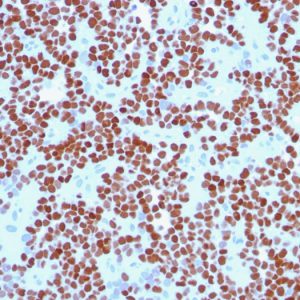
Western Blot Analysis of A-431 lysate using SERPINB3 Mouse Monoclonal Antibody (CPTC-SERPINB3-2).
Metastasis of a primary tumor to a distant site is determined through signaling cascades that break down interactions between the cell and extracellular matrix proteins. Among the proteins mediating metastasis are serine proteases, such as neutrophil elastase. Serpins are family of serine protease inhibitors, contain a stretch of peptide that mimics a true substrate for a corresponding serine protease. Serine proteases bind to this substrate mimic in a 1:1 stoichiometric fashion and become catalytically inactive. Aberrant expression of serpin family members can contribute to a number of conditions, including emphysema (-1 antitrypsin deficiency), fatal bleeding (elastase to Thrombin specificity) and thrombosis (antithrombin deficiency), and are indicators of cancer stage phenotypes (circulating levels of squamous cell carcinoma antigen, known as SCCA1, increase in advancing stages of some cervical, lung, esophageal and head and neck cancers). SCCA1 expression has been demonstrated to promote oncogenic transformation and epithelial-mesenchymal transition (EMT) in mammary epithelial cells, and its silencing in breast cancer cells has been shown to halt their proliferation.


There are no reviews yet.