
PARTNERSHIP OPPORTUNITIES


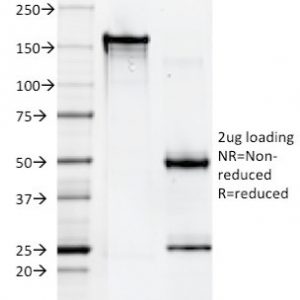
SDS-PAGE Analysis of Purified RAC1Mouse Monoclonal Antibody (CPTC-RAC1-1). Confirmation of Integrity and Purity of Antibody.

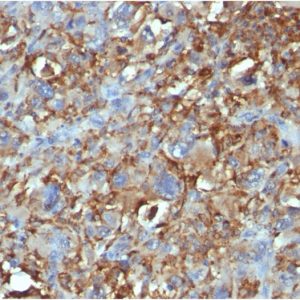
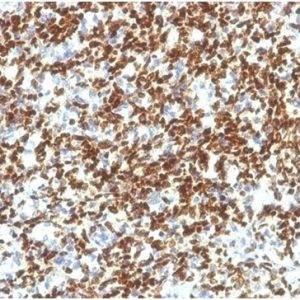
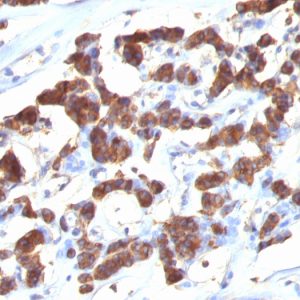
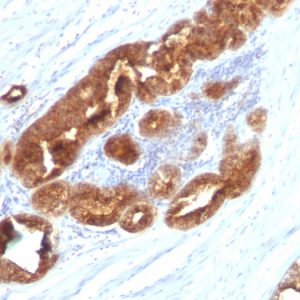
Formalin-fixed, paraffin-embedded human lung stained with RAC1Mouse Monoclonal Antibody (CPTC-RAC1-1).

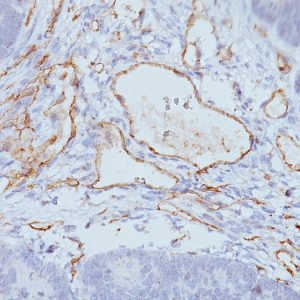
Formalin-fixed, paraffin-embedded human lung stained with RAC1Mouse Monoclonal Antibody (CPTC-RAC1-1).

Analysis of Protein Array containing more than 19,000 full-length human proteins using Ras-related C3 botulinum toxin substrate 1Monoclonal Antibody (CPTC-RAC1-1).Z- and S- Score: The Z-score represents the strength of a signal that a monoclonal antibody (MAb) (in combination with a fluorescently-tagged anti-IgG secondary antibody) produces when binding to a particular protein on the HuProtTM array. Z-scores are described in units of standard deviations (SD's) above the mean value of all signals generated on that array. If targets on HuProtTM are arranged in descending order of the Z-score, the S-score is the difference (also in units of SD's) between the Z-score. S-score therefore represents the relative target specificity of a MAb to its intended target. A MAb is considered to specific to its intended target, if the MAb has an S-score of at least 2.5. For example, if a MAb binds to protein X with a Z-score of 43 and to protein Y with a Z-score of 14, then the S-score for the binding of that MAb to protein X is equal to 29.
Plasma membrane-associated small GTPase which cycles between active GTP-bound and inactive GDP-bound states. In its active state, binds to a variety of effector proteins to regulate cellular responses such as secretory processes, phagocytosis of apoptotic cells, epithelial cell polarization and growth-factor induced formation of membrane ruffles. Rac1 p21/rho GDI heterodimer is the active component of the cytosolic factor sigma 1, which is involved in stimulation of the NADPH oxidase activity in macrophages (By similarity). Essential for the SPATA13-mediated regulation of cell migration and adhesion assembly and disassembly. Rac1 has been demonstrated to play a critical role in tumor progression of human colorectal adenocarcinoma cells. In one study, overexpression of Rac1 accelerated the tumorigenic process, whereas Rac1 inhibition completed suppressed tumor formation.


There are no reviews yet.