
PARTNERSHIP OPPORTUNITIES

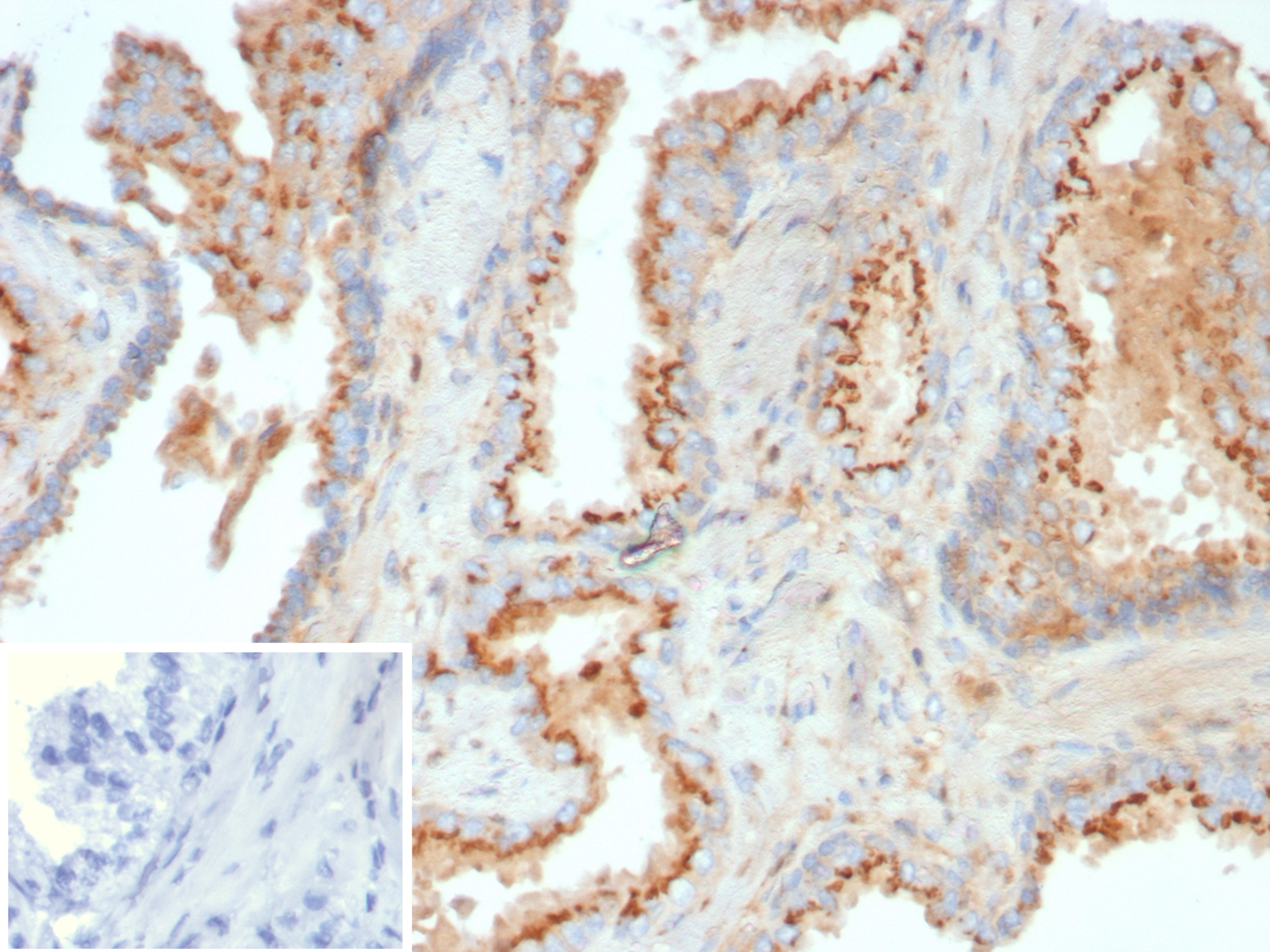
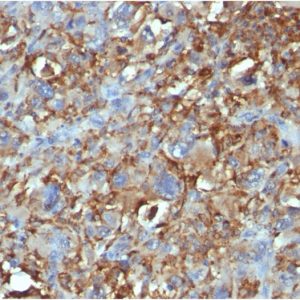
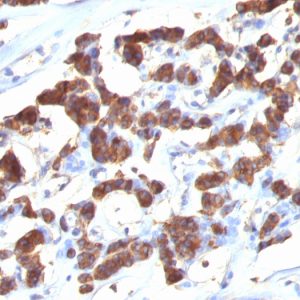
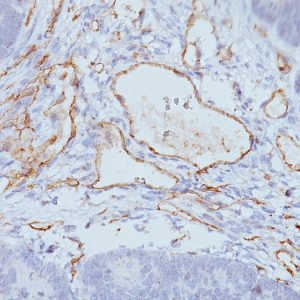
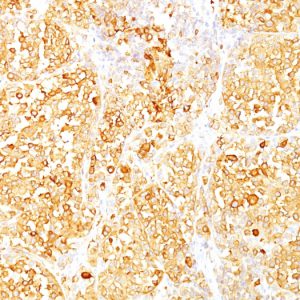
Formalin-fixed, paraffin-embedded human prostate stained with Galectin-9 Mouse Monoclonal Antibody (LGALS9/7689). Inset: PBS instead of primary antibody; secondary only negative control.
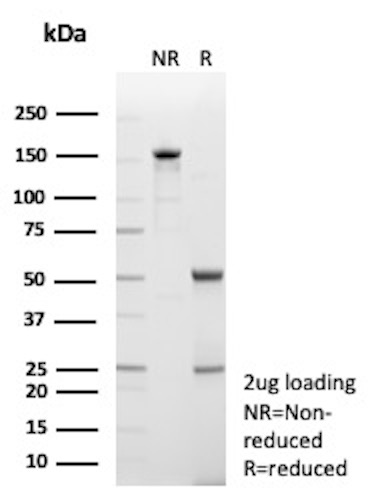
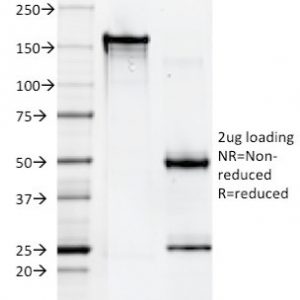
SDS-PAGE Analysis of Purified Galectin-9 Mouse Monoclonal Antibody (LGALS9/7689). Confirmation of Purity and Integrity of Antibody.
Galectins are a family of soluble β-galactoside-binding animal lectins that modulate cell-to-cell adhesion and cell-to-extracellular matrix (ECM) interactions and play a role in tumor progression, pre-mRNA splicing and apoptosis. One member of this family, Galectin-9, also known as Ecalectin, Gal-9, hUAT2, HOM-HD-21 or LGALS9, maps to human chromosome 17 and encodes a 36 kDa protein. Galectin-9 is an integral membrane protein that exists as two isoforms, a long form and a short form, which differ by an internal stretch of 32 amino acids. Galectin-9 is an eosinophile chemoattractant produced by activated T lymphocytes that is expressed in organs of the gastrointestinal tract, aorta, liver, kidney, liver, pancreatic islets, lung, tonsil and some colorectal carcinoma, and in the cell lines HUVEC, U-937, HL60, HeLa and Jurkat. Introduction of IL-1beta enhances Galectin-9 expression. Increased expression of Galectin-9 induces apoptosis in thymocytes and CD8+ cells. Galectin-9 is involved in immuno/inflammation processes in potential-sensitive uric acid translocation and contributes to inflammatory reactions in the central nervous system (CNS).


There are no reviews yet.