
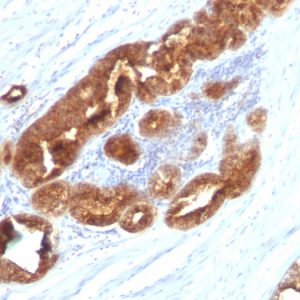
PARTNERSHIP OPPORTUNITIES

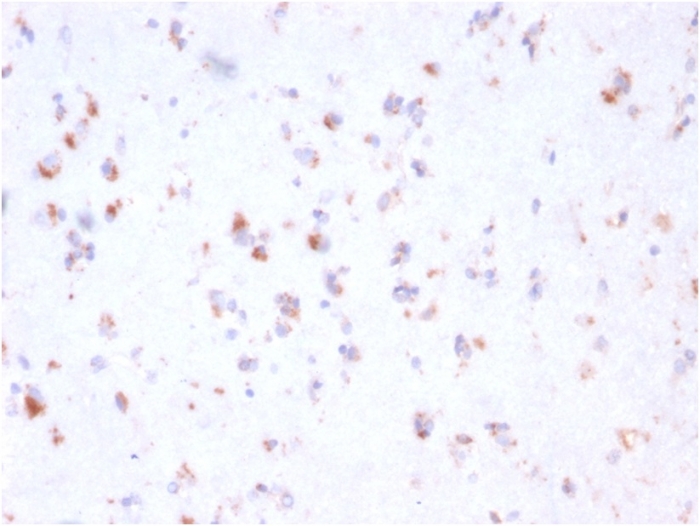
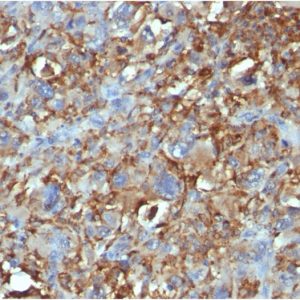
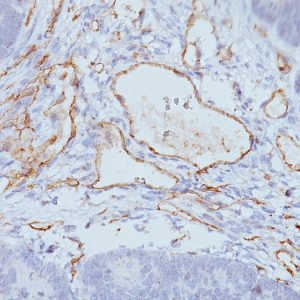
Formalin-fixed, paraffin-embedded human Cerebellum stained with FCGRT Mouse Monoclonal Antibody (FCGRT/2932).
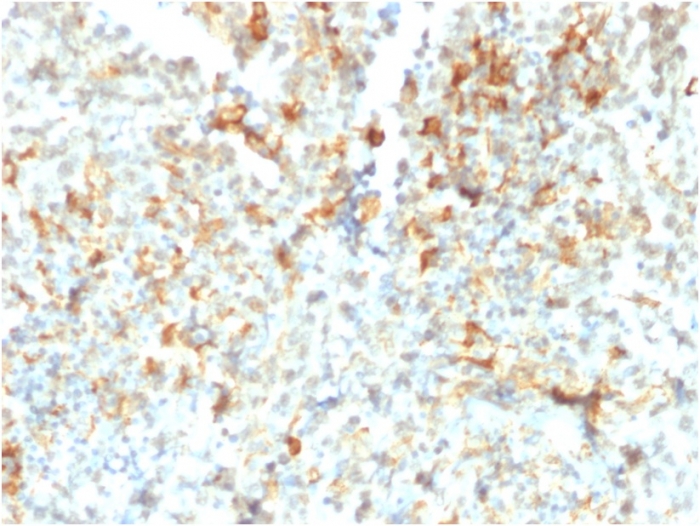
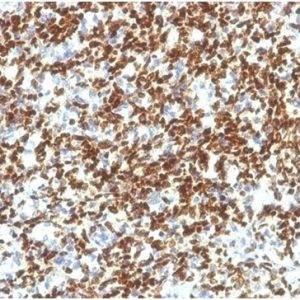
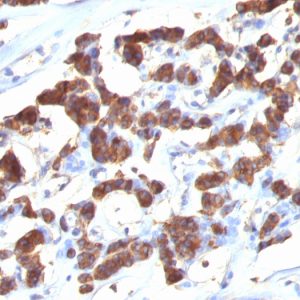
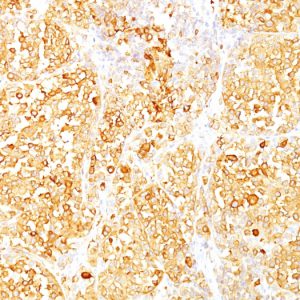
Formalin-fixed, paraffin-embedded human Testicular Cancer stained with FCGRT Mouse Monoclonal Antibody (FCGRT/2932).

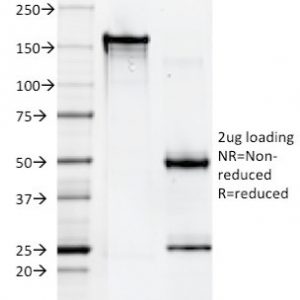
SDS-PAGE Analysis of Purified FCGRT Mouse Monoclonal Antibody (FCGRT/2932). Confirmation of Integrity and Purity of Antibody.

Analysis of Protein Array containing >19,000 full-length human proteins using FCGRT Mouse Monoclonal Antibody (FCGRT/2932) Z- and S- Score: The Z-score represents the strength of a signal that a monoclonal antibody (MAb) (in combination with a fluorescently-tagged anti-IgG secondary antibody) produces when binding to a particular protein on the HuProtTM array. Z-scores are described in units of standard deviations (SD's) above the mean value of all signals generated on that array. If targets on HuProtTM are arranged in descending order of the Z-score, the S-score is the difference (also in units of SD's) between the Z-score. S-score therefore represents the relative target specificity of a MAb to its intended target. A MAb is considered to specific to its intended target, if the MAb has an S-score of at least 2.5. For example, if a MAb binds to protein X with a Z-score of 43 and to protein Y with a Z-score of 14, then the S-score for the binding of that MAb to protein X is equal to 29.
This gene encodes a receptor that binds the Fc region of monomeric immunoglobulin G. FCGRT is present in the intestinal epithelium of neonates and mediates the selective uptake of immunoglobulin G (IgG) in mothers’ milk, thereby helping newborn to acquire passive immunity. FCGRT is comprised of a heavy chain and -2-Microglobulin. FCGRT localizes in endosomes of vascular endothelial cells and selectively recycles IgG to the cell surface, thus protecting IgG from lysosomal degradation.


There are no reviews yet.