
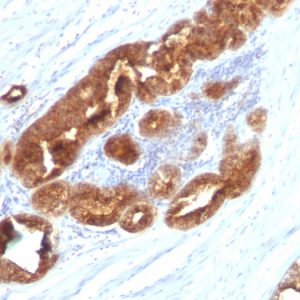
PARTNERSHIP OPPORTUNITIES

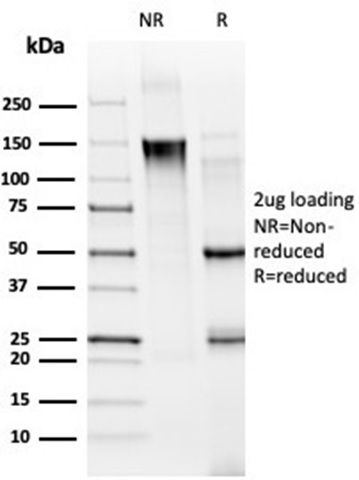
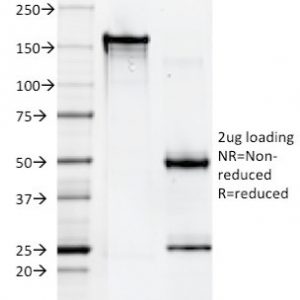
SDS-PAGE Analysis. Purified MED21 Mouse Monoclonal Antibody (PCRP-MED21-4B5). Confirmation of Purity and Integrity of Antibody
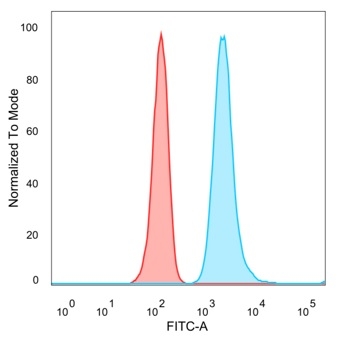
Flow cytometric analysis of PFA-fixed HeLa cells. MED21 Mouse Monoclonal Antibody (PCRP-MED21-4B5) followed by goat anti-mouse IgG-CF488 (blue); unstained cells (red).
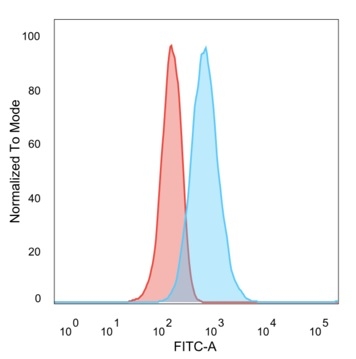
Flow cytometric analysis of PFA-fixed U87 cells. MED21 Mouse Monoclonal Antibody (PCRP-MED21-4B5) followed by goat anti-mouse IgG-CF488 (blue); unstained cells (red).
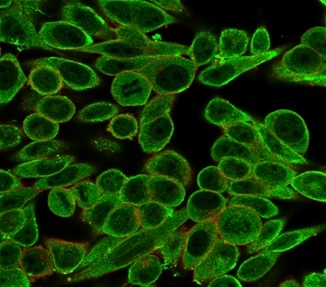
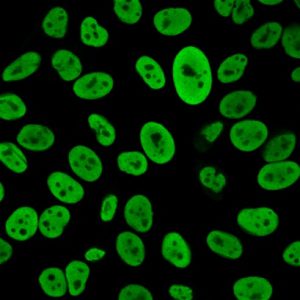
Immunofluorescence Analysis of PFA-fixed HeLa cells stained using MED21 Mouse Monoclonal Antibody (PCRP-MED21-4B5) followed by goat anti-mouse IgG-CF488. Membrane stained with phalloidin.
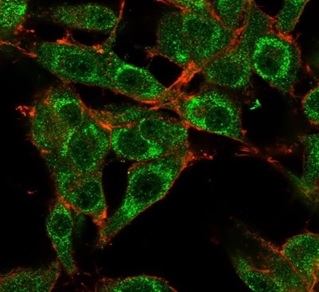
Immunofluorescence Analysis of PFA-fixed U87 cells stained using MED21 Mouse Monoclonal Antibody (PCRP-MED21-4B5) followed by goat anti-mouse IgG-CF488. Membrane stained with phalloidin.
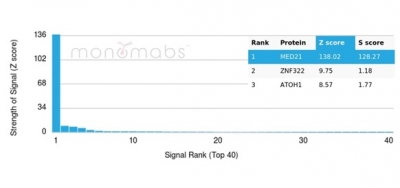
Analysis of Protein Array containing more than 19,000 full-length human proteins using MED21 Mouse Monoclonal Antibody (PCRP-MED21-4B5. Z- and S- Score: The Z-score represents the strength of a signal that a monoclonal antibody (MAb) (in combination with a fluorescently-tagged anti-IgG secondary antibody) produces when binding to a particular protein on the HuProtTM array. Z-scores are described in units of standard deviations (SD's) above the mean value of all signals generated on that array. If targets on HuProtTM are arranged in descending order of the Z-score, the S-score is the difference (also in units of SD's) between the Z-score. S-score therefore represents the relative target specificity of a MAb to its intended target. A MAb is considered to specific to its intended target, if the MAb has an S-score of at least 2.5. For example, if a MAb binds to protein X with a Z-score of 43 and to protein Y with a Z-score of 14, then the S-score for the binding of that MAb to protein X is equal to 29.
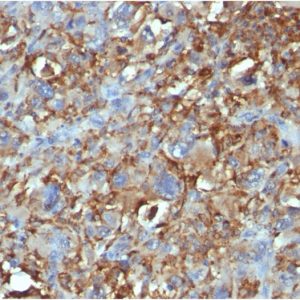
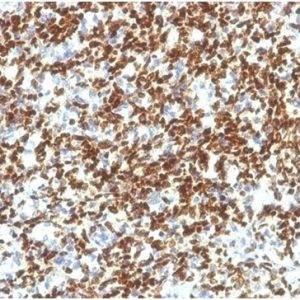
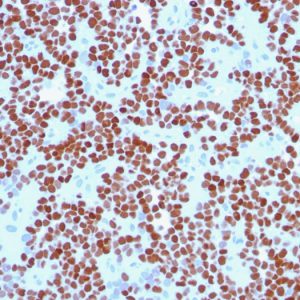
In mammalian cells, transcription is regulated in part by high molecular weight coactivating complexes that mediate signals between transcriptional activators and RNA polymerase. These complexes include the SMCC (SRB and MED protein cofactor complex), which consists of various subunits that share homology with several components of the yeast transcriptional mediator complexes and including the human proteins Srb7, Med6 (also designated DRIP33) and Med7 (also designated DRIP34). SMCC associates with the RNAPII (RNA polymerase II) holoenzyme through Srb7 and, in turn, enhances gene-specific activation or repression induced by DNA-binding transcription factors. Med6 and Med7, as well as other components of SMCC, associate with co-activator proteins from the TRAP (thyroid hormone receptor-activating protein) complex and DRIP (for vitamin D receptor interacting protein) complex to facilitate steroid receptor dependent transcriptional activation. Additionally, SMCC associates with PC4 (positive cofactor 4) to repress basal transcription independent of RNAPII activity


There are no reviews yet.