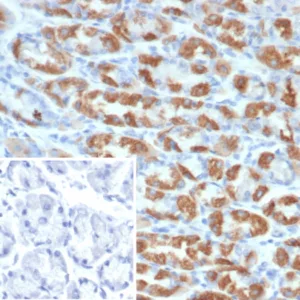
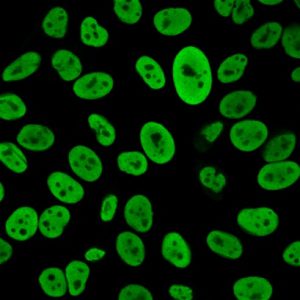
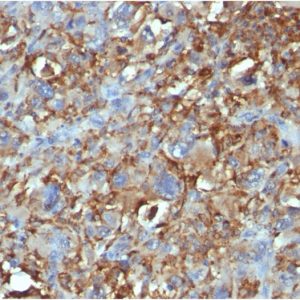
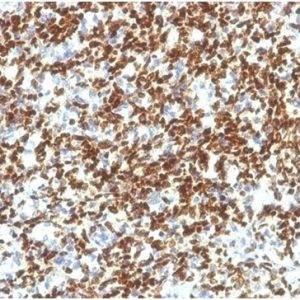
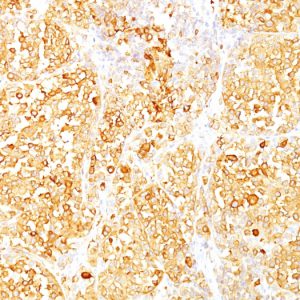
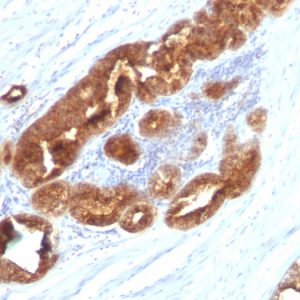
Recombinant Thrombospondin-1 Antibody [THBS1/13474R]

In Stock
Catalog Number Formulation Size Price
7057-RBM4-P0
Purified Ab with BSA and Azide at 200ug/ml
20ug
$259.00
7057-RBM4-P1
Purified Ab with BSA and Azide at 200ug/ml
100ug
$559.00
7057-RBM4-P1ABX
Purified Ab WITHOUT BSA or Azide at 1.0mg/ml
100ug
$559.00
Flat Rate Domestic: $95 | Orders outside the US - Contact Us for Order Information | Ships next business day

Applications & Dilutions

Applications Tested Dillution Protocol
Flow Cytometry (Flow)
1-2ug/million cells
Immunofluorescence (IF)
1-3ug/ml
Western Blot (WB)
2-4ug/ml

Summary

Adhesive glycoprotein that mediates cell-to-cell and cell-to-matrix interactions (PubMed:15014436, PubMed:18285447, PubMed:2430973, PubMed:6489349). Multifunctional, involved in inflammation, angiogenesis, wound healing, reactive oxygen species (ROS) signaling, nitrous oxide (NO) signaling, apoptosis, senescence, aging, cellular self-renewal, stemness, and cardiovascular and metabolic homeostasis (PubMed:10613822, PubMed:11134179, PubMed:1371676, PubMed:14568985, PubMed:24511121, PubMed:29042481, PubMed:32679764). Negatively modulates dendritic cell activation and cytokine release, as part of an autocrine feedback loop, contributing to the resolution of inflammation and immune homeostasis (PubMed:14568985). Ligand for receptor CD47 (PubMed:19004835, PubMed:8550562). Modulates nitrous oxide (NO) signaling via CD47, hence playing a role as a pressor agent, supporting blood pressure (By similarity). Plays a role in endothelial cell senescence, acting via CD47, by increasing the abundance and activation of NADPH oxidase NOX1, and so generating excess ROS (PubMed:29042481). Inhibits stem cell self-renewal, acting via CD47 signaling, probably by regulation of the stem cell transcription factors POU5F1/OCT4, SOX2, MYC/c-Myc and KLF4 (By similarity). Negatively modulates wound healing, acting via CD47 (By similarity). Ligand for receptor CD36 (PubMed:10613822, PubMed:11134179, PubMed:1371676). Involved in inducing apoptosis in podocytes in response to elevated free fatty acids, acting via CD36 (By similarity). Plays a role in suppressing angiogenesis, acting, depending on context, via CD36 or CD47 (PubMed:10613822, PubMed:11134179, PubMed:1371676, PubMed:32679764). Promotes cellular senescence in a TP53-CDKN1A-RB1 signaling-dependent manner (PubMed:29042481). Ligand for immunoglobulin-like cell surface receptor SIRPA (PubMed:24511121). Involved in ROS signaling in non-phagocytic cells, stimulating NADPH oxidase-derived ROS production, acting via interaction with SIRPA (PubMed:24511121). Plays a role in metabolic dysfunction in diet-induced obesity, perhaps acting by exacerbating adipose inflammatory activity; its effects may be mediated, at least in part, through enhanced adipocyte proliferation (By similarity). Plays a role in ER stress response, via its interaction with the activating transcription factor 6 alpha (ATF6) which produces adaptive ER stress response factors (By similarity). May be involved in age-related conditions, including metabolic dysregulation, during normal aging (PubMed:29042481, PubMed:32679764).

Product Properties & Targets

Host
Rabbit
Species Reactivity
Isotype / Light Chain
IgG / Kappa
Cellular Localization
Cell surface, Endoplasmic reticulum, Extracellular matrix, Extracellular space, Sarcoplasmic reticulum, Secreted
Gene Name
Positive Control
Expressed by platelets (at protein level) (PubMed:101549)
Immunogen
Recombinant fragment (around aa 547-1170) of human THBS1 protein
Alternate Names
Thrombospondin-1, THBS|THBS-1|TSP|TSP-1|TSP1

Database Links

Entrez Gene ID
SwissProt

Additional Information

Clone
THBS1/13474R
Chromosome Location
15q14
Mol. Weight of Antigen
129.38kDa
Purification
Protein A

Functions

  • Adhesive glycoprotein that mediates cell-to-cell and cell-to-matrix interactions (PubMed:15014436, PubMed:18285447, PubMed:2430973, PubMed:6489349). Multifunctional, involved in inflammation, angiogenesis, wound healing, reactive oxygen species (ROS) signaling, nitrous oxide (NO) signaling, apoptosis, senescence, aging, cellular self-renewal, stemness, and cardiovascular and metabolic homeostasis (PubMed:10613822, PubMed:11134179, PubMed:1371676, PubMed:14568985, PubMed:24511121, PubMed:29042481, PubMed:32679764). Negatively modulates dendritic cell activation and cytokine release, as part of an autocrine feedback loop, contributing to the resolution of inflammation and immune homeostasis (PubMed:14568985). Ligand for receptor CD47 (PubMed:19004835, PubMed:8550562). Modulates nitrous oxide (NO) signaling via CD47, hence playing a role as a pressor agent, supporting blood pressure (By similarity). Plays a role in endothelial cell senescence, acting via CD47, by increasing the abundance and activation of NADPH oxidase NOX1, and so generating excess ROS (PubMed:29042481). Inhibits stem cell self-renewal, acting via CD47 signaling, probably by regulation of the stem cell transcription factors POU5F1/OCT4, SOX2, MYC/c-Myc and KLF4 (By similarity). Negatively modulates wound healing, acting via CD47 (By similarity). Ligand for receptor CD36 (PubMed:10613822, PubMed:11134179, PubMed:1371676). Involved in inducing apoptosis in podocytes in response to elevated free fatty acids, acting via CD36 (By similarity). Plays a role in suppressing angiogenesis, acting, depending on context, via CD36 or CD47 (PubMed:10613822, PubMed:11134179, PubMed:1371676, PubMed:32679764). Promotes cellular senescence in a TP53-CDKN1A-RB1 signaling-dependent manner (PubMed:29042481). Ligand for immunoglobulin-like cell surface receptor SIRPA (PubMed:24511121). Involved in ROS signaling in non-phagocytic cells, stimulating NADPH oxidase-derived ROS production, acting via interaction with SIRPA (PubMed:24511121). Plays a role in metabolic dysfunction in diet-induced obesity, perhaps acting by exacerbating adipose inflammatory activity; its effects may be mediated, at least in part, through enhanced adipocyte proliferation (By similarity). Plays a role in ER stress response, via its interaction with the activating transcription factor 6 alpha (ATF6) which produces adaptive ER stress response factors (By similarity). May be involved in age-related conditions, including metabolic dysregulation, during normal aging (PubMed:29042481, PubMed:32679764).

Storage & Stability

Antibody with azide - store at 2 to 8 °C. Antibody without azide - store at -20 to -80 °C. Antibody is stable for 24 months. Non-hazardous. No MSDS required.

Limitations

This antibody is available for research use only and is not approved for use in diagnosis.

Supplied as

200ug/ml of Ab produced in a mammalian-based expression system. Prepared in 10mM PBS with 0.05% BSA & 0.05% azide. Also available WITHOUT BSA & azide at 1.0mg/ml.

Warranty

There are no warranties, expressed or implied, which extend beyond this description. Company is not liable for any personal injury or economic loss resulting from this product.
PARTNERSHIP OPPORTUNITIES

NeoBiotechnologies holds Exclusive rights to 10,000 recombinant and hybridoma antibody products, available for Licensing or Collaboration.

LETS TALK