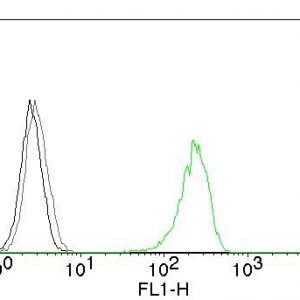
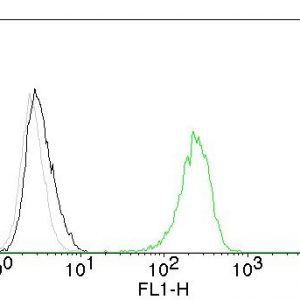
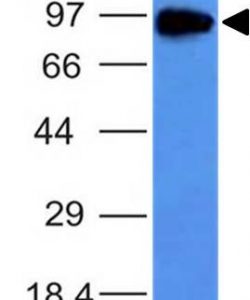
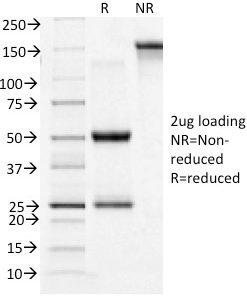
Recombinant CD71 / Transferrin Receptor (TFRC) Antibody [TFRC/13046R]

In Stock
Catalog Number Formulation Size Price
7037-RBM17-P0
Purified Ab with BSA and Azide at 200ug/ml
20ug
$259.00
7037-RBM17-P1
Purified Ab with BSA and Azide at 200ug/ml
100ug
$559.00
7037-RBM17-P1ABX
Purified Ab WITHOUT BSA or Azide at 1.0mg/ml
100ug
$559.00
Flat Rate Domestic: $95 | Orders outside the US - Contact Us for Order Information | Ships next business day

Summary

This gene encodes a cell surface receptor necessary for cellular iron uptake by the process of receptor-mediated endocytosis. This receptor is required for erythropoiesis and neurologic development. Multiple alternatively spliced variants have been identified.

Product Properties & Targets

Host
Rabbit
Applications
Species Reactivity
Isotype / Light Chain
IgG / Kappa
Cellular Localization
Cell membrane, Melanosome, Secreted
Gene Name
Positive Control
Human placenta, bone marrow or lung.
Immunogen
Recombinant full-length human CD71 protein
Alternate Names
Transferrin receptor protein 1, CD71|IMD46|T9|TFR|TFR1|TR|TRFR|p90

Database Links

Entrez Gene ID
SwissProt

Additional Information

Clone
TFRC/13046R
Chromosome Location
3q29
Mol. Weight of Antigen
84.87kDa
Expression System
CHO Cells
Purification
Protein A

Functions

  • Cellular uptake of iron occurs via receptor-mediated endocytosis of ligand-occupied transferrin receptor into specialized endosomes (PubMed:26214738). Endosomal acidification leads to iron release. The apotransferrin-receptor complex is then recycled to the cell surface with a return to neutral pH and the concomitant loss of affinity of apotransferrin for its receptor. Transferrin receptor is necessary for development of erythrocytes and the nervous system (By similarity). A second ligand, the hereditary hemochromatosis protein HFE, competes for binding with transferrin for an overlapping C-terminal binding site. Positively regulates T and B cell proliferation through iron uptake (PubMed:26642240). Acts as a lipid sensor that regulates mitochondrial fusion by regulating activation of the JNK pathway (PubMed:26214738). When dietary levels of stearate (C18:0) are low, promotes activation of the JNK pathway, resulting in HUWE1-mediated ubiquitination and subsequent degradation of the mitofusin MFN2 and inhibition of mitochondrial fusion (PubMed:26214738). When dietary levels of stearate (C18:0) are high, TFRC stearoylation inhibits activation of the JNK pathway and thus degradation of the mitofusin MFN2 (PubMed:26214738). Mediates uptake of NICOL1 into fibroblasts where it may regulate extracellular matrix production (By similarity)., (Microbial infection) Acts as a receptor for new-world arenaviruses: Guanarito, Junin and Machupo virus., (Microbial infection) Acts as a host entry factor for rabies virus that hijacks the endocytosis of TFRC to enter cells., (Microbial infection) Acts as a host entry factor for SARS-CoV, MERS-CoV and SARS-CoV-2 viruses that hijack the endocytosis of TFRC to enter cells.

Storage & Stability

Antibody with azide - store at 2 to 8 °C. Antibody without azide - store at -20 to -80 °C. Antibody is stable for 24 months. Non-hazardous. No MSDS required.

Limitations

This antibody is available for research use only and is not approved for use in diagnosis.

Supplied as

200ug/ml of Ab produced in a mammalian-based expression system. Prepared in 10mM PBS with 0.05% BSA & 0.05% azide. Also available WITHOUT BSA & azide at 1.0mg/ml.

Warranty

There are no warranties, expressed or implied, which extend beyond this description. Company is not liable for any personal injury or economic loss resulting from this product.
PARTNERSHIP OPPORTUNITIES

NeoBiotechnologies holds Exclusive rights to 10,000 recombinant and hybridoma antibody products, available for Licensing or Collaboration.

LETS TALK