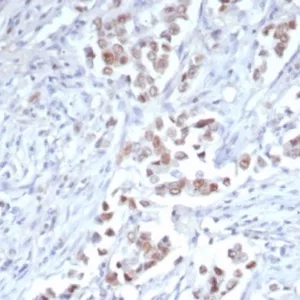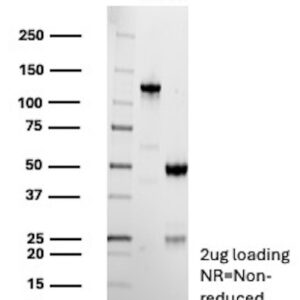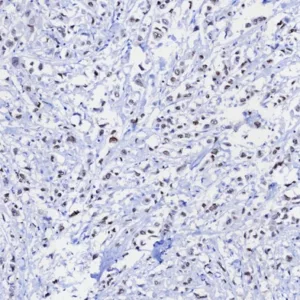


Trichorhinophalangeal syndrome type I (TRPS1) is a protein encoded by the TRPS1 gene on chromosome 8q23.3. This protein consists of 1211 amino acids with a molecular weight of approximately 130 kDa. TRPS1 undergoes several post-translational modifications, including phosphorylation, glycosylation, and possibly disulfide bonds, which can influence cell function and localization.
Functionally, TRPS1 is a transcriptional repressor impacting pathways involved in cell proliferation, differentiation, and apoptosis. It plays a crucial role in skeletal development, hair growth, and facial development. Mutations in the TRPS1 gene have been associated with Trichorhinophalangeal syndrome type I, a rare genetic disorder characterized by distinctive facial features, skeletal abnormalities, and sparse scalp hair. TRPS1 is intracellularly expressed and localized in the nucleus of bone, cartilage, hair follicles, and skin cells. Expression levels are tightly regulated during development and in adult tissues, with factors such as growth factors and hormones influencing its expression. Notably, the dysregulation of TRPS1 expression has been implicated in several types of cancer, including breast, prostate, and colorectal cancer.
In breast cancer, TRPS1 is overexpressed in certain subtypes, particularly those associated with poor prognosis, such as triple-negative breast cancer (TNBC). High TRPS1 expression has been correlated with aggressive tumor behavior, increased tumor size, lymph node metastasis, and reduced overall survival rates. TRPS1 expression levels have also been linked to hormone receptor status, with higher expression observed in hormone receptor-negative breast cancers. Similarly, in prostate cancer, elevated TRPS1 expression has been associated with advanced disease stages, higher Gleason scores, and poorer prognosis. TRPS1 overexpression promotes prostate cancer cell proliferation, migration, and invasion, contributing to tumor progression and metastasis. In colorectal cancer, TRPS1 expression levels have been shown to correlate with tumor stage and lymph node metastasis. Higher TRPS1 expression has been observed in advanced stages of colorectal cancer and is associated with poorer survival outcomes. These findings suggest that TRPS1 expression levels could serve as potential diagnostic and prognostic biomarkers in certain types of cancer, providing valuable information for treatment planning and patient management.
NeoBiotechnologies offers several antibodies against TRPS1 that have been validated for immunohistochemistry. Additionally, we hold exclusive rights to TRPS1 antibodies available for licensing or collaboration [https://www.neobiotechnologies.com/shop/?s=TRPS1].
Zinc finger transcription factor Trps1, GC79|LGCR
Apoptosis, Autophagy, Breast Cancer, Cancer, Cardiovascular, Cell Biology, Cellular Markers and Tags, Developmental Biology, Endocrine, Epigenetics, Gastrointestinal Tract, Hypoxia, Immuno Oncology, Immunology, Kidney, Lymphatic, Metabolism, Microbiology, Muscle, Neuroscience, Pancreatic Cancer, Prostate Cancer, Skin, Stem Cell, AKT Signaling, Angiogenesis, Articular Cartilage Extracellular Matrix, B Cell Markers, Basal Cell Marker, BBB VCAM-1 Signaling, Bladder Cancer, Cardiac Stem Cells, Colon Cancer, Colorectal Cancer, Complement System, CTLA-4 blockade immunotherapy, Cytokine Signaling, Defective Intrinsic Apoptosis, Dendritic Cell Marker, Digestion, Endothelial Cell Marker, Hematopoietic Stem Cells, Immune checkpoint, Infectious Disease, Lipid Metabolism, Lung Cancer, MAPK Signaling, Mast Cell Marker, Melanoma, Mesenchymal Stem Cell Differentiation, Mitochondria Marker, Neural Stem Cells, Neuroinflammation, Nuclear Marker, Oncology, Ovarian Cancer, PD-1 blockade immunotherapy, Signal Transduction, Stem Cell Differentiation, Transcription Factors
Showing all 4 results