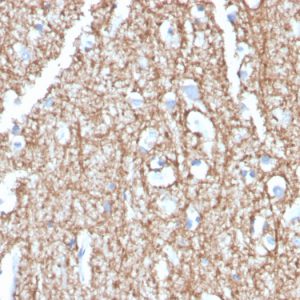
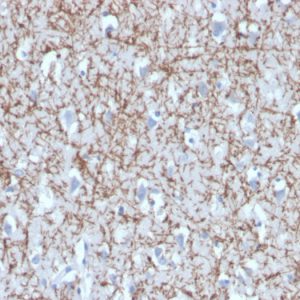
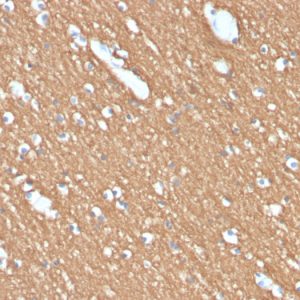
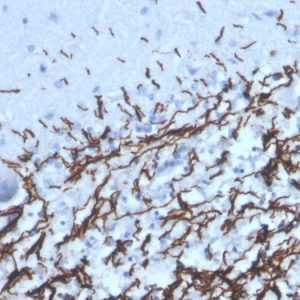
![Myelin Basic Protein [p Thr98] (Marker of Oligodendrocytes & Myelin) Antibody](https://www.neobiotechnologies.com/wp-content/uploads/2022/03/img-4155-MSM6-P0-1-300x300.jpg "Formalin-fixed, paraffin-embedded human brain stained with Myelin Basic Protein Mouse Monoclonal Antibody (MBP/4276).")






PARTNERSHIP OPPORTUNITIES


Myelin basic protein (MBP) is a major structural protein component of the myelin sheath, a fatty insulating layer that surrounds nerve fibers in the central nervous system (CNS) and facilitates the rapid transmission of nerve impulses. The MBP gene is on chromosome 18q23, and it encodes a protein with multiple isoforms resulting from alternative splicing. The most abundant isoform, classic MBP, consists of 170 amino acids and has a molecular weight of approximately 18.5 kDa. MBP undergoes several post-translational modifications, including phosphorylation, which regulates its function in myelin compaction and stability. MBP is an intracellular protein primarily expressed in oligodendrocytes in the CNS and Schwann cells in the peripheral nervous system (PNS).
Its main function is to maintain the structural integrity of the myelin sheath and facilitate saltatory conduction along nerve fibers. Additionally, MBP modulates the interactions between myelin membranes and promotes myelin compaction during development and repair processes in the nervous system. The expression of MBP is tightly regulated during development and is influenced by various signaling pathways and transcription factors that control oligodendrocyte differentiation and myelination. Dysregulation of MBP expression or mutations in the MBP gene can lead to demyelinating diseases such as multiple sclerosis (MS), where the immune system mistakenly attacks the myelin sheath, resulting in nerve damage and neurological symptoms. Moreover, mutations that disrupt MBP function or expression may also lead to developmental disorders or neurological conditions characterized by abnormal myelin formation and impaired nerve conduction.
MBP has been studied as a potential biomarker for MS and other demyelinating diseases. Elevated levels of MBP in cerebrospinal fluid or serum have been observed in patients with active MS lesions, suggesting ongoing myelin breakdown and inflammation. Additionally, MBP autoantibodies have been detected in the serum of MS patients, although their role in disease pathogenesis remains unclear. While MBP levels or autoantibodies may not be specific or sensitive enough for diagnostic purposes, they can provide additional information when combined with other clinical and imaging findings.
Additionally, several therapeutic strategies have been explored for targeting MBP or its associated pathways in the treatment of demyelinating diseases. Immunotherapy approaches, such as monoclonal antibodies targeting MBP-specific T cells or immune checkpoint inhibitors, have been investigated for their potential in modulating immune responses and attenuating CNS inflammation in MS. Additionally, strategies aimed at promoting remyelination, such as stem cell transplantation or pharmacological agents targeting oligodendrocyte precursor cells, hold promise for restoring myelin integrity and function in demyelinating disorders.
NeoBiotechnologies offers a variety of antibodies against MBP that have been validated for ELISA, flow cytometry, immunofluorescence, immunohistochemistry, and Western blotting, as well as a HuProt validated option. Additionally, we hold exclusive rights to MBP antibodies available for licensing or collaboration [https://www.neobiotechnologies.com/shop/?s=MYELIN+BASIC+PROTEIN].
Myelin basic protein, -
Apoptosis, Autophagy, Breast Cancer, Cancer, Cardiovascular, Cell Biology, Cellular Markers and Tags, Developmental Biology, Endocrine, Epigenetics, Gastrointestinal Tract, Hypoxia, Immuno Oncology, Immunology, Kidney, Lymphatic, Metabolism, Microbiology, Muscle, Neuroscience, Pancreatic Cancer, Prostate Cancer, Skin, Stem Cell, AKT Signaling, Angiogenesis, Articular Cartilage Extracellular Matrix, B Cell Markers, Basal Cell Marker, BBB VCAM-1 Signaling, Bladder Cancer, Cardiac Stem Cells, Colon Cancer, Colorectal Cancer, Complement System, CTLA-4 blockade immunotherapy, Cytokine Signaling, Defective Intrinsic Apoptosis, Dendritic Cell Marker, Digestion, Endothelial Cell Marker, Hematopoietic Stem Cells, Immune checkpoint, Infectious Disease, Lipid Metabolism, Lung Cancer, MAPK Signaling, Mast Cell Marker, Melanoma, Mesenchymal Stem Cell Differentiation, Mitochondria Marker, Neural Stem Cells, Neuroinflammation, Nuclear Marker, Oncology, Ovarian Cancer, PD-1 blockade immunotherapy, Signal Transduction, Stem Cell Differentiation, Transcription Factors
Showing all 11 results
Showing all 11 results


