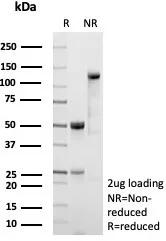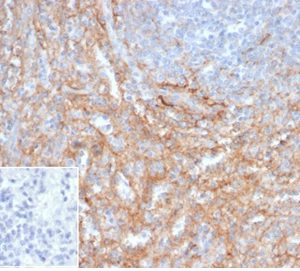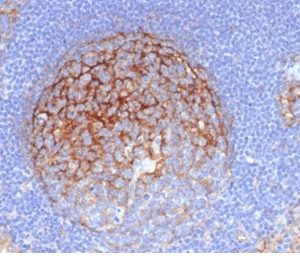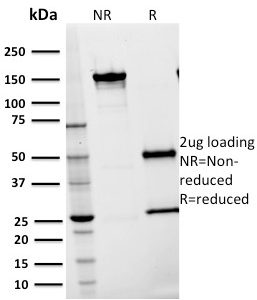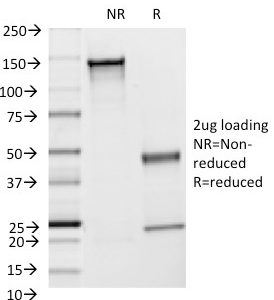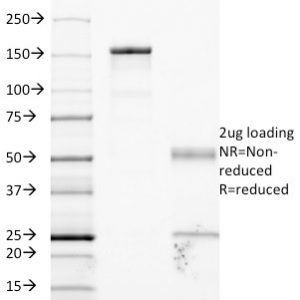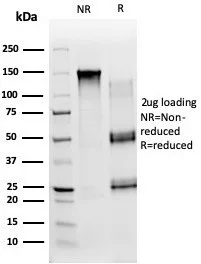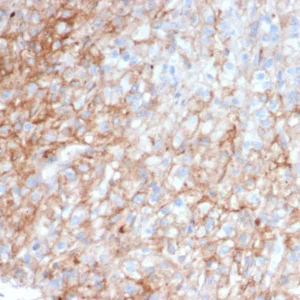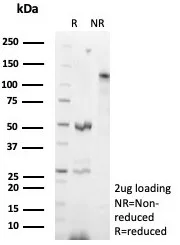


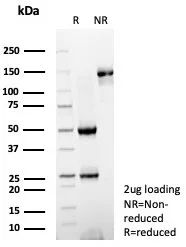
CD54, also known as intercellular adhesion molecule 1 (ICAM-1), is a cell surface glycoprotein encoded by the ICAM1 gene on chromosome 19p13.2. It consists of approximately 532 amino acids with a molecular weight of approximately 90 kDa. CD54 undergoes various post-translational modifications, including phosphorylation, glycosylation, and disulfide bond formation, contributing to its structural integrity and functions. The main function of this transmembrane protein is to facilitate adhesion and interactions between immune cells and endothelial cells during inflammatory responses and immune surveillance. CD54 is a ligand for integrins such as lymphocyte function-associated antigen 1 (LFA-1) on leukocytes, enabling their attachment to endothelial cells and extravasation into inflamed tissues. Additionally, CD54 is involved in antigen presentation, T cell activation, and leukocyte trafficking, contributing to immune cell recruitment and activation in response to infection or tissue injury.
CD54 is expressed in various tissues and cell types, including endothelial cells, leukocytes, fibroblasts, and epithelial cells. Its expression levels can be upregulated by pro-inflammatory cytokines, such as interleukin-1 (IL-1) and tumor necrosis factor-alpha (TNF-α), as well as by cellular stressors and inflammatory stimuli. Regulation of CD54 expression is tightly controlled to ensure proper immune cell adhesion and trafficking during physiological and pathological conditions. Dysregulated expression of CD54 has been associated with various inflammatory and autoimmune diseases, including rheumatoid arthritis, multiple sclerosis, and inflammatory bowel disease.
In diseases, including cancer, CD54 expression can impact tumor progression, invasion, metastasis, and immune evasion. Its diagnostic and prognostic value in cancer varies across different types of cancer and their microenvironments. Elevated CD54 expression has been linked to poor prognosis in cancers such as breast cancer, colorectal cancer, melanoma, and ovarian cancer, with associations to advanced tumor stage, metastasis, and reduced overall survival. Furthermore, CD54 expression levels have been explored as potential diagnostic markers, particularly in detecting circulating tumor cells (CTCs) in various cancers.
NeoBiotechnologies offers a variety of antibodies against CD54 that have been validated for flow cytometry, immunofluorescence, immunohistochemistry, and Western blotting. Additionally, we hold exclusive rights to CD54 antibodies available for licensing or collaboration [https://www.neobiotechnologies.com/shop/?s=cd54].
Synonyms
Intercellular adhesion molecule 1, BB2|CD54|P3.58
Research Areas
Apoptosis, Autophagy, Breast Cancer, Cancer, Cardiovascular, Cell Biology, Cellular Markers and Tags, Developmental Biology, Endocrine, Epigenetics, Gastrointestinal Tract, Hypoxia, Immuno Oncology, Immunology, Kidney, Lymphatic, Metabolism, Microbiology, Muscle, Neuroscience, Pancreatic Cancer, Prostate Cancer, Skin, Stem Cell, AKT Signaling, Angiogenesis, Articular Cartilage Extracellular Matrix, B Cell Markers, Basal Cell Marker, BBB VCAM-1 Signaling, Bladder Cancer, Cardiac Stem Cells, Colon Cancer, Colorectal Cancer, Complement System, CTLA-4 blockade immunotherapy, Cytokine Signaling, Defective Intrinsic Apoptosis, Dendritic Cell Marker, Digestion, Endothelial Cell Marker, Hematopoietic Stem Cells, Immune checkpoint, Infectious Disease, Lipid Metabolism, Lung Cancer, MAPK Signaling, Mast Cell Marker, Melanoma, Mesenchymal Stem Cell Differentiation, Mitochondria Marker, Neural Stem Cells, Neuroinflammation, Nuclear Marker, Oncology, Ovarian Cancer, PD-1 blockade immunotherapy, Signal Transduction, Stem Cell Differentiation, Transcription Factors