Trial Size Available
Carrier-Free Available
| Document Name | |
|---|---|
| Datasheet | Download Here |
| Material Safety Data Sheet | Download Here |
| Applications | Tested Dilutions | Protocol | Note |
|---|---|---|---|
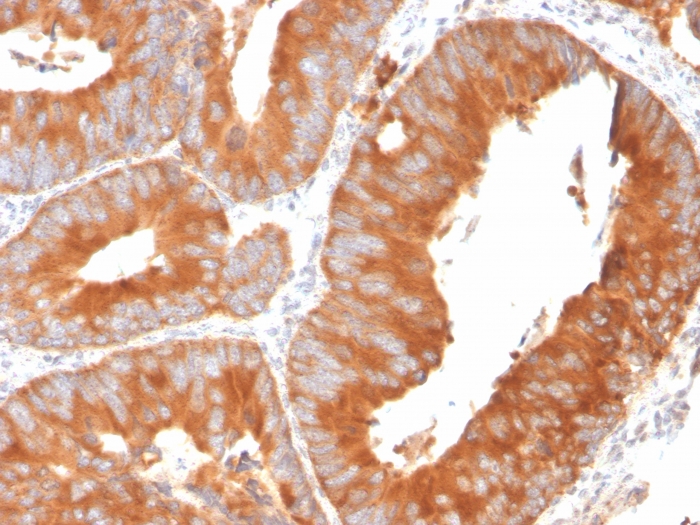
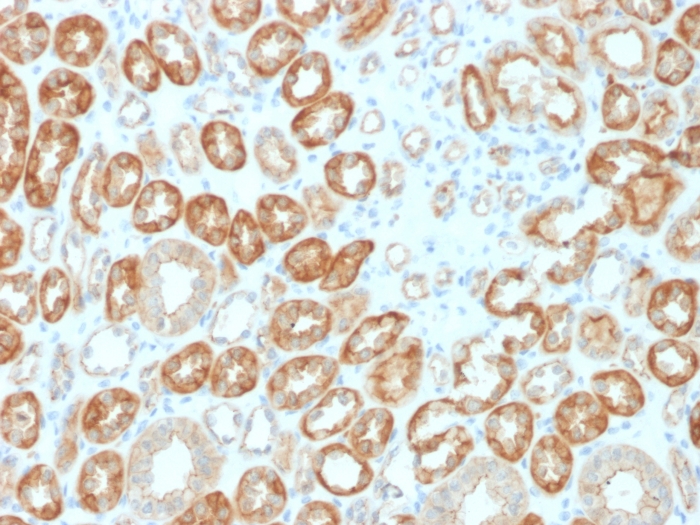
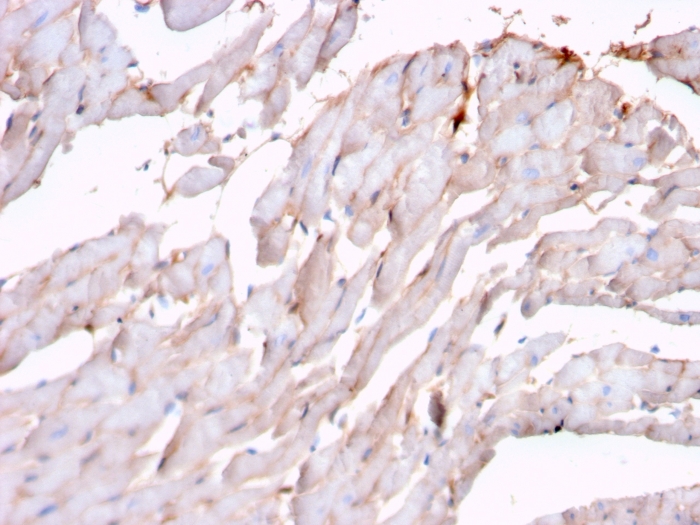
| Immunohistochemistry (IHC) | 1-2ug/ml | IHC Protocol | 30 min at RT. Staining of formalin-fixed tissues requires heating tissue sections in 10mM Tris with 1mM EDTA, pH 9.0, for 45 min at 95°C followed by cooling at RT for 20 minutes |
CS1, also known as novel Ly9, SLAMF7, 19A24 or CRACC, is a homophilic cell surface receptor. It is a member of the SLAM (signaling lymphocytic activation molecule) family of receptors expressed on natural killer (NK) cells, T cells and stimulated B cells. CS1 contains immunoreceptor tyrosine-based switch motifs in its cytoplasmic domain but, unlike other SLAM receptors, it does not recruit SAP (SLAM-associated protein). In humans, CS1 activates NK cells through an EAT-2-mediated pathway that is SAP-independent. CS1 recruits and associates with EAT-2, a protein closely related to SAP. EAT-2 induces phosphorylation of CS1 which then, upon ligand binding, activates downstream cytotoxicity effectors PLC and PI 3K. In mice, the EAT-2 association with CS1 has an inhibitory effect on the activation of NK cells.
Should a NeoBiotechnologies antibody not meet the experimental expectations outlined on our website or datasheet, please contact our Technical Support. We unconditionally guarantee our product.
Our team of scientists are ready to help you with expert recommendations or technical assistance related to applications or product use.
Information
© 2026 NeoBiotechnologies.  All Rights Reserved.
Monday-Friday: 8:00am – 8:00pm Pacific Time