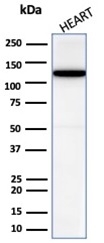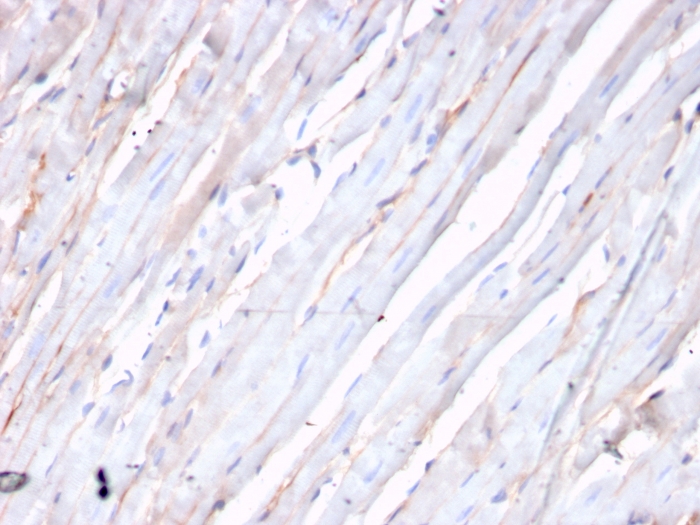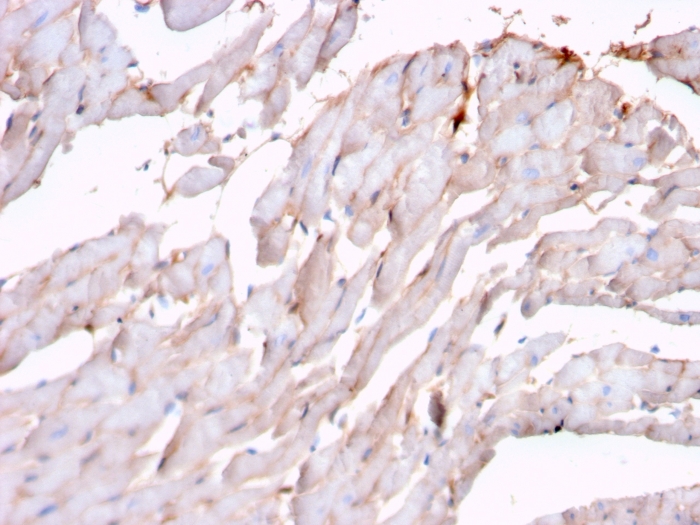
Recombinant MCM4 (Pan Cancer Marker) Antibody [MCM4/13209R]

These antibodies perform exceptionally well in the intended applications and have undergone stringent testing and additional validation to ensure monospecificity.

The MAbMan recommends these antibodies for repeatable and reliable results.

Additional information

Catalog Number: 4173-RBM3
Host:

Reactivity:

Gene:

In Stock

Trial Size Available

Carrier-Free Available

In Stock
Catalog Number Formulation Size Price
4173-RBM3-P1ABX
Purified Ab WITHOUT BSA and Azide at 1.0mg/ml
100ug
$559.00
4173-RBM3-P1
Purified Ab with BSA and Azide at 200ug/ml
100ug
$559.00
4173-RBM3-P0
Purified Ab with BSA and Azide at 200ug/ml
20ug
$259.00
Flat Rate Domestic: $95 | Orders outside the US - Contact Us for Order Information | Ships next business day
  • IHC
  • WB

Documents

Document Name
Datasheet Download Here
Material Safety Data Sheet Download Here

Applications & Dilutions

Applications Tested Dilutions Protocol Note
Immunohistochemistry (IHC) 1-2ug/ml IHC Protocol 30 min at RT. Staining of formalin-fixed tissues requires heating tissue sections in 10mM Tris with 1mM EDTA, pH 9.0, for 45 min at 95°C followed by cooling at RT for 20 minutes
Western Blot (WB) 2-4ug/ml Western Blot Protocol

Product Properties

Host
Rabbit
Species Reactivity
Clone
MCM4/13209R
Isotype
IgG
Light Chain
Kappa
Cellular Localization
Nucleus
Gene Name
Positive Control
Human colon or tonsil.
Immunogen
Recombinant fragment (around aa600-800) of human MCM4 protein (exact sequence is proprietary)
Storage & Stability
Antibody with azide - store at 2 to 8°C. Antibody without azide - store at -20 to -80°C.Antibody is stable for 24 months. Non-hazardous. No MSDS required.
Supplied as
200ug/ml of Ab purified from Bioreactor Concentrate by Protein A/G. Prepared in 10mM PBS with 0.05% BSA & 0.05% azide. Also available WITHOUT BSA & azide at 1.0mg/ml.
Limitations
This antibody is available for research use only and is not approved for use in diagnosis.

Related Antibodies

Other Information

Functions
Key References
Warranty
There are no warranties, expressed or implied, which extend beyond this description. Company is not liable for any personal injury or economic loss resulting from this product.
Entrez Gene ID
SwissProt
Chromosome Location
8q11.21
Mol. Weight of Antigen
100kDa
Alternate Names
DNA replication licensing factor MCM4, 19G antibody; AI325074 antibody; AU045576 antibody; CDC 21 antibody ;CDC 54 antibody; CDC21 antibody; CDC21 homolog antibody; CDC21, S. pombe, homolog of antibody; CDC54 antibody; Cell division cycle 21, S. pombe, homolog of antibody; DNA replication licensing factor MCM 4 antibody; DNA replication licensing factor MCM4 antibody; hCdc 21 antibody; hCdc21 antibody; Homolog of S. pombe cell devision cycle 21 antibody; KIAA4003 antibody; mcdc21 antibody ;MCM 4 antibody; MCM 4 minichromosome maintenance deficient 4 antibody; mcm4 antibody; MCM4 minichromosome maintenance deficient 4 antibody; MCM4 minichromosome maintenance deficient 4, mitotin (S. cerevisiae) antibody; MCM4_HUMAN antibody Mcmd4 antibody ;MGC33310 antibody; Minichromosome maintenance 4 antibody; Minichromosome maintenance complex component 4 antibody; Minichromosome maintenance deficient (S. cerevisiae) 4 antibody; Minichromosome maintenance deficient 4 antibody; Minichromosome maintenance deficient 4 homolog (S. cerevisiae) antibody; Minichromosome maintenance, S. cerevisiae, homolog of, 4 antibody; mKIAA4003 antibody; NKCD antibody NKGCD antibody; P1 CDC21 antibody; P1-CDC21 antibody; P1CDC21 antibody, NKCD; CDC21; CDC54; IMD54; NKGCD; hCdc21; P1-CDC21

Summary

The mini-chromosome maintenance (MCM) family of proteins, including MCM2, MCM3, MCM4 (Cdc21), MCM5 (Cdc46), MCM6 (Mis5) and MCM7 (Cdc47), are regulators of DNA replication that act to ensure replication occurs only once in the cell cycle. Expression of MCM proteins increases during cell growth, peaking at G1 to S phase. The MCM proteins each contain an ATP-binding motif, which is predicted to mediate ATP-dependent opening of double- stranded DNA. MCM proteins are regulated by E2F transcription factors, which induce MCM expression, and by protein kinases, which interact with MCM proteins to maintain the postreplicative state of the cell. MCM2/MCM4 complexes function as substrates for Cdc2/cyclin B in vitro. Cleavage of MCM3, which can be prevented by caspase inhibitors, results in the inactivation of the MCM complex (composed of at least MCM proteins 2-6) during apoptosis. A complex composed of MCM4, MCM6 and MCM7 has been shown to be involved in DNA helicase activity; and MCM5 is involved in IFN-γ-induced Stat1α transcription activation.

Worry-Free Guarantee

Should a NeoBiotechnologies antibody not meet the experimental expectations outlined on our website or datasheet, please contact our Technical Support. We unconditionally guarantee our product.

Need Technical Help?

Our team of scientists are ready to help you with expert recommendations or technical assistance related to applications or product use.