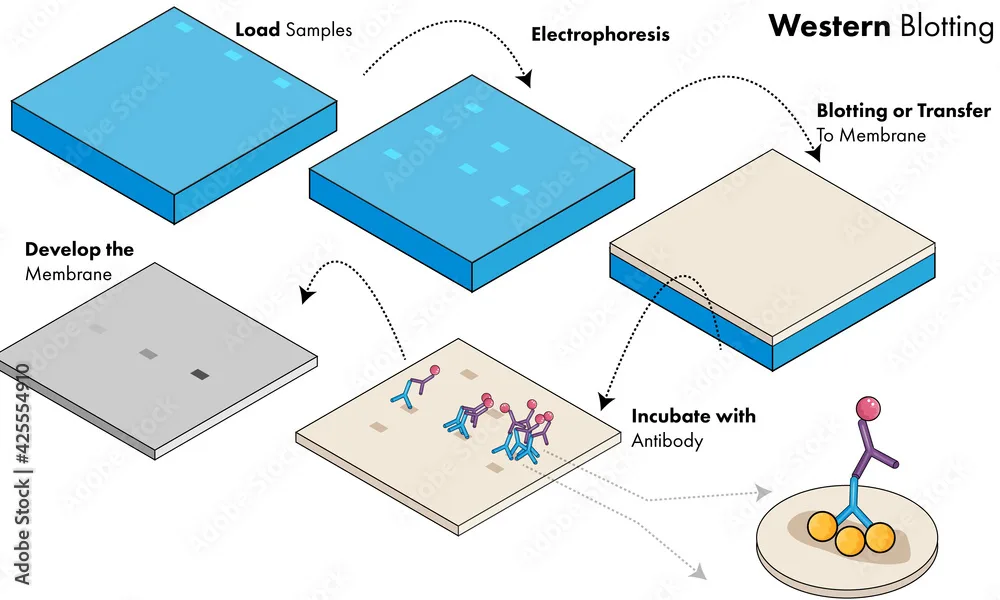
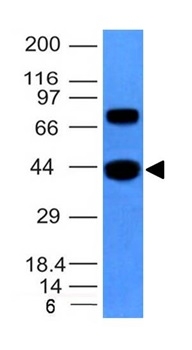
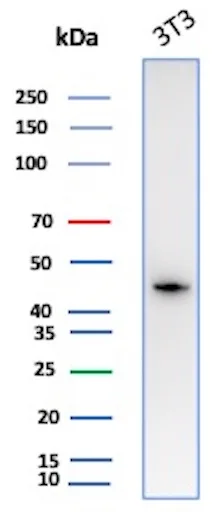
- Perform SDS-PAGE to separate proteins based on their molecular weight. After electrophoresis, remove the gel from the cassette.
- Prepare the transfer apparatus. Place the gel and membrane in the transfer sandwich with the transfer buffer. Apply a constant voltage to transfer proteins from the gel to the membrane (typically 100 V for 1–2 hours).
- Incubate the membrane in blocking solution to prevent non-specific binding. Block for 1 hour at room temperature or overnight at 4 °C.
- Incubate the membrane with the specific primary antibody. Dilute the primary antibody according to the manufacturer’s recommendations. Incubate for 1–2 hours at room temperature or overnight at 4 °C with gentle agitation.
- Wash the membrane with a suitable buffer to remove unbound primary antibody.
- Incubate the membrane with the appropriate secondary antibody. Dilute the secondary antibody according to the manufacturer’s recommendations. Incubate for 1 hour at room temperature with gentle agitation.
- Wash the membrane to remove unbound secondary antibody.
- Detect the protein bands using the chosen detection method (e.g., chemiluminescence or fluorescence). Capture images or obtain data as needed.
Analyze the Western blot data to determine the presence and quantity of the target proteins. However, it is important to point out that validating an antibody for Western blotting is crucial to ensure accurate and reliable results. Here are four key steps to validate an antibody:
- Include positive controls that contain the target protein of interest known to be present in your sample. Conversely, use negative controls that lack the target protein, ensuring that the antibody does not produce non-specific bands.
- Perform a competition assay by pre-incubating the antibody with a free peptide that corresponds to the epitope recognized by the antibody. If the presence of the free peptide significantly reduces or abolishes the antibody’s signal on the blot, it confirms antibody specificity.
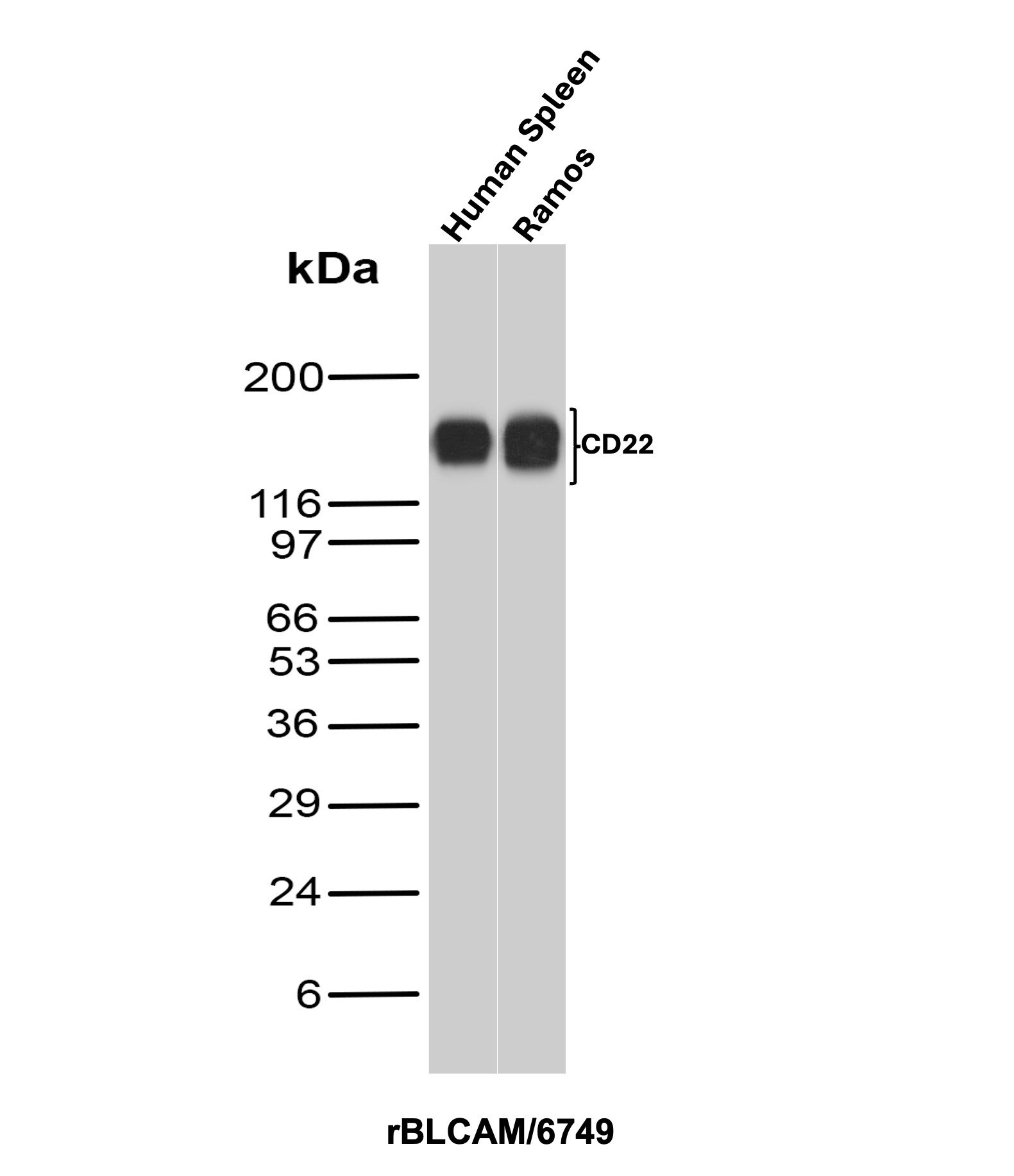
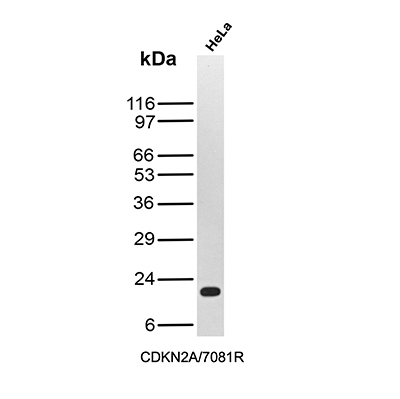
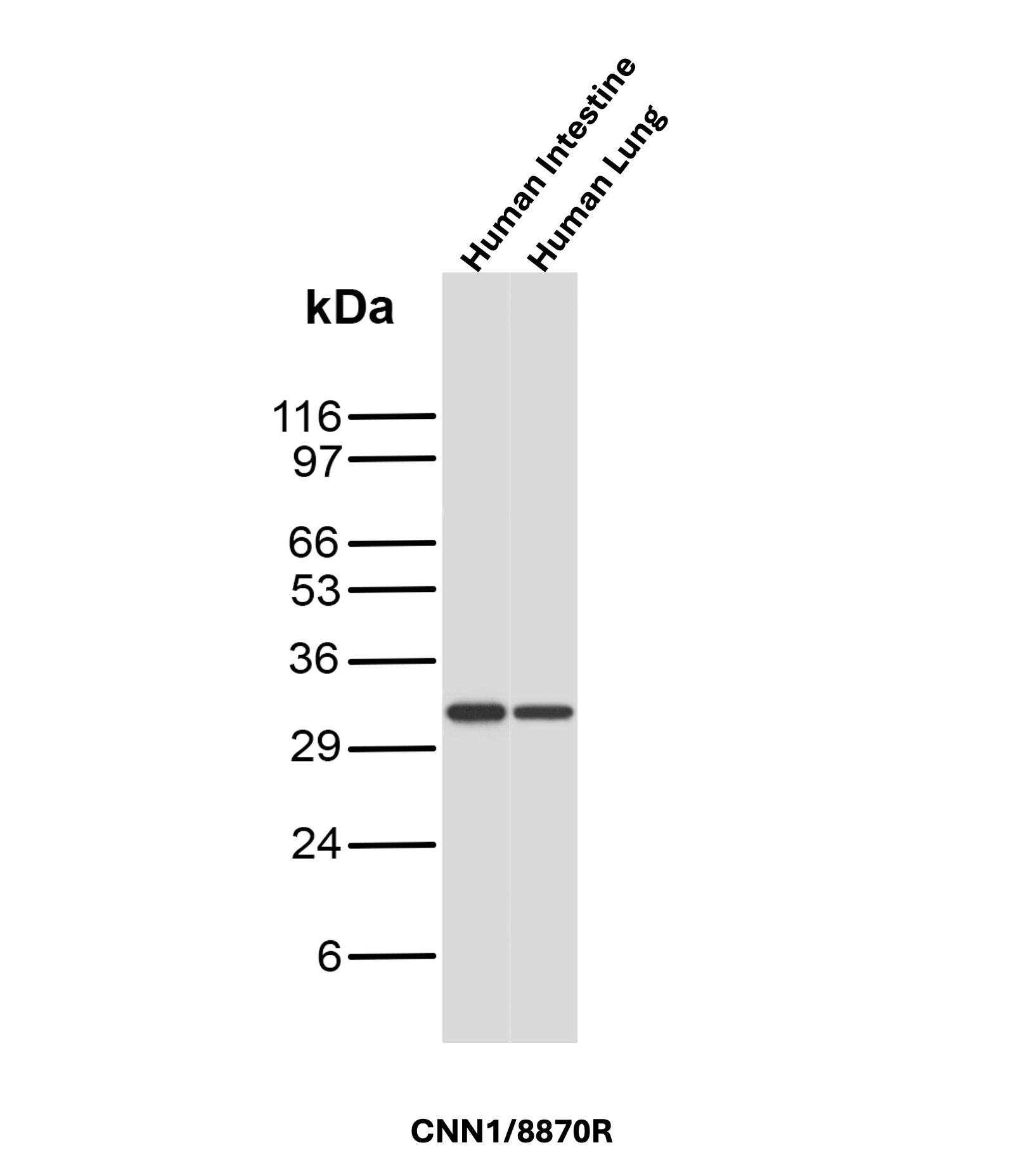
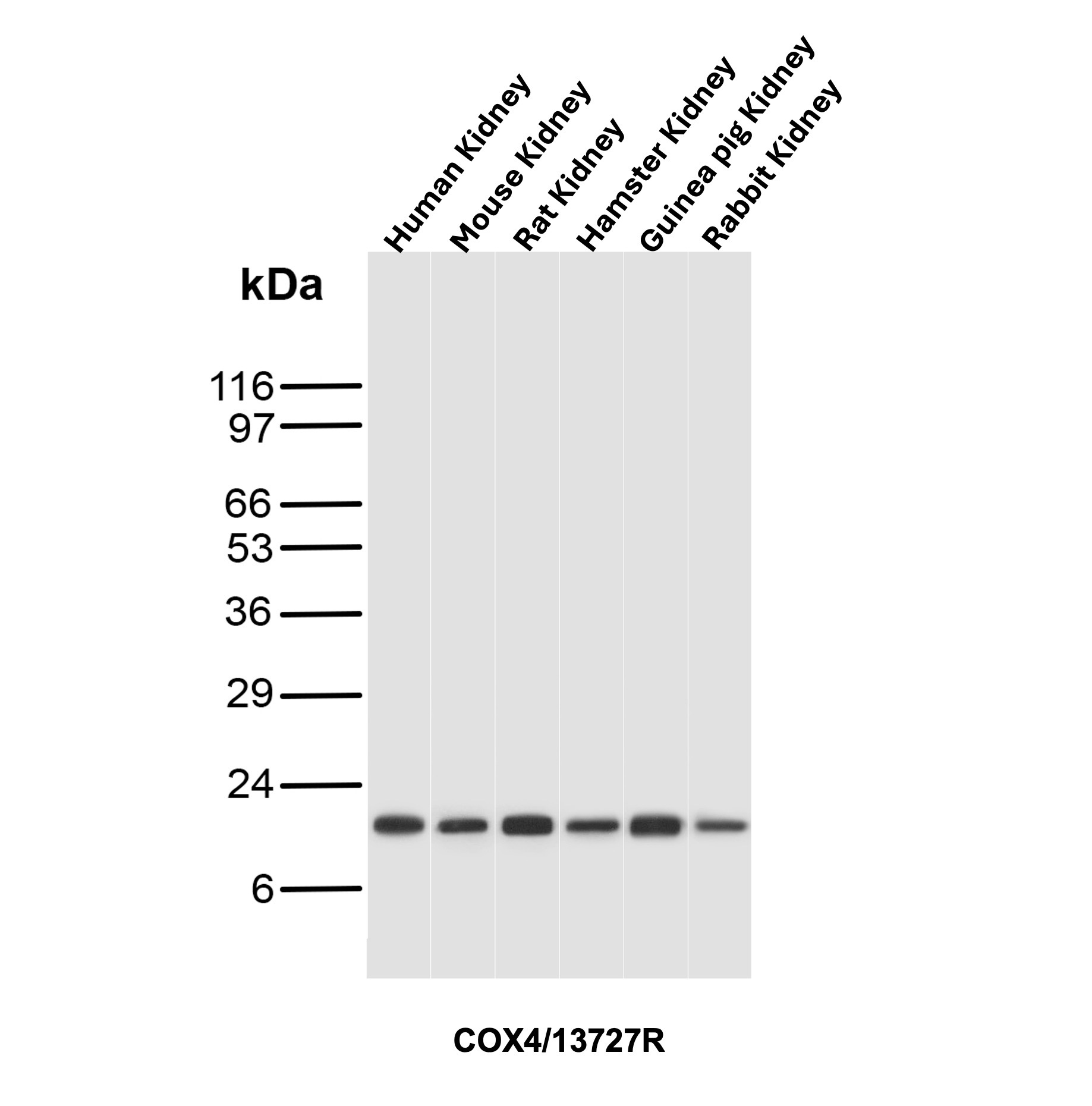
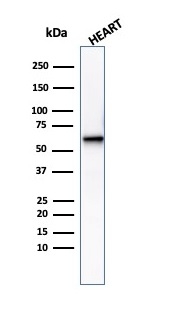
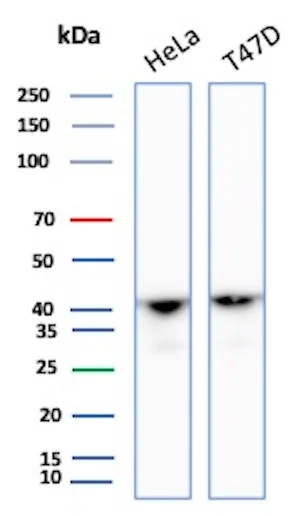
- Run the antibody-stained samples alongside molecular weight markers. The observed bands should align with the expected molecular weight of the target protein, providing further evidence of antibody accuracy.
- In addition to the primary antibody, validate the secondary antibody by running a blot without the primary antibody but with the secondary antibody alone. This control ensures that the secondary antibody does not produce non-specific signals.
By following these steps, you can thoroughly validate an antibody for Western blotting, increasing the reliability of your experimental results.