


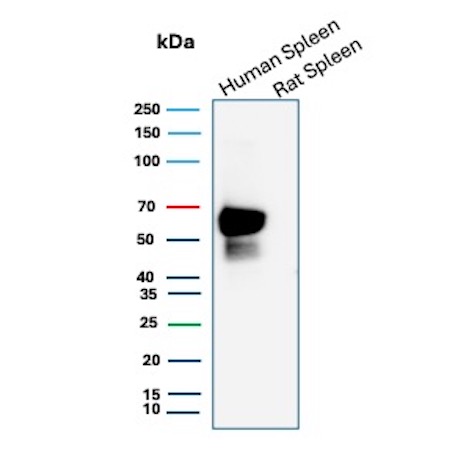
Western Blot Analysis of Human Spleen and Rat Spleen tissue lysates using CD16 / FCGR3A Recombinant Rabbit Monoclonal Antibody (FCGR3A/12961R).
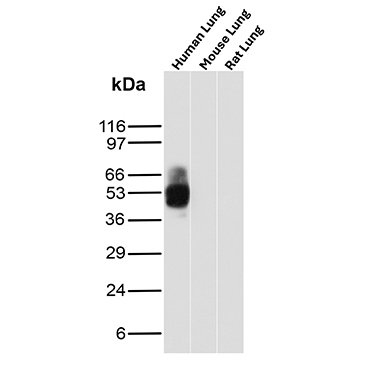
Western Blot Analysis of Human Lung, Mouse Lung and Rat Lung tissue lysates using CD16 / FCGR3A Recombinant Rabbit Monoclonal Antibody (FCGR3A/12961R).
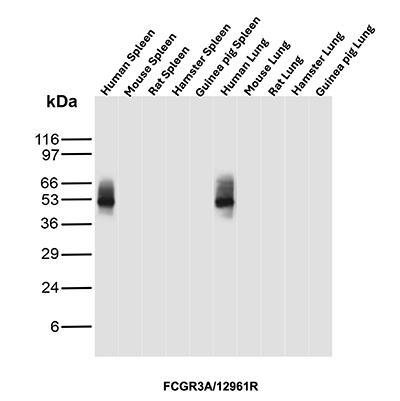
Western Blot Analysis of Human Spleen, Mouse Spleen, Rat Spleen, Hamster Spleen, Guinea pig Spleen, Human Lungs, Mouse Lungs, Rat Lungs, Hamster Lungs and Guinea pig Lungs tissue lysates using CD16 / FCGR3A Recombinant Rabbit Monoclonal Antibody (FCGR3A/12961R).
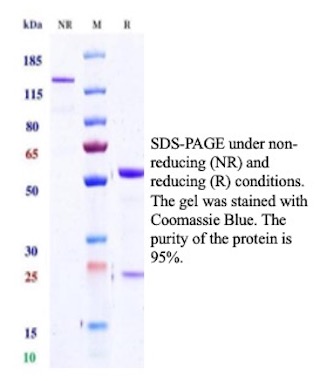
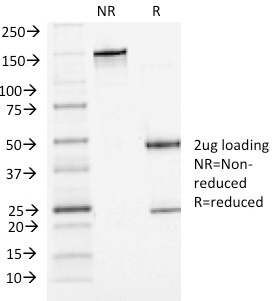
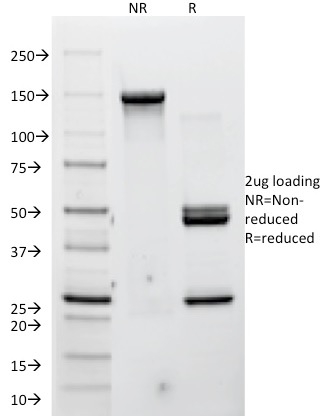
SDS-PAGE Analysis of Purified CD16 Recombinant Rabbit Monoclonal Antibody (FCGR3A/12961R). Confirmation of Purity and Integrity of Antibody.

 4
4
 0
0
 0
0
 3
3

 2
2
 3
3
 2
2
 4
4

Monday-Friday: 8:00am – 8:00pm Pacific Time