


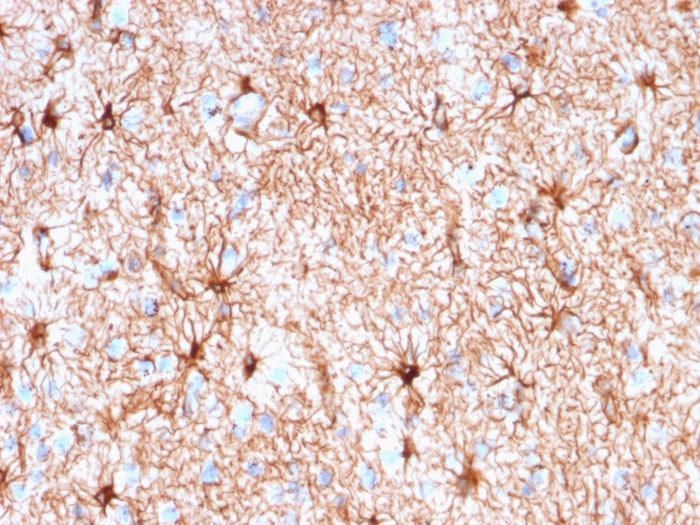
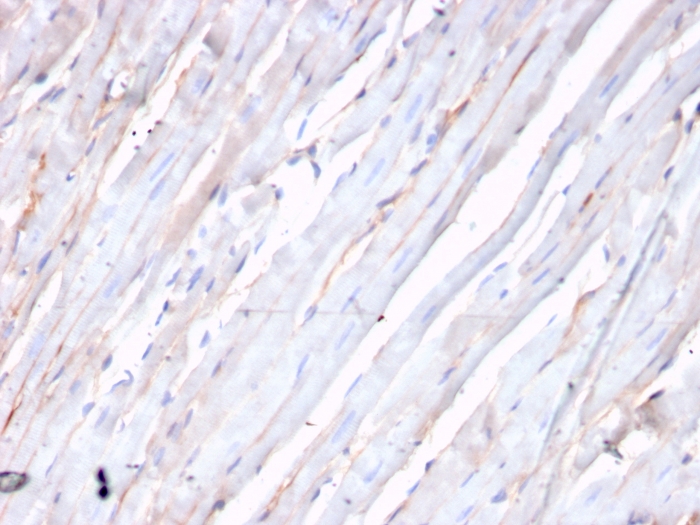
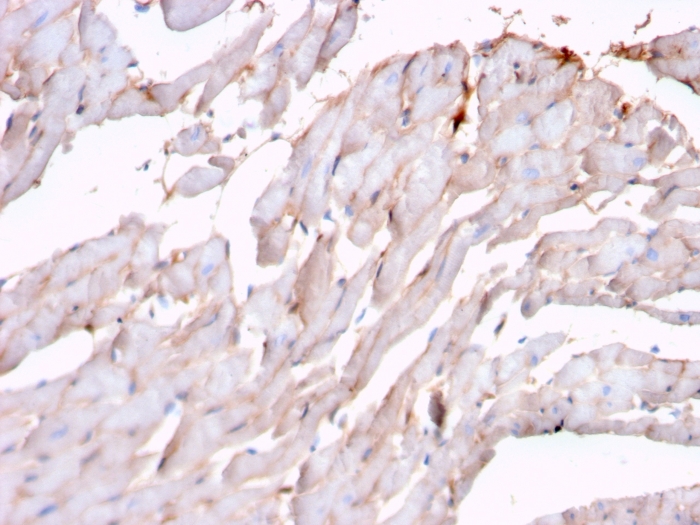
Formalin-fixed, paraffin-embedded human cerebellum stained with GFAP Mouse Recombinant Monoclonal Antibody (rASTRO/789).
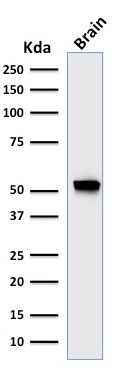
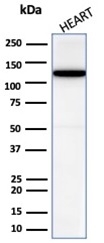
Western Blot Analysis of human brain tissue lysate using GFAP Mouse Recombinant Monoclonal Antibody (rASTRO/789).
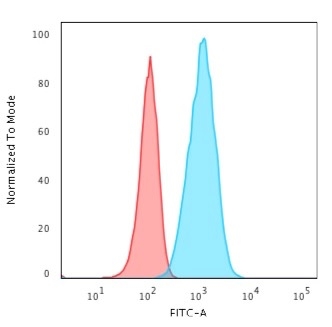
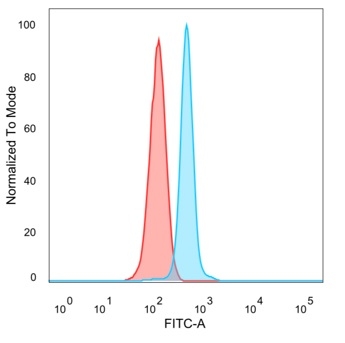
Flow Cytometric Analysis of T98G cells. GFAP Recombinant Mouse Monoclonal Antibody (rASTRO/789) followed by goat anti-mouse IgG-CF488 (blue); Isotype Control (red).
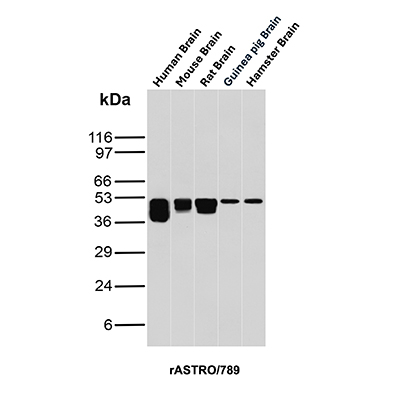
Western Blot Analysis of Human Brain, Mouse Brain, Rat Brain, Guinea Pig Brain and Hamster Brain tissue lysates using GFAP Mouse Recombinant Monoclonal Antibody (rASTRO/789).

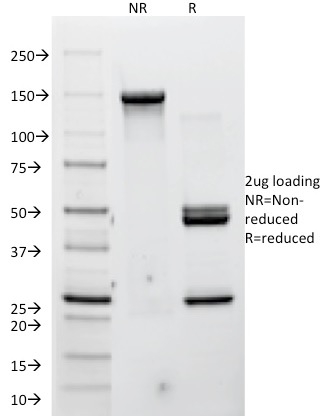
SDS-PAGE Analysis of Purified Glial fibrillary acidic protein Recombinant Mouse Monoclonal Antibody (rASTRO/789). Confirmation of Purity and Integrity of Antibody.

Mouse Monoclonal Antibody GFAP antibody (GFAP/15097) was utilized as the capture antibody, coated onto the microtiter plate at 1 µg/mL. A biotinylated Anti-GFAP clone (rASTRO/789) was used as the detection antibody at a 1:2000 dilution. The graph displays background-subtracted absorbance values measured at 450 nm across a serial dilution of the target antigen.
 3
3
 0
0
 2
2

 3
3
 3
3
 5
5
 3
3
 2
2

Monday-Friday: 8:00am – 8:00pm Pacific Time