Recombinant Cdk2 / p34cdc2 Serine-Threonine Kinase Antibody [CDK2/13742R]

In Stock
Catalog Number Formulation Size Price
1017-RBM4-P0
Purified Ab with BSA and Azide at 200ug/ml
20ug
$259.00
1017-RBM4-P1
Purified Ab with BSA and Azide at 200ug/ml
100ug
$559.00
1017-RBM4-P1ABX
Purified Ab WITHOUT BSA or Azide at 1.0mg/ml
100ug
$559.00
Flat Rate Domestic: $95 | Orders outside the US - Contact Us for Order Information | Ships next business day

Applications & Dilutions

Applications Tested Dillution Protocol Note
Immunohistochemistry (IHC)
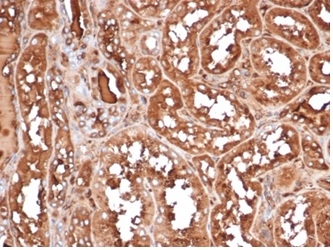
1-2ug/ml
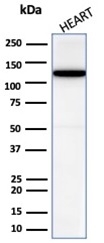
30 min at RT. Staining of formalin-fixed tissues requires heating tissue sections in 10mM Tris with 1mM EDTA, pH 9.0, for 45 min at 95°C followed by cooling at RT for 20 minutes
Western Blot (WB)
2-4ug/ml

Summary

Serine/threonine-protein kinase involved in the control of the cell cycle; essential for meiosis, but dispensable for mitosis (PubMed:10499802, PubMed:10884347, PubMed:10995386, PubMed:10995387, PubMed:11051553, PubMed:11113184, PubMed:12944431, PubMed:15800615, PubMed:17495531, PubMed:19966300, PubMed:20935635, PubMed:21262353, PubMed:21596315, PubMed:28216226, PubMed:28666995). Phosphorylates CABLES1, CTNNB1, CDK2AP2, ERCC6, NBN, USP37, p53/TP53, NPM1, CDK7, RB1, BRCA2, MYC, NPAT, EZH2 (PubMed:10499802, PubMed:10995386, PubMed:10995387, PubMed:11051553, PubMed:11113184, PubMed:12944431, PubMed:15800615, PubMed:19966300, PubMed:20935635, PubMed:21262353, PubMed:21596315, PubMed:28216226). Triggers duplication of centrosomes and DNA (PubMed:11051553). Acts at the G1-S transition to promote the E2F transcriptional program and the initiation of DNA synthesis, and modulates G2 progression; controls the timing of entry into mitosis/meiosis by controlling the subsequent activation of cyclin B/CDK1 by phosphorylation, and coordinates the activation of cyclin B/CDK1 at the centrosome and in the nucleus (PubMed:18372919, PubMed:19238148, PubMed:19561645). Crucial role in orchestrating a fine balance between cellular proliferation, cell death, and DNA repair in embryonic stem cells (ESCs) (PubMed:18372919, PubMed:19238148, PubMed:19561645). Activity of CDK2 is maximal during S phase and G2; activated by interaction with cyclin E during the early stages of DNA synthesis to permit G1-S transition, and subsequently activated by cyclin A2 (cyclin A1 in germ cells) during the late stages of DNA replication to drive the transition from S phase to mitosis, the G2 phase (PubMed:18372919, PubMed:19238148, PubMed:19561645). EZH2 phosphorylation promotes H3K27me3 maintenance and epigenetic gene silencing (PubMed:20935635). Cyclin E/CDK2 prevents oxidative stress-mediated Ras-induced senescence by phosphorylating MYC (PubMed:19966300). Involved in G1-S phase DNA damage checkpoint that prevents cells with damaged DNA from initiating mitosis; regulates homologous recombination-dependent repair by phosphorylating BRCA2, this phosphorylation is low in S phase when recombination is active, but increases as cells progress towards mitosis (PubMed:15800615, PubMed:20195506, PubMed:21319273). In response to DNA damage, double-strand break repair by homologous recombination a reduction of CDK2-mediated BRCA2 phosphorylation (PubMed:15800615). Involved in regulation of telomere repair by mediating phosphorylation of NBN (PubMed:28216226). Phosphorylation of RB1 disturbs its interaction with E2F1 (PubMed:10499802). NPM1 phosphorylation by cyclin E/CDK2 promotes its dissociates from unduplicated centrosomes, thus initiating centrosome duplication (PubMed:11051553). Cyclin E/CDK2-mediated phosphorylation of NPAT at G1-S transition and until prophase stimulates the NPAT-mediated activation of histone gene transcription during S phase (PubMed:10995386, PubMed:10995387). Required for vitamin D-mediated growth inhibition by being itself inactivated (PubMed:20147522). Involved in the nitric oxide- (NO) mediated signaling in a nitrosylation/activation-dependent manner (PubMed:20079829). USP37 is activated by phosphorylation and thus triggers G1-S transition (PubMed:21596315). CTNNB1 phosphorylation regulates insulin internalization (PubMed:21262353). Phosphorylates FOXP3 and negatively regulates its transcriptional activity and protein stability (By similarity). Phosphorylates ERCC6 which is essential for its chromatin remodeling activity at DNA double-strand breaks (PubMed:29203878). Acts as a regulator of the phosphatidylinositol 3-kinase/protein kinase B signal transduction by mediating phosphorylation of the C-terminus of protein kinase B (PKB/AKT1 and PKB/AKT2), promoting its activation (PubMed:24670654).

Product Properties & Targets

Host
Rabbit
Species Reactivity
Isotype / Light Chain
IgG / Kappa
Cellular Localization
Cajal body, Centrosome, Cytoplasm, Cytoskeleton, Endosome, Microtubule organizing center, Nucleus
Gene Name
Immunogen
cLAHPFFQDVTKPVPHLRL
Alternate Names
Cyclin-dependent kinase 2, CDKN2|p33(CDK2)

Database Links

Entrez Gene ID
SwissProt

Additional Information

Clone
CDK2/13742R
Chromosome Location
12q13.2
Mol. Weight of Antigen
33.93kDa
Expression System
CHO Cells
Purification
Protein A

Functions

  • Serine/threonine-protein kinase involved in the control of the cell cycle; essential for meiosis, but dispensable for mitosis (PubMed:10499802, PubMed:10884347, PubMed:10995386, PubMed:10995387, PubMed:11051553, PubMed:11113184, PubMed:12944431, PubMed:15800615, PubMed:17495531, PubMed:19966300, PubMed:20935635, PubMed:21262353, PubMed:21596315, PubMed:28216226, PubMed:28666995). Phosphorylates CABLES1, CTNNB1, CDK2AP2, ERCC6, NBN, USP37, p53/TP53, NPM1, CDK7, RB1, BRCA2, MYC, NPAT, EZH2 (PubMed:10499802, PubMed:10995386, PubMed:10995387, PubMed:11051553, PubMed:11113184, PubMed:12944431, PubMed:15800615, PubMed:19966300, PubMed:20935635, PubMed:21262353, PubMed:21596315, PubMed:28216226). Triggers duplication of centrosomes and DNA (PubMed:11051553). Acts at the G1-S transition to promote the E2F transcriptional program and the initiation of DNA synthesis, and modulates G2 progression; controls the timing of entry into mitosis/meiosis by controlling the subsequent activation of cyclin B/CDK1 by phosphorylation, and coordinates the activation of cyclin B/CDK1 at the centrosome and in the nucleus (PubMed:18372919, PubMed:19238148, PubMed:19561645). Crucial role in orchestrating a fine balance between cellular proliferation, cell death, and DNA repair in embryonic stem cells (ESCs) (PubMed:18372919, PubMed:19238148, PubMed:19561645). Activity of CDK2 is maximal during S phase and G2; activated by interaction with cyclin E during the early stages of DNA synthesis to permit G1-S transition, and subsequently activated by cyclin A2 (cyclin A1 in germ cells) during the late stages of DNA replication to drive the transition from S phase to mitosis, the G2 phase (PubMed:18372919, PubMed:19238148, PubMed:19561645). EZH2 phosphorylation promotes H3K27me3 maintenance and epigenetic gene silencing (PubMed:20935635). Cyclin E/CDK2 prevents oxidative stress-mediated Ras-induced senescence by phosphorylating MYC (PubMed:19966300). Involved in G1-S phase DNA damage checkpoint that prevents cells with damaged DNA from initiating mitosis; regulates homologous recombination-dependent repair by phosphorylating BRCA2, this phosphorylation is low in S phase when recombination is active, but increases as cells progress towards mitosis (PubMed:15800615, PubMed:20195506, PubMed:21319273). In response to DNA damage, double-strand break repair by homologous recombination a reduction of CDK2-mediated BRCA2 phosphorylation (PubMed:15800615). Involved in regulation of telomere repair by mediating phosphorylation of NBN (PubMed:28216226). Phosphorylation of RB1 disturbs its interaction with E2F1 (PubMed:10499802). NPM1 phosphorylation by cyclin E/CDK2 promotes its dissociates from unduplicated centrosomes, thus initiating centrosome duplication (PubMed:11051553). Cyclin E/CDK2-mediated phosphorylation of NPAT at G1-S transition and until prophase stimulates the NPAT-mediated activation of histone gene transcription during S phase (PubMed:10995386, PubMed:10995387). Required for vitamin D-mediated growth inhibition by being itself inactivated (PubMed:20147522). Involved in the nitric oxide- (NO) mediated signaling in a nitrosylation/activation-dependent manner (PubMed:20079829). USP37 is activated by phosphorylation and thus triggers G1-S transition (PubMed:21596315). CTNNB1 phosphorylation regulates insulin internalization (PubMed:21262353). Phosphorylates FOXP3 and negatively regulates its transcriptional activity and protein stability (By similarity). Phosphorylates ERCC6 which is essential for its chromatin remodeling activity at DNA double-strand breaks (PubMed:29203878). Acts as a regulator of the phosphatidylinositol 3-kinase/protein kinase B signal transduction by mediating phosphorylation of the C-terminus of protein kinase B (PKB/AKT1 and PKB/AKT2), promoting its activation (PubMed:24670654).

Storage & Stability

Antibody with azide - store at 2 to 8 °C. Antibody without azide - store at -20 to -80 °C. Antibody is stable for 24 months. Non-hazardous. No MSDS required.

Limitations

This antibody is available for research use only and is not approved for use in diagnosis.

Supplied as

200ug/ml of Ab produced in a mammalian-based expression system. Prepared in 10mM PBS with 0.05% BSA & 0.05% azide. Also available WITHOUT BSA & azide at 1.0mg/ml.

Warranty

There are no warranties, expressed or implied, which extend beyond this description. Company is not liable for any personal injury or economic loss resulting from this product.
PARTNERSHIP OPPORTUNITIES

NeoBiotechnologies holds Exclusive rights to 10,000 recombinant and hybridoma antibody products, available for Licensing or Collaboration.

LETS TALK