Lactotransferrin Antibody [LTF/4091]

In Stock
Catalog Number Formulation Size Price
4057-MSM21-P0
Purified Ab with BSA and Azide at 200ug/ml
20ug
$259.00
4057-MSM21-P1
Purified Ab with BSA and Azide at 200ug/ml
100ug
$559.00
4057-MSM21-P1ABX
Purified Ab WITHOUT BSA or Azide at 1.0mg/ml
100ug
$559.00
Flat Rate Domestic: $95 | Orders outside the US - Contact Us for Order Information | Ships next business day

Applications & Dilutions

Applications Tested Dillution Protocol Note
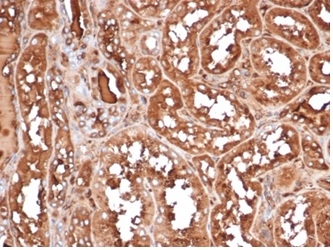
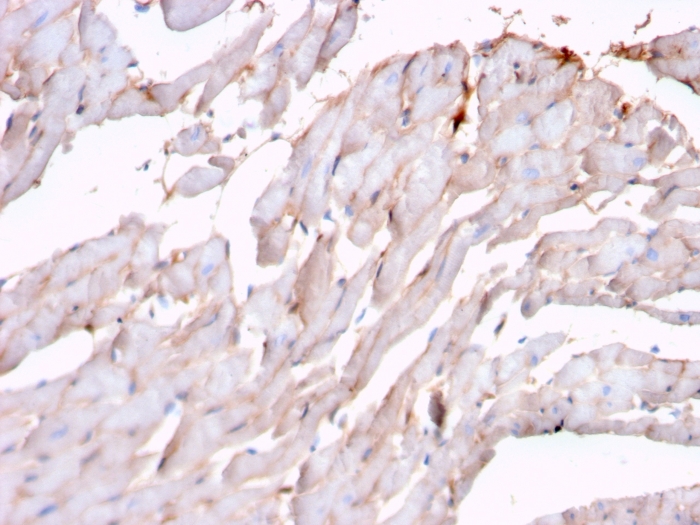
Immunohistochemistry (IHC)
1-2ug/ml
30 min at RT. Staining of formalin-fixed tissues requires heating tissue sections in 10mM Tris with 1mM EDTA, pH 9.0, for 45 min at 95°C followed by cooling at RT for 20 minutes

Summary

Transferrins are iron binding transport proteins which can bind two Fe(3+) ions in association with the binding of an anion, usually bicarbonate., Major iron-binding and multifunctional protein found in exocrine fluids such as breast milk and mucosal secretions (PubMed:11179314, PubMed:12693969, PubMed:14573629, PubMed:1599934, PubMed:3169987, PubMed:6802759). Has antimicrobial activity, which depends on the extracellular cation concentration (PubMed:6802759). Antimicrobial properties include bacteriostasis, which is related to its ability to sequester free iron and thus inhibit microbial growth, as well as direct bactericidal properties leading to the release of lipopolysaccharides from the bacterial outer membrane (PubMed:11179314, PubMed:12693969, PubMed:14573629, PubMed:1599934, PubMed:3169987, PubMed:6802759). Can also prevent bacterial biofilm development in P.aeruginosa infection (PubMed:12037568). Has weak antifungal activity against C.albicans (PubMed:11083624). Has anabolic, differentiating and anti-apoptotic effects on osteoblasts and can also inhibit osteoclastogenesis, possibly playing a role in the regulation of bone growth (PubMed:15166119). Promotes binding of species C adenoviruses to epithelial cells, promoting adenovirus infection (PubMed:17079302). Can inhibit papillomavirus infections (PubMed:17481742). Stimulates the TLR4 signaling pathway leading to NF-kappa-B activation and subsequent pro-inflammatory cytokine production while also interfering with the lipopolysaccharide (LPS)-stimulated TLR4 signaling (PubMed:20345905). Inhibits neutrophil granulocyte migration to sites of apoptosis, when secreted by apoptotic cells (PubMed:19033648). Stimulates VEGFA-mediated endothelial cell migration and proliferation (PubMed:16842782). Binds heparin, chondroitin sulfate and possibly other glycosaminoglycans (GAGs) (PubMed:9359845). Also binds specifically to pneumococcal surface protein A (PspA), the lipid A portion of bacterial lipopolysaccharide (LPS), lysozyme and DNA (PubMed:9359845)., Lactoferricin binds to the bacterial surface and is crucial for the bactericidal functions. Has some antiviral activity against papillomavirus infection (PubMed:17481742). N-terminal region shows strong antifungal activity against C.albicans (PubMed:11083624). Contains two BBXB heparin-binding consensus sequences that appear to form the predominate functional GAG-binding site., Has antimicrobial activity and is able to permeabilize different ions through liposomal membranes., Has opioid antagonist activity (PubMed:1369293). Shows preference for mu-receptor (PubMed:1369293)., Has opioid antagonist activity (PubMed:1369293). Shows higher degrees of preference for kappa-receptors than for mu-receptors (PubMed:1369293)., The lactotransferrin transferrin-like domain 1 functions as a serine protease of the peptidase S60 family that cuts arginine rich regions (PubMed:12535064). This function contributes to the antimicrobial activity (PubMed:12535064). Shows a preferential cleavage at -Arg-Ser-Arg-Arg-|- and -Arg-Arg-Ser-Arg-|-, and of Z-Phe-Arg-|-aminomethylcoumarin sites (PubMed:12535064)., Transcription factor with antiproliferative properties and ability to induce cell cycle arrest (PubMed:15222485). Binds to the DeltaLf response element found in the SKP1, BAX, DCPS, and SELENOH promoters (PubMed:22320386).

Product Properties & Targets

Antibody Type
Host
Mouse
Applications
Species Reactivity
Isotype / Light Chain
IgG1 / Kappa
Cellular Localization
Cytoplasm, Cytoplasmic granule, Nucleus, Secreted
Gene Name
LTF
Positive Control
High levels are found in saliva and tears, intermediate levels in serum and plasma, and low levels in urine
Immunogen
Recombinant fragment (around aa614-645) of human Lactotransferrin protein
Alternate Names
Lactotransferrin, GIG12|HEL110|HLF2|LF

Database Links

Entrez Gene ID
SwissProt

Additional Information

Clone
LTF/4091
Chromosome Location
3p21.31
Mol. Weight of Antigen
78.18kDa
Purification
Protein G

Functions

  • Transferrins are iron binding transport proteins which can bind two Fe(3+) ions in association with the binding of an anion, usually bicarbonate., Major iron-binding and multifunctional protein found in exocrine fluids such as breast milk and mucosal secretions (PubMed:11179314, PubMed:12693969, PubMed:14573629, PubMed:1599934, PubMed:3169987, PubMed:6802759). Has antimicrobial activity, which depends on the extracellular cation concentration (PubMed:6802759). Antimicrobial properties include bacteriostasis, which is related to its ability to sequester free iron and thus inhibit microbial growth, as well as direct bactericidal properties leading to the release of lipopolysaccharides from the bacterial outer membrane (PubMed:11179314, PubMed:12693969, PubMed:14573629, PubMed:1599934, PubMed:3169987, PubMed:6802759). Can also prevent bacterial biofilm development in P.aeruginosa infection (PubMed:12037568). Has weak antifungal activity against C.albicans (PubMed:11083624). Has anabolic, differentiating and anti-apoptotic effects on osteoblasts and can also inhibit osteoclastogenesis, possibly playing a role in the regulation of bone growth (PubMed:15166119). Promotes binding of species C adenoviruses to epithelial cells, promoting adenovirus infection (PubMed:17079302). Can inhibit papillomavirus infections (PubMed:17481742). Stimulates the TLR4 signaling pathway leading to NF-kappa-B activation and subsequent pro-inflammatory cytokine production while also interfering with the lipopolysaccharide (LPS)-stimulated TLR4 signaling (PubMed:20345905). Inhibits neutrophil granulocyte migration to sites of apoptosis, when secreted by apoptotic cells (PubMed:19033648). Stimulates VEGFA-mediated endothelial cell migration and proliferation (PubMed:16842782). Binds heparin, chondroitin sulfate and possibly other glycosaminoglycans (GAGs) (PubMed:9359845). Also binds specifically to pneumococcal surface protein A (PspA), the lipid A portion of bacterial lipopolysaccharide (LPS), lysozyme and DNA (PubMed:9359845)., Lactoferricin binds to the bacterial surface and is crucial for the bactericidal functions. Has some antiviral activity against papillomavirus infection (PubMed:17481742). N-terminal region shows strong antifungal activity against C.albicans (PubMed:11083624). Contains two BBXB heparin-binding consensus sequences that appear to form the predominate functional GAG-binding site., Has antimicrobial activity and is able to permeabilize different ions through liposomal membranes., Has opioid antagonist activity (PubMed:1369293). Shows preference for mu-receptor (PubMed:1369293)., Has opioid antagonist activity (PubMed:1369293). Shows higher degrees of preference for kappa-receptors than for mu-receptors (PubMed:1369293)., The lactotransferrin transferrin-like domain 1 functions as a serine protease of the peptidase S60 family that cuts arginine rich regions (PubMed:12535064). This function contributes to the antimicrobial activity (PubMed:12535064). Shows a preferential cleavage at -Arg-Ser-Arg-Arg-
  • - and -Arg-Arg-Ser-Arg-
  • -, and of Z-Phe-Arg-
  • -aminomethylcoumarin sites (PubMed:12535064)., Transcription factor with antiproliferative properties and ability to induce cell cycle arrest (PubMed:15222485). Binds to the DeltaLf response element found in the SKP1, BAX, DCPS, and SELENOH promoters (PubMed:22320386).

Storage & Stability

Antibody with azide - store at 2 to 8 °C. Antibody without azide - store at -20 to -80 °C. Antibody is stable for 24 months. Non-hazardous. No MSDS required.

Limitations

This antibody is available for research use only and is not approved for use in diagnosis.

Supplied as

200ug/ml of Ab purified from Bioreactor Concentrate by Protein G. Prepared in 10mM PBS with 0.05% BSA & 0.05% azide. Also available WITHOUT BSA & azide at 1.0mg/ml.

Warranty

There are no warranties, expressed or implied, which extend beyond this description. Company is not liable for any personal injury or economic loss resulting from this product.
PARTNERSHIP OPPORTUNITIES

NeoBiotechnologies holds Exclusive rights to 10,000 recombinant and hybridoma antibody products, available for Licensing or Collaboration.

LETS TALK