


Trial Size Available

Carrier-Free Available

| Document Name | |
|---|---|
| Datasheet | Download Here |
| Material Safety Data Sheet | Download Here |
| Applications | Tested Dilutions | Protocol |
|---|---|---|
| Western Blot (WB) | 2-4ug/ml | Western Blot Protocol |
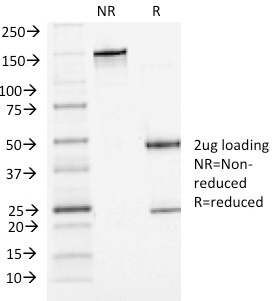
 0
0
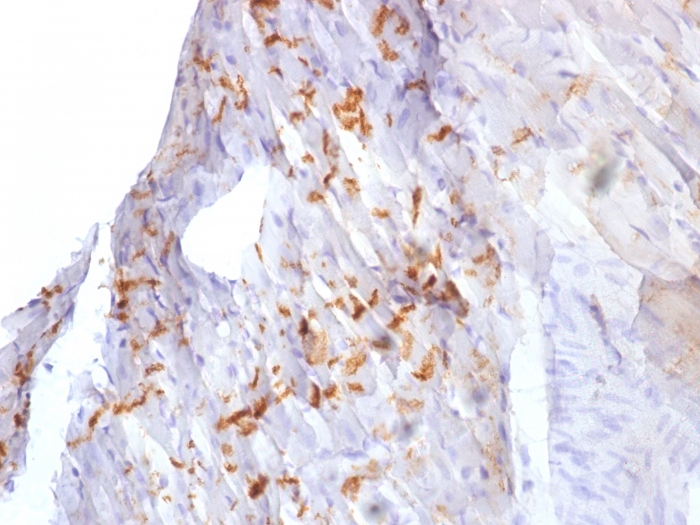 3
3

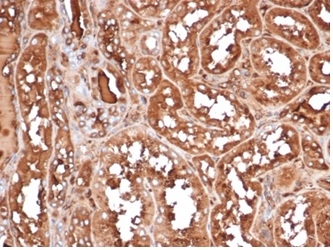 5
5
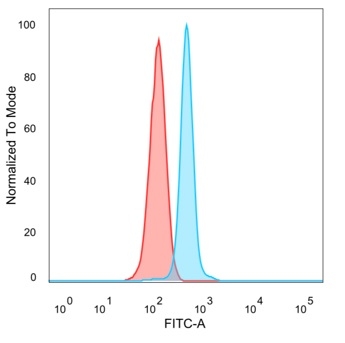 3
3
 3
3
 3
3
 6
6
Non-classical major histocompatibility class Ib molecule involved in immune regulatory processes at the maternal-fetal interface (PubMed:19304799, PubMed:23184984, PubMed:29262349). In complex with B2M/beta-2 microglobulin binds a limited repertoire of nonamer self-peptides derived from intracellular proteins including histones and ribosomal proteins (PubMed:7584149, PubMed:8805247). Peptide-bound HLA-G-B2M complex acts as a ligand for inhibitory/activating KIR2DL4, LILRB1 and LILRB2 receptors on uterine immune cells to promote fetal development while maintaining maternal-fetal tolerance (PubMed:16366734, PubMed:19304799, PubMed:20448110, PubMed:23184984, PubMed:27859042, PubMed:29262349). Upon interaction with KIR2DL4 and LILRB1 receptors on decidual NK cells, it triggers NK cell senescence-associated secretory phenotype as a molecular switch to promote vascular remodeling and fetal growth in early pregnancy (PubMed:16366734, PubMed:19304799, PubMed:23184984, PubMed:29262349). Through interaction with KIR2DL4 receptor on decidual macrophages induces pro-inflammatory cytokine production mainly associated with tissue remodeling (PubMed:19304799). Through interaction with LILRB2 receptor triggers differentiation of type 1 regulatory T cells and myeloid-derived suppressor cells, both of which actively maintain maternal-fetal tolerance (PubMed:20448110, PubMed:27859042). May play a role in balancing tolerance and antiviral-immunity at maternal-fetal interface by keeping in check the effector functions of NK, CD8+ T cells and B cells (PubMed:10190900, PubMed:11290782, PubMed:24453251). Reprograms B cells toward an immune suppressive phenotype via LILRB1 (PubMed:24453251). May induce immune activation/suppression via intercellular membrane transfer (trogocytosis), likely enabling interaction with KIR2DL4, which resides mostly in endosomes (PubMed:20179272, PubMed:26460007). Through interaction with the inhibitory receptor CD160 on endothelial cells may control angiogenesis in immune privileged sites (PubMed:16809620)., Likely does not bind B2M and presents peptides. Negatively regulates NK cell- and CD8+ T cell-mediated cytotoxicity (PubMed:11290782)., Non-classical major histocompatibility class Ib molecule involved in immune regulatory processes at the maternal-fetal interface (PubMed:19304799, PubMed:23184984, PubMed:29262349). In complex with B2M/beta-2 microglobulin binds a limited repertoire of nonamer self-peptides derived from intracellular proteins including histones and ribosomal proteins (PubMed:7584149, PubMed:8805247). Peptide-bound HLA-G-B2M complex acts as a ligand for inhibitory/activating KIR2DL4, LILRB1 and LILRB2 receptors on uterine immune cells to promote fetal development while maintaining maternal-fetal tolerance (PubMed:16366734, PubMed:19304799, PubMed:20448110, PubMed:23184984, PubMed:29262349). Upon interaction with KIR2DL4 and LILRB1 receptors on decidual NK cells, it triggers NK cell senescence-associated secretory phenotype as a molecular switch to promote vascular remodeling and fetal growth in early pregnancy (PubMed:16366734, PubMed:19304799, PubMed:23184984, PubMed:29262349). Through interaction with KIR2DL4 receptor on decidual macrophages induces pro-inflammatory cytokine production mainly associated with tissue remodeling (PubMed:19304799). Through interaction with LILRB2 receptor triggers differentiation of type 1 regulatory T cells and myeloid-derived suppressor cells, both of which actively maintain maternal-fetal tolerance (PubMed:20448110). Reprograms B cells toward an immune suppressive phenotype via LILRB1 (PubMed:24453251)., Likely does not bind B2M and presents peptides.
Should a NeoBiotechnologies antibody not meet the experimental expectations outlined on our website or datasheet, please contact our Technical Support. We unconditionally guarantee our product.
Our team of scientists are ready to help you with expert recommendations or technical assistance related to applications or product use.

Quick Links
Information
© 2026 NeoBiotechnologies. All Rights Reserved.
Monday-Friday: 8:00am – 8:00pm Pacific Time