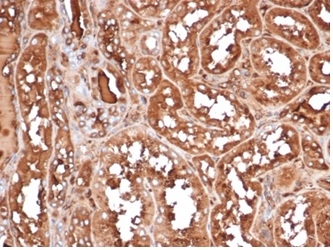
Recombinant Angiotensin I Converting Enzyme (ACE) / CD143 Antibody [ACE/13648R]

In Stock
Catalog Number Formulation Size Price
1636-RBM10-P0
Purified Ab with BSA and Azide at 200ug/ml
20ug
$259.00
1636-RBM10-P1
Purified Ab with BSA and Azide at 200ug/ml
100ug
$559.00
1636-RBM10-P1ABX
Purified Ab WITHOUT BSA or Azide at 1.0mg/ml
100ug
$559.00
Flat Rate Domestic: $95 | Orders outside the US - Contact Us for Order Information | Ships next business day

Applications & Dilutions

Applications Tested Dillution Protocol Note
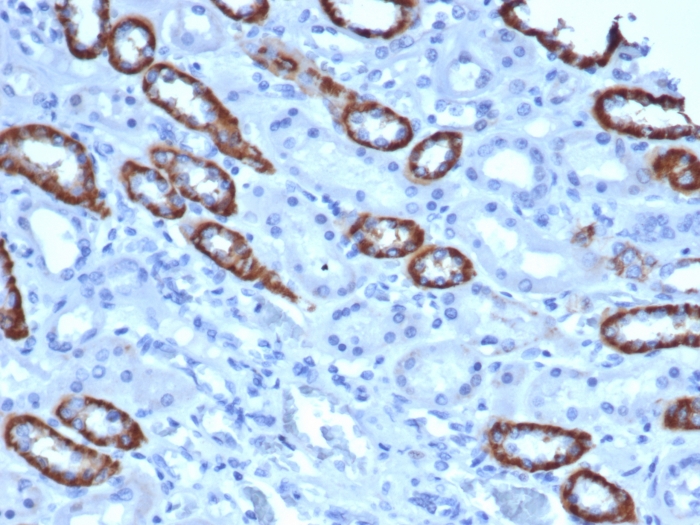
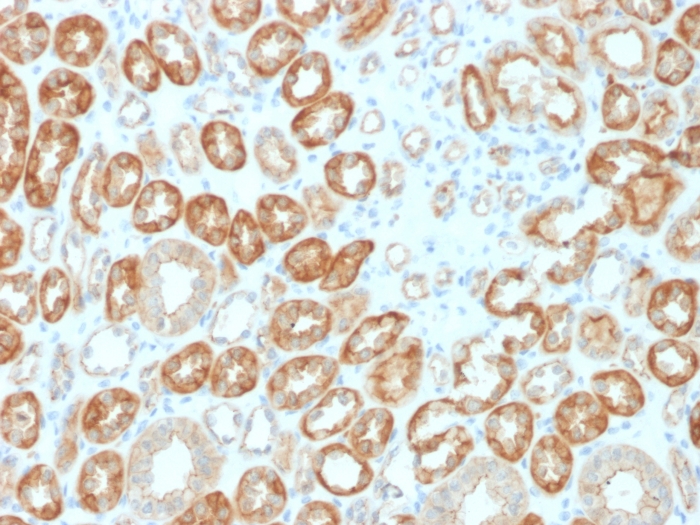
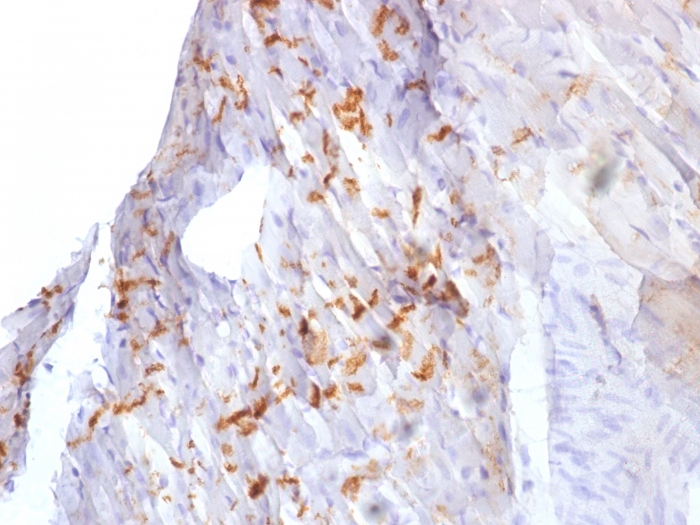
Immunohistochemistry (IHC)
1-2ug/ml
30 min at RT. Staining of formalin-fixed tissues requires heating tissue sections in 10mM Tris with 1mM EDTA, pH 9.0, for 45 min at 95°C followed by cooling at RT for 20 minutes
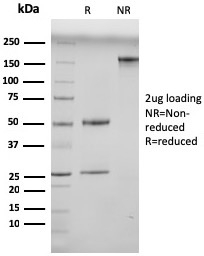
Western Blot (WB)
2-4ug/ml

Summary

Dipeptidyl carboxypeptidase that removes dipeptides from the C-terminus of a variety of circulating hormones, such as angiotensin I, bradykinin or enkephalins, thereby playing a key role in the regulation of blood pressure, electrolyte homeostasis or synaptic plasticity (PubMed:15615692, PubMed:20826823, PubMed:2558109, PubMed:4322742, PubMed:7523412, PubMed:7683654). Composed of two similar catalytic domains, each possessing a functional active site, with different selectivity for substrates (PubMed:10913258, PubMed:1320019, PubMed:1851160, PubMed:19773553, PubMed:7683654, PubMed:7876104). Plays a major role in the angiotensin-renin system that regulates blood pressure and sodium retention by the kidney by converting angiotensin I to angiotensin II, resulting in an increase of the vasoconstrictor activity of angiotensin (PubMed:11432860, PubMed:1851160, PubMed:19773553, PubMed:23056909, PubMed:4322742). Also able to inactivate bradykinin, a potent vasodilator, and therefore enhance the blood pressure response (PubMed:15615692, PubMed:2558109, PubMed:4322742, PubMed:6055465, PubMed:6270633, PubMed:7683654). Acts as a regulator of synaptic transmission by mediating cleavage of neuropeptide hormones, such as substance P, neurotensin or enkephalins (PubMed:15615692, PubMed:6208535, PubMed:6270633, PubMed:656131). Catalyzes degradation of different enkephalin neuropeptides (Met-enkephalin, Leu-enkephalin, Met-enkephalin-Arg-Phe and possibly Met-enkephalin-Arg-Gly-Leu) (PubMed:2982830, PubMed:6270633, PubMed:656131). Acts as a regulator of synaptic plasticity in the nucleus accumbens of the brain by mediating cleavage of Met-enkephalin-Arg-Phe, a strong ligand of Mu-type opioid receptor OPRM1, into Met-enkephalin (By similarity). Met-enkephalin-Arg-Phe cleavage by ACE decreases activation of OPRM1, leading to long-term synaptic potentiation of glutamate release (By similarity). Also acts as a regulator of hematopoietic stem cell differentiation by mediating degradation of hemoregulatory peptide N-acetyl-SDKP (AcSDKP) (PubMed:26403559, PubMed:7876104, PubMed:8257427, PubMed:8609242). Acts as a regulator of cannabinoid signaling pathway by mediating degradation of hemopressin, an antagonist peptide of the cannabinoid receptor CNR1 (PubMed:18077343). Involved in amyloid-beta metabolism by catalyzing degradation of Amyloid-beta protein 40 and Amyloid-beta protein 42 peptides, thereby preventing plaque formation (PubMed:11604391, PubMed:16154999, PubMed:19773553). Catalyzes cleavage of cholecystokinin (maturation of Cholecystokinin-8 and Cholecystokinin-5) and Gonadoliberin-1 (both maturation and degradation) hormones (PubMed:10336644, PubMed:2983326, PubMed:7683654, PubMed:9371719). Degradation of hemoregulatory peptide N-acetyl-SDKP (AcSDKP) and amyloid-beta proteins is mediated by the N-terminal catalytic domain, while angiotensin I and cholecystokinin cleavage is mediated by the C-terminal catalytic region (PubMed:10336644, PubMed:19773553, PubMed:7876104)., Soluble form that is released in blood plasma and other body fluids following proteolytic cleavage in the juxtamembrane stalk region., Isoform produced by alternative promoter usage that is specifically expressed in spermatocytes and adult testis, and which is required for male fertility (PubMed:1651327, PubMed:1668266). In contrast to somatic isoforms, only contains one catalytic domain (PubMed:1651327, PubMed:1668266). Acts as a dipeptidyl carboxypeptidase that removes dipeptides from the C-terminus of substrates (PubMed:1668266, PubMed:24297181). The identity of substrates that are needed for male fertility is unknown (By similarity). May also have a glycosidase activity which releases GPI-anchored proteins from the membrane by cleaving the mannose linkage in the GPI moiety. The GPIase activity was reported to be essential for the egg-binding ability of the sperm (By similarity). This activity is however unclear and has been challenged by other groups, suggesting that it may be indirect (By similarity).

Product Properties & Targets

Host
Rabbit
Species Reactivity
Isotype / Light Chain
IgG / Kappa
Cellular Localization
Cell membrane, Cytoplasm, Secreted
Gene Name
ACE
Positive Control
Ubiquitously expressed, with highest levels in lung, kidney, heart, gastrointestinal system and prostate
Immunogen
Recombinant full-length human ACE protein
Alternate Names
Angiotensin-converting enzyme, ACE1|CD143|DCP|DCP1

Database Links

Entrez Gene ID
SwissProt

Additional Information

Clone
ACE/13648R
Chromosome Location
17q23.3
Mol. Weight of Antigen
149.71kDa
Expression System
CHO Cells
Purification
Protein A

Functions

  • Dipeptidyl carboxypeptidase that removes dipeptides from the C-terminus of a variety of circulating hormones, such as angiotensin I, bradykinin or enkephalins, thereby playing a key role in the regulation of blood pressure, electrolyte homeostasis or synaptic plasticity (PubMed:15615692, PubMed:20826823, PubMed:2558109, PubMed:4322742, PubMed:7523412, PubMed:7683654). Composed of two similar catalytic domains, each possessing a functional active site, with different selectivity for substrates (PubMed:10913258, PubMed:1320019, PubMed:1851160, PubMed:19773553, PubMed:7683654, PubMed:7876104). Plays a major role in the angiotensin-renin system that regulates blood pressure and sodium retention by the kidney by converting angiotensin I to angiotensin II, resulting in an increase of the vasoconstrictor activity of angiotensin (PubMed:11432860, PubMed:1851160, PubMed:19773553, PubMed:23056909, PubMed:4322742). Also able to inactivate bradykinin, a potent vasodilator, and therefore enhance the blood pressure response (PubMed:15615692, PubMed:2558109, PubMed:4322742, PubMed:6055465, PubMed:6270633, PubMed:7683654). Acts as a regulator of synaptic transmission by mediating cleavage of neuropeptide hormones, such as substance P, neurotensin or enkephalins (PubMed:15615692, PubMed:6208535, PubMed:6270633, PubMed:656131). Catalyzes degradation of different enkephalin neuropeptides (Met-enkephalin, Leu-enkephalin, Met-enkephalin-Arg-Phe and possibly Met-enkephalin-Arg-Gly-Leu) (PubMed:2982830, PubMed:6270633, PubMed:656131). Acts as a regulator of synaptic plasticity in the nucleus accumbens of the brain by mediating cleavage of Met-enkephalin-Arg-Phe, a strong ligand of Mu-type opioid receptor OPRM1, into Met-enkephalin (By similarity). Met-enkephalin-Arg-Phe cleavage by ACE decreases activation of OPRM1, leading to long-term synaptic potentiation of glutamate release (By similarity). Also acts as a regulator of hematopoietic stem cell differentiation by mediating degradation of hemoregulatory peptide N-acetyl-SDKP (AcSDKP) (PubMed:26403559, PubMed:7876104, PubMed:8257427, PubMed:8609242). Acts as a regulator of cannabinoid signaling pathway by mediating degradation of hemopressin, an antagonist peptide of the cannabinoid receptor CNR1 (PubMed:18077343). Involved in amyloid-beta metabolism by catalyzing degradation of Amyloid-beta protein 40 and Amyloid-beta protein 42 peptides, thereby preventing plaque formation (PubMed:11604391, PubMed:16154999, PubMed:19773553). Catalyzes cleavage of cholecystokinin (maturation of Cholecystokinin-8 and Cholecystokinin-5) and Gonadoliberin-1 (both maturation and degradation) hormones (PubMed:10336644, PubMed:2983326, PubMed:7683654, PubMed:9371719). Degradation of hemoregulatory peptide N-acetyl-SDKP (AcSDKP) and amyloid-beta proteins is mediated by the N-terminal catalytic domain, while angiotensin I and cholecystokinin cleavage is mediated by the C-terminal catalytic region (PubMed:10336644, PubMed:19773553, PubMed:7876104)., Soluble form that is released in blood plasma and other body fluids following proteolytic cleavage in the juxtamembrane stalk region., Isoform produced by alternative promoter usage that is specifically expressed in spermatocytes and adult testis, and which is required for male fertility (PubMed:1651327, PubMed:1668266). In contrast to somatic isoforms, only contains one catalytic domain (PubMed:1651327, PubMed:1668266). Acts as a dipeptidyl carboxypeptidase that removes dipeptides from the C-terminus of substrates (PubMed:1668266, PubMed:24297181). The identity of substrates that are needed for male fertility is unknown (By similarity). May also have a glycosidase activity which releases GPI-anchored proteins from the membrane by cleaving the mannose linkage in the GPI moiety. The GPIase activity was reported to be essential for the egg-binding ability of the sperm (By similarity). This activity is however unclear and has been challenged by other groups, suggesting that it may be indirect (By similarity).

Storage & Stability

Antibody with azide - store at 2 to 8 °C. Antibody without azide - store at -20 to -80 °C. Antibody is stable for 24 months. Non-hazardous. No MSDS required.

Limitations

This antibody is available for research use only and is not approved for use in diagnosis.

Supplied as

200ug/ml of Ab produced in a mammalian-based expression system. Prepared in 10mM PBS with 0.05% BSA & 0.05% azide. Also available WITHOUT BSA & azide at 1.0mg/ml.

Warranty

There are no warranties, expressed or implied, which extend beyond this description. Company is not liable for any personal injury or economic loss resulting from this product.
PARTNERSHIP OPPORTUNITIES

NeoBiotechnologies holds Exclusive rights to 10,000 recombinant and hybridoma antibody products, available for Licensing or Collaboration.

LETS TALK