Trial Size Available
Carrier-Free Available
| Document Name | |
|---|---|
| Datasheet | Download Here |
| Material Safety Data Sheet | Download Here |
| Applications | Tested Dilutions | Protocol | Note |
|---|---|---|---|
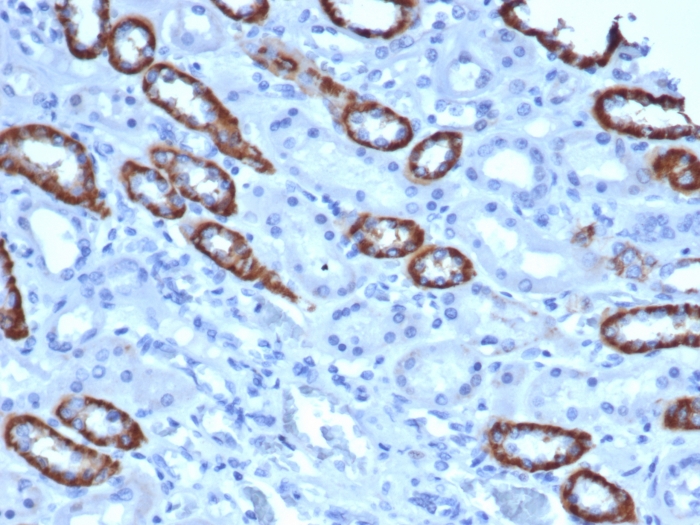
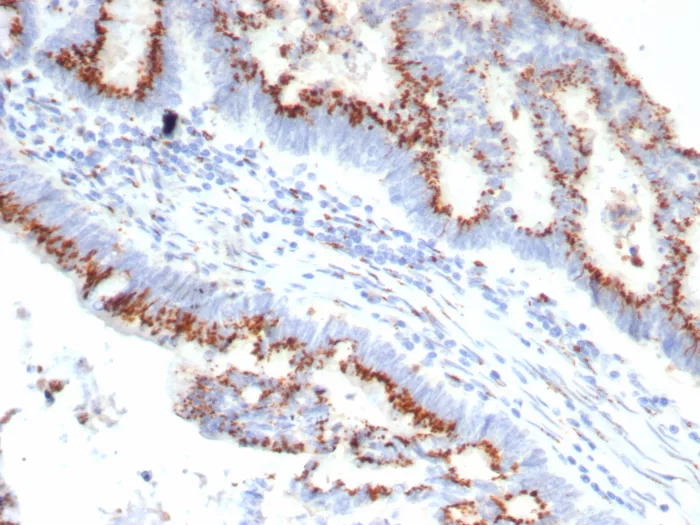
| Immunohistochemistry (IHC) | 1-2ug/ml | IHC Protocol | 30 min at RT. Staining of formalin-fixed tissues requires heating tissue sections in 10mM Tris with 1mM EDTA, pH 9.0, for 45 min at 95°C followed by cooling at RT for 20 minutes |
The ATF/CREB family consists of a series of transcription factors that function by binding to the cAMP responsive element (CRE) palindromic octanucleotide, TGACCTCA. The best characterized members of this gene family include CREB-1, CREB-2 (also designated ATF-4), CRE-BPa, LZIP (also designated CREB-3 and Luman), CREM-2, ATF-1, ATF-2, ATF-3, ATF-5, ATF-6 and ATF-7. These transcription factors share terminal leucine zipper dimerization and basic DNA binding domains and are highly variable in their N-termini. Although each of the ATF/ CREB proteins bind CREs in their homodimeric form, they can also bind as heterodimers, both within the ATF/CREB family and with members of the AP-1 transcription factor family. Protein kinase A- mediated CREB phosphorylation induces association with a nuclear protein designated CBP (CREB-binding protein), which may represent a CREB coactivator. CRE-BPa is a nuclear protein that binds DNA as a homodimer but can also form a heterodimer with ATF-2 or Jun.
Should a NeoBiotechnologies antibody not meet the experimental expectations outlined on our website or datasheet, please contact our Technical Support. We unconditionally guarantee our product.
Our team of scientists are ready to help you with expert recommendations or technical assistance related to applications or product use.
Information
© 2026 NeoBiotechnologies. All Rights Reserved.
Monday-Friday: 8:00am – 8:00pm Pacific Time