
These antibodies are validated on HuProt™ Human Protein Microarrays containing over 21,000 full-length human proteins, including the specific target of interest. LEARN MORE
Trial Size Available
Carrier-Free Available


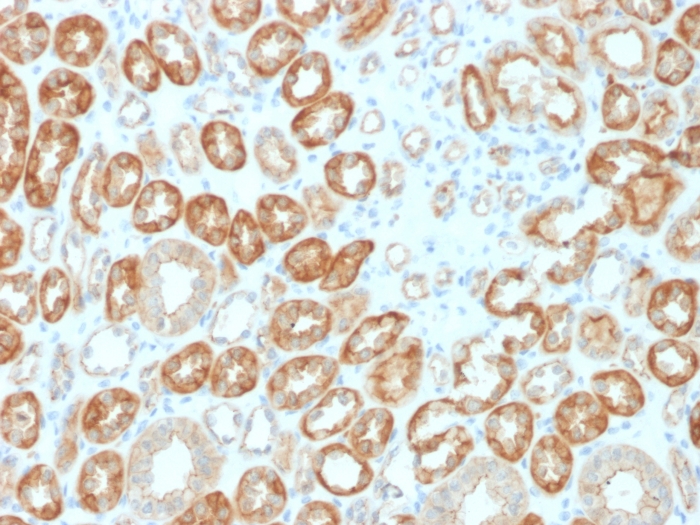
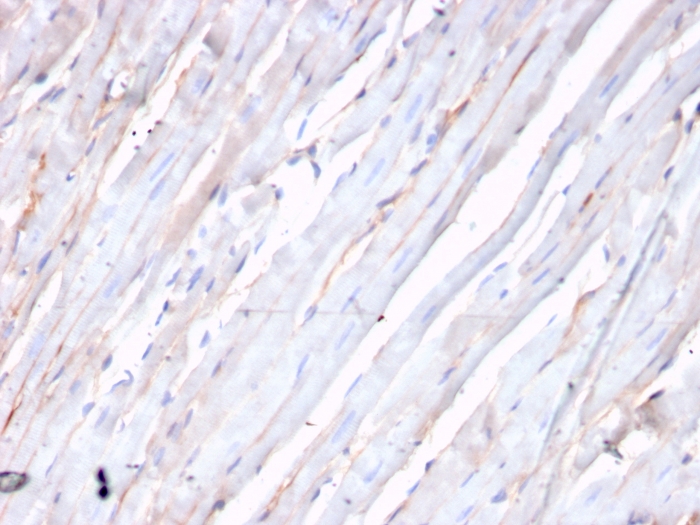
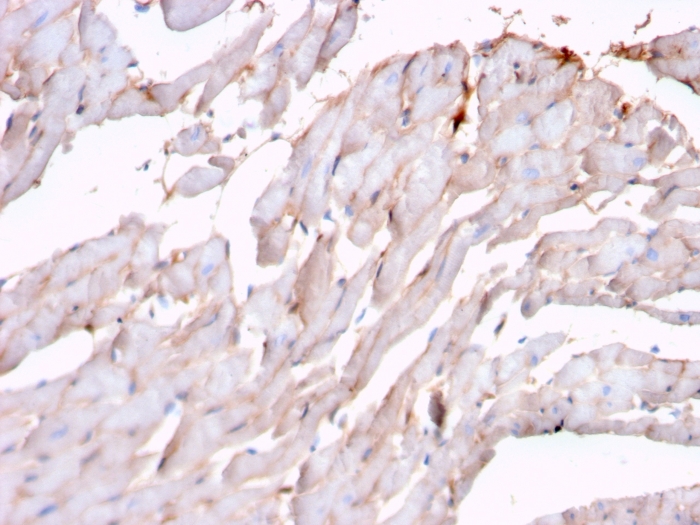
Formalin-fixed, paraffin-embedded human kidney stained with Crystallin Alpha B Mouse Monoclonal Antibody (CRYAB/4665). Inset: PBS instead of primary antibody; secondary only negative control.
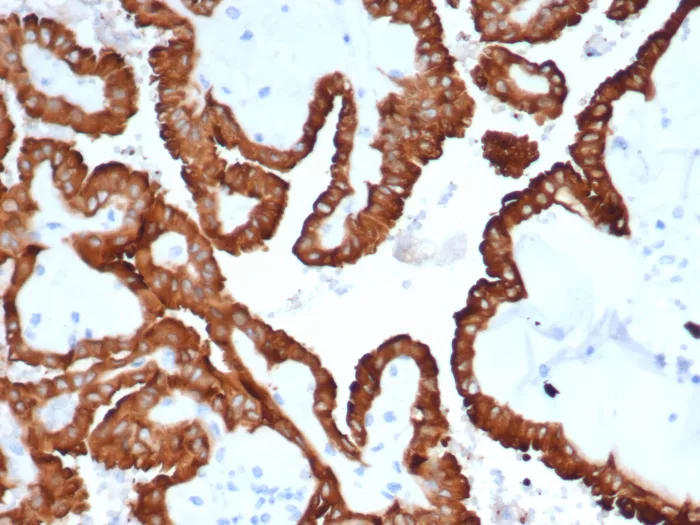
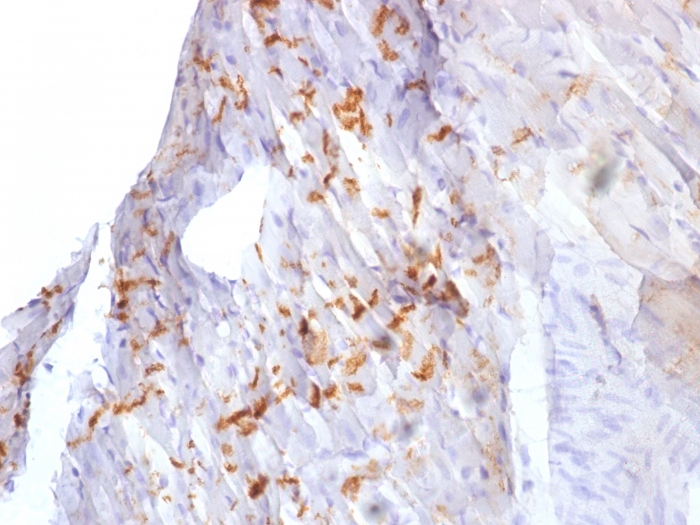
Formalin-fixed, paraffin-embedded human kidney cancer stained with Crystallin Alpha B Mouse Monoclonal Antibody (CRYAB/4665). HIER: Tris/EDTA, pH9.0, 45min. 2°C: HRP-polymer, 30min. DAB, 5min.
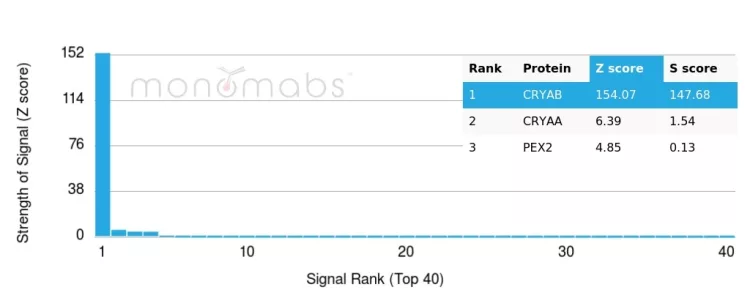
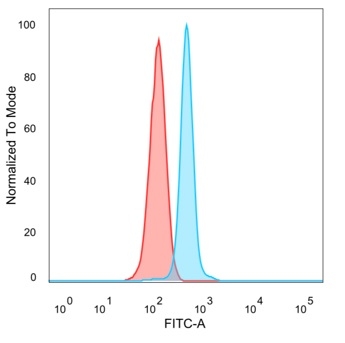
Analysis of Protein Array containing more than 19,000 full-length human proteins using Crystallin Alpha B Mouse Monoclonal Antibody (CRYAB/4665). Z- and S- Score: The Z-score represents the strength of a signal that a monoclonal antibody (MAb) (in combination with a fluorescently-tagged anti-IgG secondary antibody) produces when binding to a particular protein on the HuProtTM array. Z-scores are described in units of standard deviations (SD's) above the mean value of all signals generated on that array. If targets on HuProtTM are arranged in descending order of the Z-score, the S-score is the difference (also in units of SD's) between the Z-score. S-score therefore represents the relative target specificity of a MAb to its intended target. A MAb is considered to specific to its intended target, if the MAb has an S-score of at least 2.5. For example, if a MAb binds to protein X with a Z-score of 43 and to protein Y with a Z-score of 14, then the S-score for the binding of that MAb to protein X is equal to 29.
| Document Name | |
|---|---|
| Datasheet | Download Here |
| Material Safety Data Sheet | Download Here |
| Applications | Tested Dilutions | Protocol | Note |
|---|---|---|---|
| Immunohistochemistry (IHC) | 1-2ug/ml | IHC Protocol | 30 min at RT. Staining of formalin-fixed tissues requires heating tissue sections in 10mM Tris with 1mM EDTA, pH 9.0, for 45 min at 95°C followed by cooling at RT for 20 minutes |
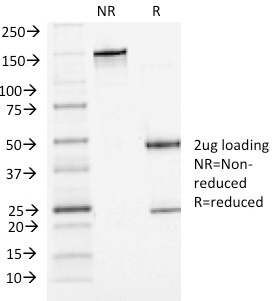
| Western Blot (WB) | 2-4ug/ml | Western Blot Protocol |
Crystallins are the major proteins of the vertebrate eye lens, where they maintain the transparency and refractive index of the lens. Crystallins are divided into Î �, Î � and Î � families, and the Î �- and Î �-crystallins also compose a superfamily. Crystallins usually contain seven distinct protein regions, including four homologous motifs, a connecting peptide, and N- and C-terminal extensions. Î �-crystallins consist of three gene products, Î �A-, Î �B- and Î �C-crystallin, which are members of the small heat shock protein family (HSP 20). Î �-crystallins act as molecular chaperones by holding denatured proteins in large soluble aggregates. However, unlike other molecular chaperones, Î �-crystallins do not renature these proteins. Expression of Î �A-crystallin is restricted to the lens and defects of this gene cause the development of autosomal dominant congenital cataracts (ADCC). The human Î �B-crystallin gene product is expressed in many tissues, including lens, heart and skeletal muscle. Elevated expression of Î �B-crystallin is associated with many neurological diseases, and a missense mutation in this gene has co-segregated in a family with a Desmin-related myopathy.
Should a NeoBiotechnologies antibody not meet the experimental expectations outlined on our website or datasheet, please contact our Technical Support. We unconditionally guarantee our product.
Our team of scientists are ready to help you with expert recommendations or technical assistance related to applications or product use.
Information
© 2026 NeoBiotechnologies. All Rights Reserved.
Monday-Friday: 8:00am – 8:00pm Pacific Time