Retinoic acid receptor RXR-alpha Antibody [PCRP-RXRA-2A8]

In Stock
Catalog Number Formulation Size Price
6256-MSM1-P0
Purified Ab with BSA and Azide at 200ug/ml
20ug
$259.00
6256-MSM1-P1
Purified Ab with BSA and Azide at 200ug/ml
100ug
$559.00
6256-MSM1-P1ABX
Purified Ab WITHOUT BSA or Azide at 1.0mg/ml
100ug
$559.00
Flat Rate Domestic: $95 | Orders outside the US - Contact Us for Order Information | Ships next business day

Applications & Dilutions

Applications Tested Dillution Protocol
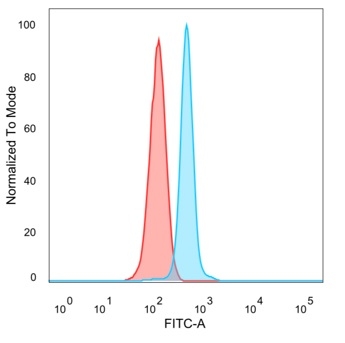
Flow Cytometry (Flow)
1-2ug/million cells
Immunofluorescence (IF)
1-3ug/ml

Summary

Receptor for retinoic acid that acts as a transcription factor (PubMed:10874028, PubMed:11162439, PubMed:11915042, PubMed:37478846). Forms homo- or heterodimers with retinoic acid receptors (RARs) and binds to target response elements in response to their ligands, all-trans or 9-cis retinoic acid, to regulate gene expression in various biological processes (PubMed:10195690, PubMed:11162439, PubMed:11915042, PubMed:16107141, PubMed:17761950, PubMed:18800767, PubMed:19167885, PubMed:28167758, PubMed:37478846). The RAR/RXR heterodimers bind to the retinoic acid response elements (RARE) composed of tandem 5′-AGGTCA-3′ sites known as DR1-DR5 to regulate transcription (PubMed:10195690, PubMed:11162439, PubMed:11915042, PubMed:17761950, PubMed:28167758). The high affinity ligand for retinoid X receptors (RXRs) is 9-cis retinoic acid (PubMed:1310260). In the absence of ligand, the RXR-RAR heterodimers associate with a multiprotein complex containing transcription corepressors that induce histone deacetylation, chromatin condensation and transcriptional suppression (PubMed:20215566). On ligand binding, the corepressors dissociate from the receptors and coactivators are recruited leading to transcriptional activation (PubMed:20215566, PubMed:37478846, PubMed:9267036). Serves as a common heterodimeric partner for a number of nuclear receptors, such as RARA, RARB and PPARA (PubMed:10195690, PubMed:11915042, PubMed:28167758, PubMed:29021580). The RXRA/RARB heterodimer can act as a transcriptional repressor or transcriptional activator, depending on the RARE DNA element context (PubMed:29021580). The RXRA/PPARA heterodimer is required for PPARA transcriptional activity on fatty acid oxidation genes such as ACOX1 and the P450 system genes (PubMed:10195690). Together with RARA, positively regulates microRNA-10a expression, thereby inhibiting the GATA6/VCAM1 signaling response to pulsatile shear stress in vascular endothelial cells (PubMed:28167758). Acts as an enhancer of RARA binding to RARE DNA element (PubMed:28167758). May facilitate the nuclear import of heterodimerization partners such as VDR and NR4A1 (PubMed:12145331, PubMed:15509776). Promotes myelin debris phagocytosis and remyelination by macrophages (PubMed:26463675). Plays a role in the attenuation of the innate immune system in response to viral infections, possibly by negatively regulating the transcription of antiviral genes such as type I IFN genes (PubMed:25417649). Involved in the regulation of calcium signaling by repressing ITPR2 gene expression, thereby controlling cellular senescence (PubMed:30216632).


Product Properties & Targets

Antibody Type
Host
Mouse
Species Reactivity
Isotype / Light Chain
IgG2 / Kappa
Cellular Localization
Cytoplasm, Mitochondrion, Nucleus
Gene Name
Positive Control
Expressed in lung fibroblasts (at protein level) (PubMed:30216632)
Immunogen
Recombinant full-length human RXRA protein
Alternate Names
Retinoic acid receptor RXR-alpha, NR2B1|RXR-alpha|RXRalpha

Database Links

Entrez Gene ID
SwissProt

Additional Information

Clone
PCRP-RXRA-2A8
Chromosome Location
9q34.2
Mol. Weight of Antigen
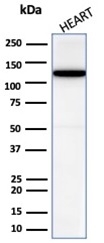
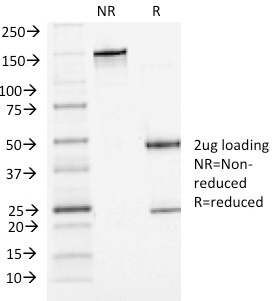
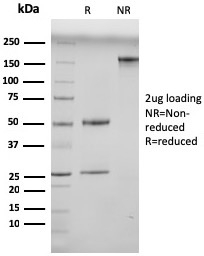
50.81kDa
Purification
Protein A

Functions

  • Receptor for retinoic acid that acts as a transcription factor (PubMed:10874028, PubMed:11162439, PubMed:11915042, PubMed:37478846). Forms homo- or heterodimers with retinoic acid receptors (RARs) and binds to target response elements in response to their ligands, all-trans or 9-cis retinoic acid, to regulate gene expression in various biological processes (PubMed:10195690, PubMed:11162439, PubMed:11915042, PubMed:16107141, PubMed:17761950, PubMed:18800767, PubMed:19167885, PubMed:28167758, PubMed:37478846). The RAR/RXR heterodimers bind to the retinoic acid response elements (RARE) composed of tandem 5'-AGGTCA-3' sites known as DR1-DR5 to regulate transcription (PubMed:10195690, PubMed:11162439, PubMed:11915042, PubMed:17761950, PubMed:28167758). The high affinity ligand for retinoid X receptors (RXRs) is 9-cis retinoic acid (PubMed:1310260). In the absence of ligand, the RXR-RAR heterodimers associate with a multiprotein complex containing transcription corepressors that induce histone deacetylation, chromatin condensation and transcriptional suppression (PubMed:20215566). On ligand binding, the corepressors dissociate from the receptors and coactivators are recruited leading to transcriptional activation (PubMed:20215566, PubMed:37478846, PubMed:9267036). Serves as a common heterodimeric partner for a number of nuclear receptors, such as RARA, RARB and PPARA (PubMed:10195690, PubMed:11915042, PubMed:28167758, PubMed:29021580). The RXRA/RARB heterodimer can act as a transcriptional repressor or transcriptional activator, depending on the RARE DNA element context (PubMed:29021580). The RXRA/PPARA heterodimer is required for PPARA transcriptional activity on fatty acid oxidation genes such as ACOX1 and the P450 system genes (PubMed:10195690). Together with RARA, positively regulates microRNA-10a expression, thereby inhibiting the GATA6/VCAM1 signaling response to pulsatile shear stress in vascular endothelial cells (PubMed:28167758). Acts as an enhancer of RARA binding to RARE DNA element (PubMed:28167758). May facilitate the nuclear import of heterodimerization partners such as VDR and NR4A1 (PubMed:12145331, PubMed:15509776). Promotes myelin debris phagocytosis and remyelination by macrophages (PubMed:26463675). Plays a role in the attenuation of the innate immune system in response to viral infections, possibly by negatively regulating the transcription of antiviral genes such as type I IFN genes (PubMed:25417649). Involved in the regulation of calcium signaling by repressing ITPR2 gene expression, thereby controlling cellular senescence (PubMed:30216632).

Storage & Stability

Antibody with azide - store at 2 to 8 °C. Antibody without azide - store at -20 to -80 °C. Antibody is stable for 24 months. Non-hazardous. No MSDS required.

Limitations

This antibody is available for research use only and is not approved for use in diagnosis.

Supplied as

200ug/ml of Ab purified from Bioreactor Concentrate by Protein A. Prepared in 10mM PBS with 0.05% BSA & 0.05% azide. Also available WITHOUT BSA & azide at 1.0mg/ml.

Warranty

There are no warranties, expressed or implied, which extend beyond this description. Company is not liable for any personal injury or economic loss resulting from this product.
PARTNERSHIP OPPORTUNITIES

NeoBiotechnologies holds Exclusive rights to 10,000 recombinant and hybridoma antibody products, available for Licensing or Collaboration.

LETS TALK