Prolyl hydroxylase EGLN2 Antibody [EGLN2/17071]

In Stock
Catalog Number Formulation Size Price
112398-MSM2-P0
Purified Ab with BSA and Azide at 200ug/ml
20ug
$259.00
112398-MSM2-P1
Purified Ab with BSA and Azide at 200ug/ml
100ug
$559.00
112398-MSM2-P1ABX
Purified Ab WITHOUT BSA or Azide at 1.0mg/ml
100ug
$559.00
Flat Rate Domestic: $95 | Orders outside the US - Contact Us for Order Information | Ships next business day

Applications & Dilutions

Applications Tested Dillution Protocol Note
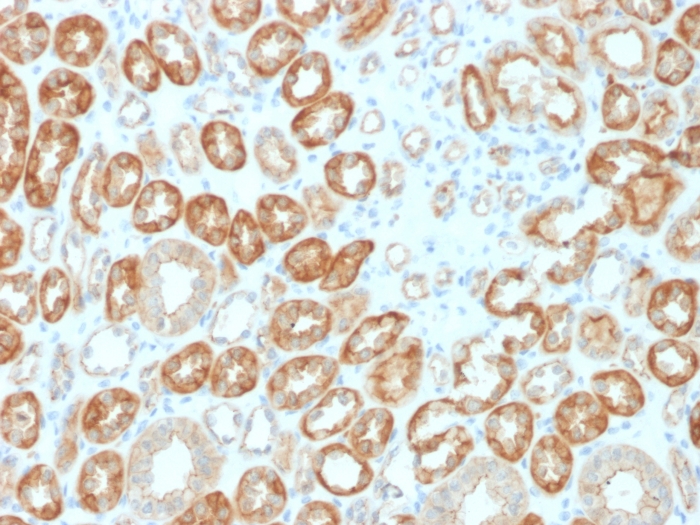
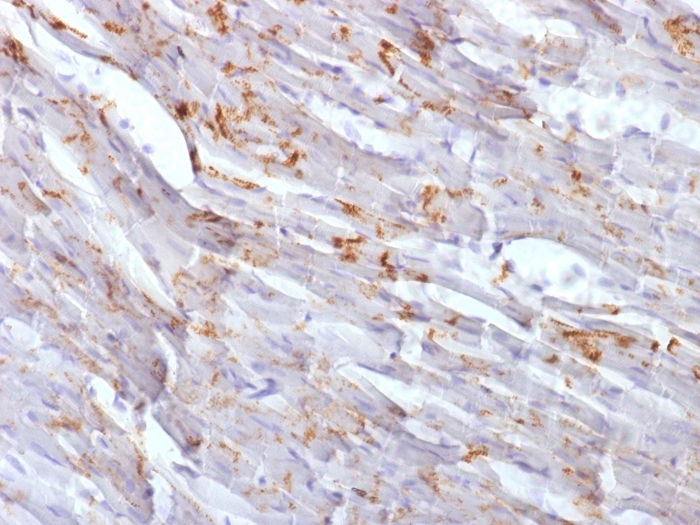
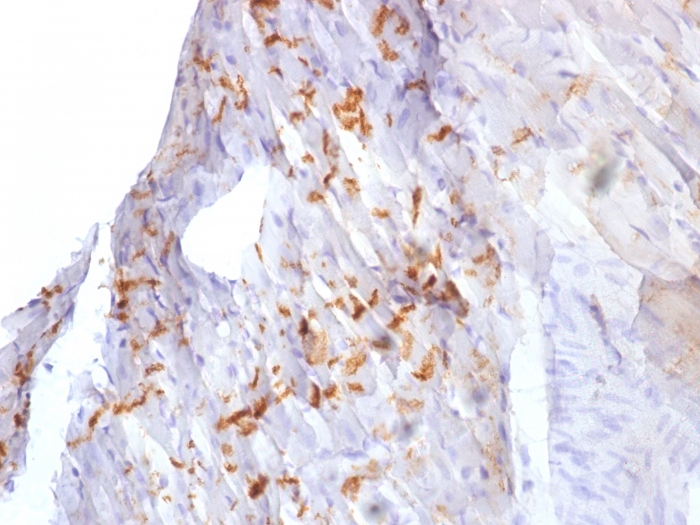
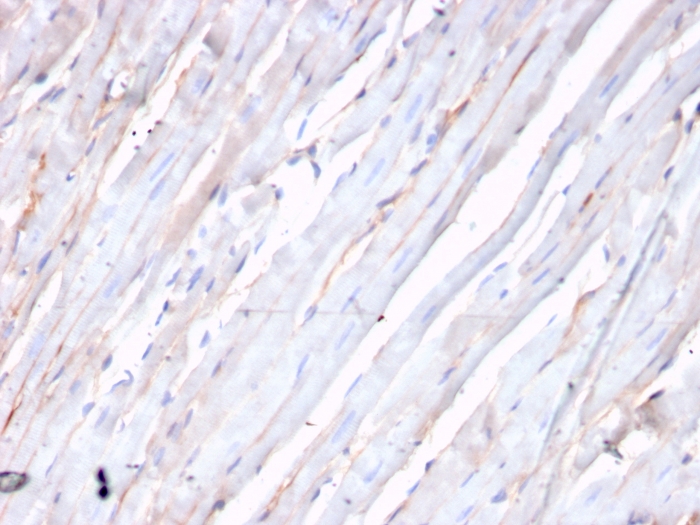
Immunohistochemistry (IHC)
1-2ug/ml
30 min at RT. Staining of formalin-fixed tissues requires heating tissue sections in 10mM Tris with 1mM EDTA, pH 9.0, for 45 min at 95°C followed by cooling at RT for 20 minutes
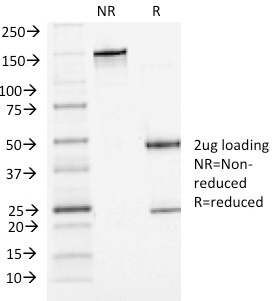
Western Blot (WB)
2-4ug/ml

Summary

Prolyl hydroxylase that mediates hydroxylation of proline residues in target proteins, such as ATF4, IKBKB, CEP192 and HIF1A (PubMed:11595184, PubMed:12039559, PubMed:15925519, PubMed:16509823, PubMed:17114296, PubMed:23932902). Target proteins are preferentially recognized via a LXXLAP motif (PubMed:11595184, PubMed:12039559, PubMed:15925519). Cellular oxygen sensor that catalyzes, under normoxic conditions, the post-translational formation of 4-hydroxyproline in hypoxia-inducible factor (HIF) alpha proteins (PubMed:11595184, PubMed:12039559, PubMed:12181324, PubMed:15925519, PubMed:19339211). Hydroxylates a specific proline found in each of the oxygen-dependent degradation (ODD) domains (N-terminal, NODD, and C-terminal, CODD) of HIF1A (PubMed:11595184, PubMed:12039559, PubMed:12181324, PubMed:15925519). Also hydroxylates HIF2A (PubMed:11595184, PubMed:12039559, PubMed:15925519). Has a preference for the CODD site for both HIF1A and HIF2A (PubMed:11595184, PubMed:12039559, PubMed:15925519). Hydroxylated HIFs are then targeted for proteasomal degradation via the von Hippel-Lindau ubiquitination complex (PubMed:11595184, PubMed:12039559, PubMed:15925519). Under hypoxic conditions, the hydroxylation reaction is attenuated allowing HIFs to escape degradation resulting in their translocation to the nucleus, heterodimerization with HIF1B, and increased expression of hypoxy-inducible genes (PubMed:11595184, PubMed:12039559, PubMed:15925519). EGLN2 is involved in regulating hypoxia tolerance and apoptosis in cardiac and skeletal muscle (PubMed:11595184, PubMed:12039559, PubMed:15925519). Also regulates susceptibility to normoxic oxidative neuronal death (PubMed:11595184, PubMed:12039559, PubMed:15925519). Links oxygen sensing to cell cycle and primary cilia formation by hydroxylating the critical centrosome component CEP192 which promotes its ubiquitination and subsequent proteasomal degradation (PubMed:23932902). Hydroxylates IKBKB, mediating NF-kappa-B activation in hypoxic conditions (PubMed:17114296). Also mediates hydroxylation of ATF4, leading to decreased protein stability of ATF4 (By similarity).


Product Properties & Targets

Antibody Type
Host
Mouse
Species Reactivity
Isotype / Light Chain
IgG /
Cellular Localization
Nucleus
Gene Name
Positive Control
Expressed in adult and fetal heart, brain, liver, lung, skeletal muscle, and kidney
Immunogen
Recombinant fragment (around aa 289-404) of human EGLN2 protein
Alternate Names
Prolyl hydroxylase EGLN2, EIT-6|EIT6|HIF-PH1|HIFPH1|HPH-1|HPH-3|PHD1

Database Links

Entrez Gene ID
SwissProt

Additional Information

Clone
EGLN2/17071
Chromosome Location
19q13.2
Mol. Weight of Antigen
43.65kDa
Purification
Protein A

Functions

  • Prolyl hydroxylase that mediates hydroxylation of proline residues in target proteins, such as ATF4, IKBKB, CEP192 and HIF1A (PubMed:11595184, PubMed:12039559, PubMed:15925519, PubMed:16509823, PubMed:17114296, PubMed:23932902). Target proteins are preferentially recognized via a LXXLAP motif (PubMed:11595184, PubMed:12039559, PubMed:15925519). Cellular oxygen sensor that catalyzes, under normoxic conditions, the post-translational formation of 4-hydroxyproline in hypoxia-inducible factor (HIF) alpha proteins (PubMed:11595184, PubMed:12039559, PubMed:12181324, PubMed:15925519, PubMed:19339211). Hydroxylates a specific proline found in each of the oxygen-dependent degradation (ODD) domains (N-terminal, NODD, and C-terminal, CODD) of HIF1A (PubMed:11595184, PubMed:12039559, PubMed:12181324, PubMed:15925519). Also hydroxylates HIF2A (PubMed:11595184, PubMed:12039559, PubMed:15925519). Has a preference for the CODD site for both HIF1A and HIF2A (PubMed:11595184, PubMed:12039559, PubMed:15925519). Hydroxylated HIFs are then targeted for proteasomal degradation via the von Hippel-Lindau ubiquitination complex (PubMed:11595184, PubMed:12039559, PubMed:15925519). Under hypoxic conditions, the hydroxylation reaction is attenuated allowing HIFs to escape degradation resulting in their translocation to the nucleus, heterodimerization with HIF1B, and increased expression of hypoxy-inducible genes (PubMed:11595184, PubMed:12039559, PubMed:15925519). EGLN2 is involved in regulating hypoxia tolerance and apoptosis in cardiac and skeletal muscle (PubMed:11595184, PubMed:12039559, PubMed:15925519). Also regulates susceptibility to normoxic oxidative neuronal death (PubMed:11595184, PubMed:12039559, PubMed:15925519). Links oxygen sensing to cell cycle and primary cilia formation by hydroxylating the critical centrosome component CEP192 which promotes its ubiquitination and subsequent proteasomal degradation (PubMed:23932902). Hydroxylates IKBKB, mediating NF-kappa-B activation in hypoxic conditions (PubMed:17114296). Also mediates hydroxylation of ATF4, leading to decreased protein stability of ATF4 (By similarity).

Storage & Stability

Antibody with azide - store at 2 to 8 °C. Antibody without azide - store at -20 to -80 °C. Antibody is stable for 24 months. Non-hazardous. No MSDS required.

Limitations

This antibody is available for research use only and is not approved for use in diagnosis.

Supplied as

200ug/ml of Ab purified from Bioreactor Concentrate by Protein A. Prepared in 10mM PBS with 0.05% BSA & 0.05% azide. Also available WITHOUT BSA & azide at 1.0mg/ml.

Warranty

There are no warranties, expressed or implied, which extend beyond this description. Company is not liable for any personal injury or economic loss resulting from this product.
PARTNERSHIP OPPORTUNITIES

NeoBiotechnologies holds Exclusive rights to 10,000 recombinant and hybridoma antibody products, available for Licensing or Collaboration.

LETS TALK