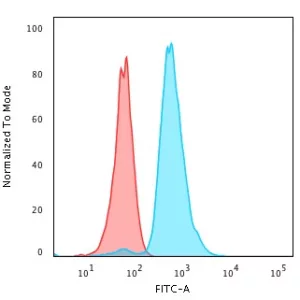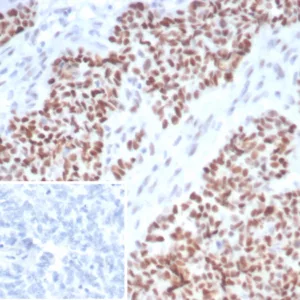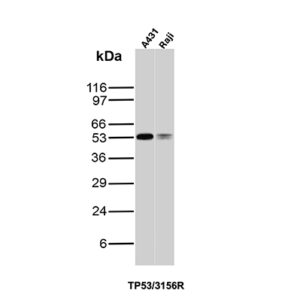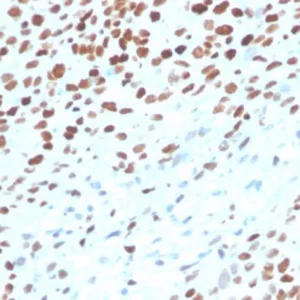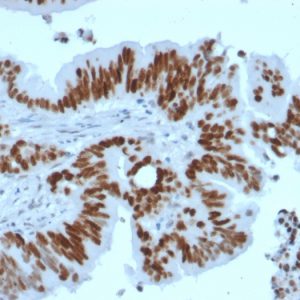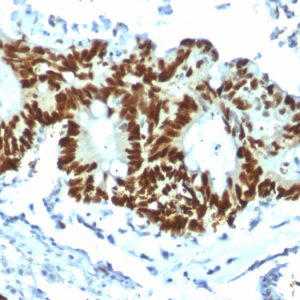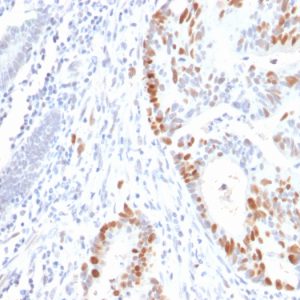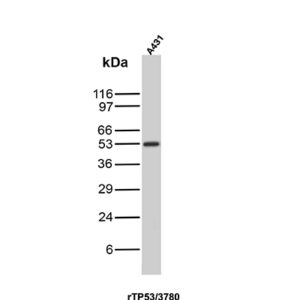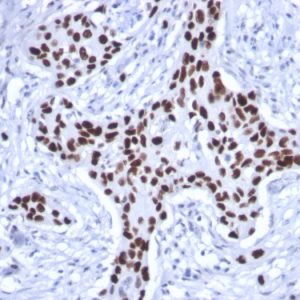



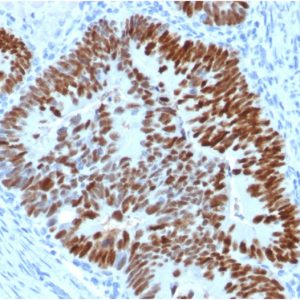
The tumor protein p53 (P53 or TP53) has a molecular weight of approximately 53 kDa. This protein is expressed in various cell types throughout the body. This protein plays a crucial role in response to cellular stress and damage by regulating the cell cycle and preventing tumor formation.
P53 is often referred to as the “guardian of the genome” because of its critical role in maintaining genomic stability. It helps prevent the development of cancer by promoting the repair of damaged DNA or triggering apoptosis in cells with irreparable damage.
Mutations in the TP53 gene are associated with a variety of cancers, including breast cancer, colorectal cancer, lung cancer, and many others. Li-Fraumeni syndrome, a rare genetic disorder, is characterized by a high predisposition to cancer and is often associated with these mutations.
Antibodies against p53 are widely used in research and diagnostics. In cancer research, these antibodies can help identify the presence of mutant or overexpressed proteins in tumor tissues. They are used in immunohistochemistry (IHC) and other techniques to visualize and quantify its expression. The detection of abnormal expressions is often used in cancer diagnosis and prognosis. In some cases, the presence of mutant p53 may influence treatment decisions.
Synonyms
Cellular tumor antigen p53, BCC7|BMFS5|LFS1|P53|TRP53
Research Areas
Apoptosis, Autophagy, Breast Cancer, Cancer, Cardiovascular, Cell Biology, Cellular Markers and Tags, Developmental Biology, Endocrine, Epigenetics, Gastrointestinal Tract, Hypoxia, Immuno Oncology, Immunology, Kidney, Lymphatic, Metabolism, Microbiology, Muscle, Neuroscience, Pancreatic Cancer, Prostate Cancer, Skin, Stem Cell, AKT Signaling, Angiogenesis, Articular Cartilage Extracellular Matrix, B Cell Markers, Basal Cell Marker, BBB VCAM-1 Signaling, Bladder Cancer, Cardiac Stem Cells, Colon Cancer, Colorectal Cancer, Complement System, CTLA-4 blockade immunotherapy, Cytokine Signaling, Defective Intrinsic Apoptosis, Dendritic Cell Marker, Digestion, Endothelial Cell Marker, Hematopoietic Stem Cells, Immune checkpoint, Infectious Disease, Lipid Metabolism, Lung Cancer, MAPK Signaling, Mast Cell Marker, Melanoma, Mesenchymal Stem Cell Differentiation, Mitochondria Marker, Neural Stem Cells, Neuroinflammation, Nuclear Marker, Oncology, Ovarian Cancer, PD-1 blockade immunotherapy, Signal Transduction, Stem Cell Differentiation, Transcription Factors