
PARTNERSHIP OPPORTUNITIES

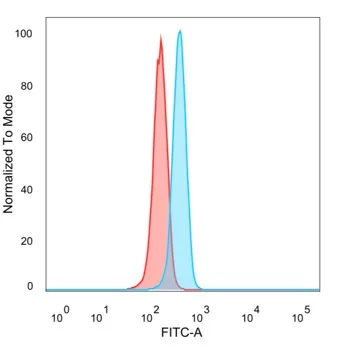
Flow Cytometric Analysis of PFA-fixed HeLa cells. PPARD Mouse Monoclonal Antibody (PCRP-PPARD-4C2) followed by goat anti-mouse IgG-CF488 (blue); unstained cells (red).
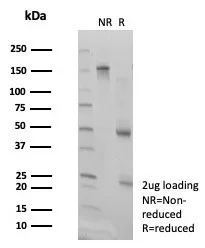
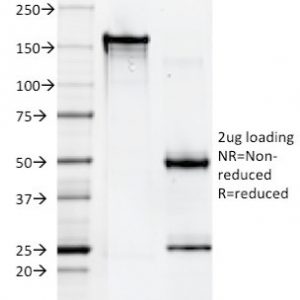
SDS-PAGE Analysis. Purified PPARD Mouse Monoclonal Antibody (PCRP-PPARD-4C2). Confirmation of Integrity and Purity of Antibody.
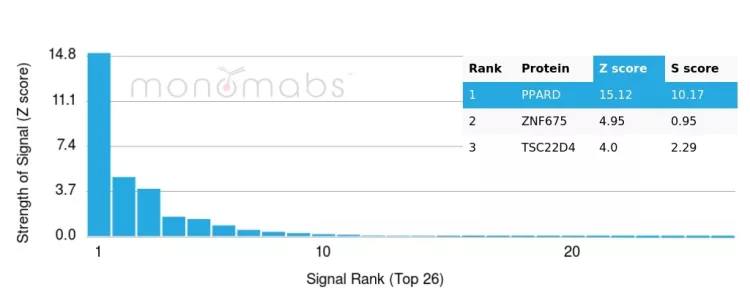
Analysis of Protein Array containing more than 19,000 full-length human proteins using PPARD Mouse Monoclonal Antibody (PCRP-PPARD-4C2). Z- and S- Score: The Z-score represents the strength of a signal that a monoclonal antibody (MAb) (in combination with a fluorescently-tagged anti-IgG secondary antibody) produces when binding to a particular protein on the HuProtTM array. Z-scores are described in units of standard deviations (SD's) above the mean value of all signals generated on that array. If targets on HuProtTM are arranged in descending order of the Z-score, the S-score is the difference (also in units of SD's) between the Z-score. S-score therefore represents the relative target specificity of a MAb to its intended target. A MAb is considered to specific to its intended target, if the MAb has an S-score of at least 2.5. For example, if a MAb binds to protein X with a Z-score of 43 and to protein Y with a Z-score of 14, then the S-score for the binding of that MAb to protein X is equal to 29.
Peroxisome proliferator-activated receptors (PPARs) are nuclear hormone receptors that can be activated by a variety of compounds including fibratus, thiazolidinediones, prostaglandins and fatty acids. Three PPAR subtypes, designated PPARa, PPARb (also designated PPARÎ �) and PPARg, have been described. PPARs promote transcription by forming heterodimers with members of the retinoid X receptor (RXR) family of steroid receptors and binding to specific DNA motifs termed PPAR-response elements (PPREs). PPARa is abundant in primary hepatocytes, where it regulates the expression of proteins involved in fatty acid metabolism. PPARb is the most widely distributed subtype and is often expressed at high levels. PPARg is predominantly seen in adipose tissue, where it plays a critical role in regulating adipocyte differentiation. Interestingly, both the orphan nuclear hormone receptor LXRa and thyroid receptor (TR) have been shown to act as antagonists of PPARa/ RXRa binding to PPREs.


There are no reviews yet.